LogicMonitor's Elevate Conference Tackles the Gap Between Deployment Speed and Operational Visibility
As enterprises accelerate software delivery, IT operations teams struggle to keep pace with detecting and resolving production issues. LogicMonitor's upcoming conference will explore how AI-powered observability and automation can bridge this widening gap.
Organizations are shipping code at unprecedented velocity, yet their capacity to spot and fix problems in production environments has not kept up. The shift toward hybrid infrastructure, cloud-native systems and interconnected services is straining conventional monitoring tools. With software delivery cycles accelerating and artificial intelligence becoming central to operations, IT teams face mounting pressure to oversee increasingly intricate systems without sacrificing application reliability or business stability.
Research from theCUBE highlights this tension. According to Paul Nashawaty, practice lead and principal analyst at theCUBE Research, "Our AppDev research indicates that 63.7% of organizations deploy applications daily or multiple times per day, while 46.5% report that required deployment speeds have increased by 50–100% over the past three years. Yet 32.3% still take hours to become aware of production issues. These findings highlight the growing disconnect between accelerated software delivery and the ability to maintain real-time operational visibility."
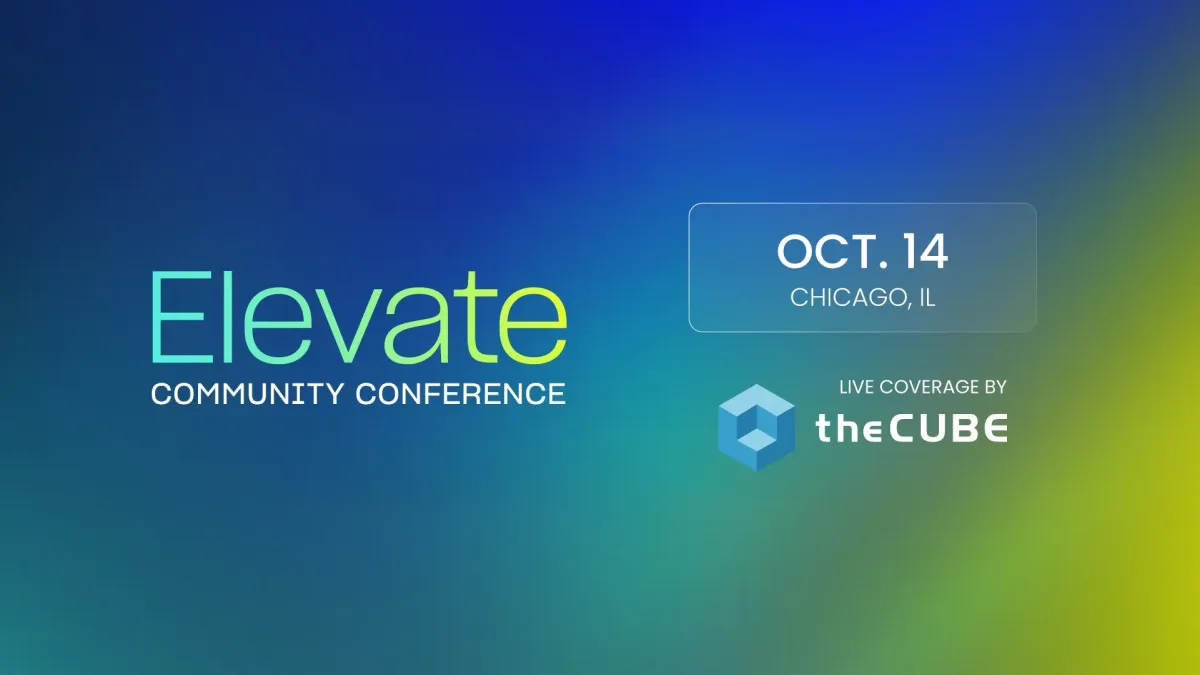
LogicMonitor's Elevate conference, scheduled for October 13–14 in Chicago, will examine how organizations can close this gap. The event brings together IT leaders and technology specialists to explore Autonomous IT—a framework combining AI-driven observability, predictive capabilities and automation to help infrastructure detect, analyze and increasingly fix problems with minimal human involvement. On October 14, theCUBE will provide live coverage of the conference, with Nashawaty hosting interviews focused on agentic AIOps, complete-stack observability and intelligent automation in enterprise settings.
From observability to intelligent operations
LogicMonitor has been broadening its observability capabilities beyond traditional infrastructure tracking toward an AI-driven operational framework that unifies telemetry collection, incident analysis and automated problem resolution.
The company unveiled its Autonomous IT Innovation Program in May, a limited-access initiative intended to test new operational workflows with a select group of customers. The program emphasizes guided incident investigation, human-supervised response, automated fixes and oversight mechanisms to help teams move past traditional alert-based dashboards.
Garth Fort, LogicMonitor's chief product and technology officer, articulated the company's vision: "The future of IT operations is not dashboard-centric. It is AI-centric. This is our commitment to redesigning how teams work around AI-native workflows so they can act earlier, operate more intelligently, and ultimately automate more of the work required to keep modern digital businesses running."
Edwin AI, LogicMonitor's agentic AIOps platform, sits at the core of this strategy. The technology analyzes operational data to link events, rank incidents by severity and support root-cause investigation. The LM Envision platform provides comprehensive visibility into hybrid and cloud settings, delivering the data streams necessary for AI-informed operational choices.
LogicMonitor strengthened its position through the acquisition of Catchpoint, announced in December 2025. This move combines internet performance and user experience monitoring with LogicMonitor's existing infrastructure visibility, allowing teams to connect internal system performance with the actual experience of customers and staff. A July update described efforts to link Catchpoint alerts with Edwin AI for incident correlation spanning these domains.
Nashawaty explained the strategic value: "For LogicMonitor Elevate, the opportunity is to bridge that gap by connecting full-stack observability with actionable AppDev insights and intelligent operations. By helping development and operations teams correlate telemetry, identify root causes and automate responses, observability can become an enabler of faster releases, greater application resilience and more efficient IT operations."
The path toward self-healing infrastructure
The next frontier for Autonomous IT involves moving past AI-assisted detection and diagnosis to systems that can independently execute corrective measures.
Conventional IT operations rely on human engineers to assess alerts, trace dependencies and carry out recovery steps. Agentic AIOps creates the possibility of automating segments of this workflow, enabling systems to connect signals, suggest remedies and run approved recovery procedures without human intervention.
LogicMonitor is pursuing this direction through Edwin AI and its automation toolkit. The company has also partnered with IBM and Red Hat to embed Edwin AI into IBM watsonx and Red Hat Ansible Automation Platform, supporting more automated data center management.
Expanding automation raises important operational questions about responsibility, access controls and the potential fallout from faulty decisions. An automated fix that resolves one incident might harm another essential service if the system lacks complete context or proper guardrails.
Karthik SJ, LogicMonitor's chief AI officer, stressed the broader transformation: "This is not about adding another AI assistant to existing workflows. We are fundamentally redesigning how enterprise teams work — moving from systems where humans manually gather and interpret information toward systems where AI empowers teams to understand, decide and act directly in the flow of work."
These considerations become critical as IT departments link observability systems with service management platforms, automation tools and production environments. Successful deployment demands dependable data collection, explicit rules for automated actions and ways for humans to step in when systems face unforeseen situations.
Nashawaty identified the conversion of operational insights into action as a crucial success metric: "The strategic differentiator will be how effectively platforms turn operational data into timely decisions across the software lifecycle."
At Elevate 2026, theCUBE will examine how far enterprises can practically move toward fully automated systems, what concrete gains customers are seeing and where human judgment remains indispensable. Discussions will also explore how comprehensive visibility and agentic AI can strengthen IT resilience while limiting new operational risks.
Event coverage and guest lineup
TheCUBE will stream its Elevate coverage on October 14 from LogicMonitor's Chicago event. Nashawaty will conduct interviews with LogicMonitor executives including Garth Fort, chief product officer; Karthik SJ, chief AI officer; John Grosshans, president of field operations; and Alyene Schneidewind, chief performance officer. Industry specialists from Bell Techlogix, GlobalFoundries, ANS and SCC will also participate.
The conversations will center on how companies are deploying agentic AIOps, linking observability signals across intricate infrastructure and application landscapes, and putting in place the operational safeguards required to transition from reactive incident response to increasingly autonomous IT management.