Overlooked Memory Chips Face Severe Shortage as AI Buildout Diverts Production Capacity
NOR flash and SLC NAND, essential components in routers and industrial equipment, are experiencing dramatic price increases and supply constraints as semiconductor manufacturers prioritize more profitable AI-related chips.
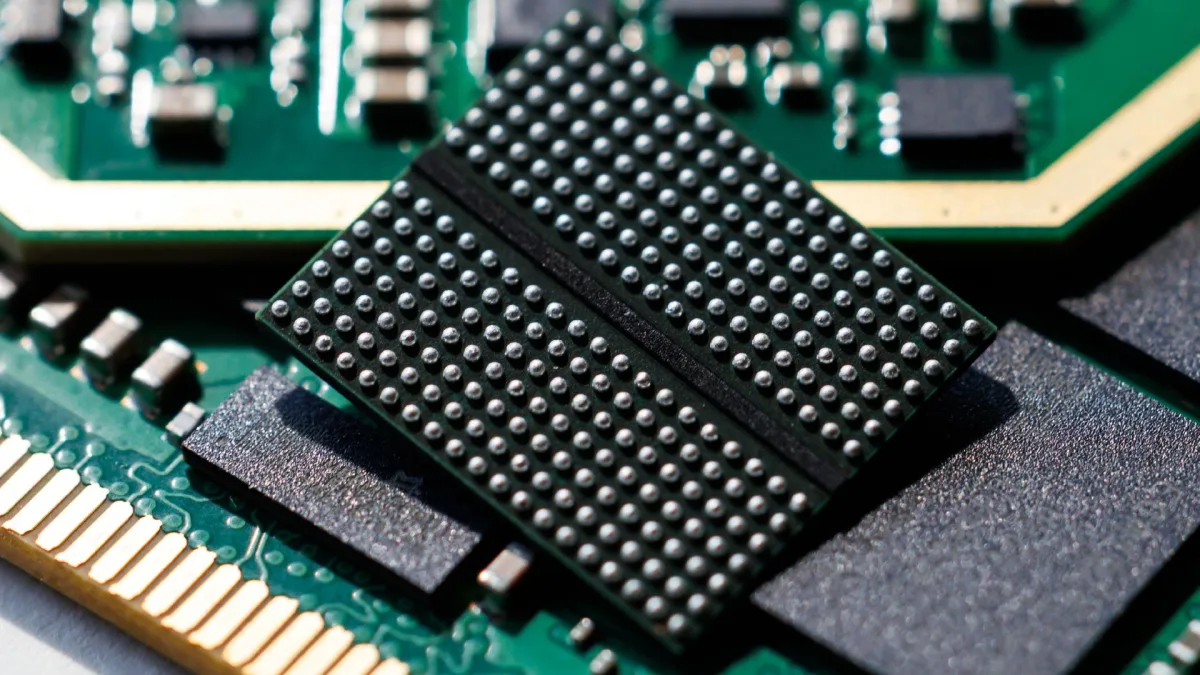
The modest memory chips that enable routers to function occupy a vastly different market segment from the graphics processors commanding billions in investment and reshaping equity valuations. These components are small, have historically been inexpensive, and rely on mature manufacturing processes. Yet the AI-driven semiconductor boom is pushing their prices upward at an unprecedented pace.
While industry focus has centered on high-end processors, older memory technologies are experiencing equally significant disruption. High-bandwidth memory serves AI accelerators, while DRAM and large-capacity NAND feed expanding data center operations. According to a June report from Morgan Stanley, memory prices have climbed more than sixfold in the past year, reversing a decades-long trend of declining costs as production volumes increased.
The supply pressure extends beyond cutting-edge memory types into legacy architectures, particularly NOR flash and single-level cell NAND. Morgan Stanley projects NOR flash will remain undersupplied through 2026, while JPMorgan has cautioned that its forecasts may underestimate potential SLC NAND shortages. Market data reflects this strain: TrendForce reports contract prices for both NOR flash and SLC NAND surged more than 100% during the first half of 2026, with SLC NAND expected to climb an additional 120% to 170% in the second half of the year relative to the first half.
Picking winners
The price escalation carries real consequences for consumer and industrial technology. NOR flash stores boot and program code in automotive, industrial, and networking devices. SLC NAND appears in embedded systems requiring long operational lifespans because of its reliability and durability characteristics.
Both memory types are critical infrastructure, yet both are being deprioritized in favor of higher-margin semiconductors, creating scarcity in products that previously faced no supply challenges. "The SLC NAND market is probably under a billion dollars a year," said Jim Handy, a semiconductor and SSD analyst at Objective Analysis. This modest market size discourages new capital investment to expand capacity.
"What you've got going on is a purely economic phenomenon," said Handy. Hyperscalers and cloud providers are "all trying to outspend each other", directing unprecedented capital toward semiconductor manufacturing for AI infrastructure. This spending power ensures the most profitable customers receive priority allocation.
Nvidia, Broadcom, and Marvell require massive semiconductor manufacturing capacity for AI-destined chips. "They're sucking up all of the wafers," says Handy. "And then the companies who make NOR flash and SLC are having a hard time getting wafers to build their product, and so they have to raise prices."
The situation intensifies in the NAND sector. Bryan Ao, research manager at TrendForce, explained that major NAND manufacturers including Micron, Kioxia, and SK Hynix are reducing wafer allocations to SLC production because newer NAND technologies generate substantially higher revenue. Ao estimates a 12-inch wafer devoted to mainstream NAND generates approximately $20,000 in revenue, while the same wafer producing SLC yields only $6,000 to $8,000.
Smaller SLC suppliers in China and Taiwan cannot easily launch new production lines. Equipment lead times for semiconductor manufacturing have extended to 12 to 15 months, according to Ao. The outcome is what he characterizes as "severe undersupply".
Big prices, big returns
BNP Paribas forecasts average NAND prices will reach $279.50 per terabyte during 2026, compared with $73.10 in 2025. JPMorgan anticipates the memory shortage will persist for at least two additional years, with customers receiving only 70% to 80% of requested orders. TrendForce notes manufacturers are shifting capacity toward advanced, higher-value memory products, leaving mature processes increasingly constrained.
Some alternatives exist. Kioxia positions its serial SLC NAND as a substitute for NOR flash. However, transitioning existing industrial or networking products to different chips demands engineering effort and qualification procedures. Memory manufacturers lack incentive to resolve the shortage through new SLC capacity investment—building factories for a market segment that may eventually disappear makes poor business sense. This creates a paradox: insufficient demand to justify new facilities, yet demand exceeding available supply.
Hardware manufacturers face a choice: absorb higher component costs and accept reduced margins, or transfer expenses to consumers. "We'll just have to either have lower margins, or we'll have to raise the prices to the consumer," Handy said.
An ongoing issue
The shortage appears to lack near-term resolution. Ao expects memory prices to remain elevated over the next five years and does not anticipate a return to 2023 or 2024 price levels. TrendForce's analysis supports this outlook, noting the absence of significant capacity expansion plans for NOR flash or SLC NAND.
Handy identifies one potential exit, though it offers little comfort. "As long as the race between the hyperscalers keeps up to spend, then it will continue to be an issue," he said.
Handy draws parallels to the internet infrastructure expansion of the late 1990s. Rather than capacity eventually arriving to restore equilibrium, he believes spending may simply exceed what the market can economically sustain.
"I'm expecting the same kind of a thing to happen here that we've got too many people spending too much money on AI, and not really making any return on it yet," he said.
Until conditions shift, the least glamorous memory chips in computing systems may become among the most difficult to obtain. As Ao summarized: "Pretty much we have to get used to this high price, no matter which segment of memory."