Intel's Nova Lake Release Timeline Takes Shape as Leaks Accelerate
A surge in hardware leaks and shipping manifests suggests Intel's long-awaited Nova Lake processors are approaching launch, with evidence pointing toward a late 2026 debut rather than early 2027.
Rumors surrounding Intel's Nova Lake processors have dominated industry conversation for nearly two years, but recent weeks have brought an unprecedented wave of concrete details. Multiple leaks involving motherboards, shipping records, and platform specifications indicate that Intel is preparing to release a generation that has captured the technology sector's attention since its initial announcement.
Intel leadership has been relatively forthcoming about Nova Lake's importance. Robert Hallock, Intel's enthusiast channel vice president, characterized it to Tom's Hardware Premium as "one of the most important launches for the company ever." At the start of 2026, Intel CEO Lip-Bu Tan publicly stated that Nova Lake would arrive in the second half of 2026, establishing a timeline that the company has maintained despite persistent speculation about potential delays.
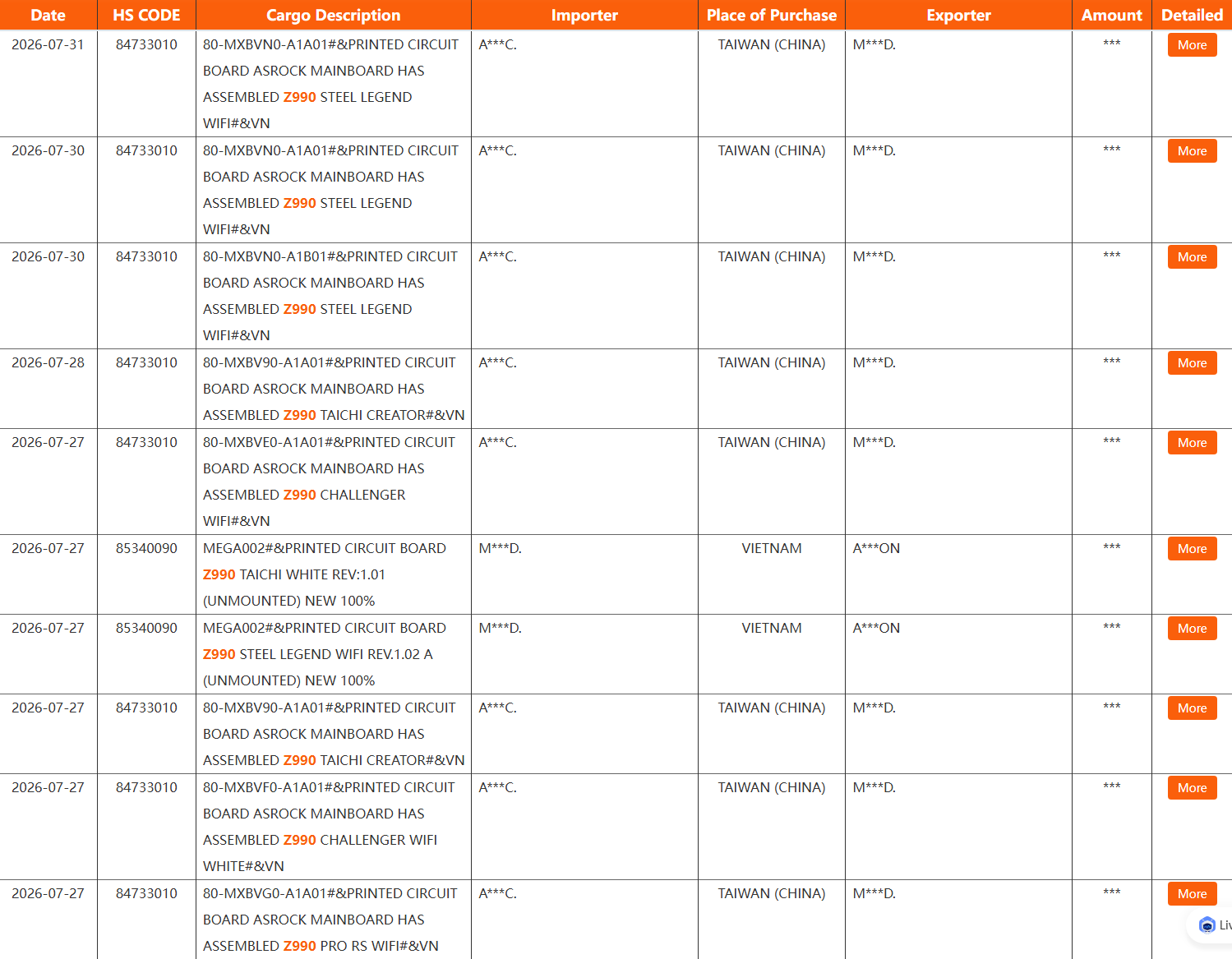
The recent surge in leaks encompasses several categories of evidence. A leaked slide containing high-level information about Nova Lake's launch schedule and platform specifications appeared online, likely originating from one of Intel's manufacturing or distribution partners rather than Intel itself. Simultaneously, shipping databases revealed multiple Z990 motherboards from ASRock entering distribution channels, while SiSoftware entries documented a next-generation HP EliteBook X equipped with an unidentified Intel processor. Physical sightings of Z990 motherboards at Computex earlier this year, combined with photographic documentation circulating online, add further weight to the growing body of evidence.
The convergence of these disparate data points—leaked slides, shipping manifests, database entries, and physical prototypes—typically signals an imminent product launch. While Nova Lake has been a subject of industry discussion for over two years, the current wave of leaks represents substantially more concrete information than previous rumors. The launch is approaching, though Intel has not yet provided official specifications or performance details.
Intel's desktop CPU release patterns
Establishing a plausible timeline requires examining Intel's historical release cadence, particularly since the Alder Lake generation marked the company's transition away from the 14-nanometer process node that had defined multiple product cycles.
Over the past five years, Intel has maintained a consistent pattern of releasing new desktop processor generations annually in the fall season, with 2025 representing a notable exception to this rhythm. Earlier in Intel's history, the pace was even more aggressive: both 7th-Generation and 8th-Generation processors launched in 2017, followed by 9th-Generation in 2018. The company then paused for a year before releasing 10th-Generation in 2020 and 11th-Generation in early 2021. These timelines refer specifically to desktop CPU launches featuring new microarchitectures; Intel has released numerous other products during the intervals between major generational updates.
The most recent chapter of this timeline reveals significant organizational changes at Intel. Arrow Lake Refresh, which arrived after Arrow Lake, was developed by what Hallock described as a "pretty much completely different" team compared to the original Arrow Lake group. This organizational shift may account for the unusually extended gap between the two generations. The market positioning of Arrow Lake Refresh differs noticeably from Arrow Lake when examining their respective product stacks side by side, suggesting different strategic thinking informed their development.
Hallock indicated that the restructured team is "moving faster than we ever have in product, in release cadence." While this statement likely contains some degree of hyperbole, it reflects Intel's broader strategic shift. Following Arrow Lake's lukewarm reception, Intel reorganized its product divisions and established a new roadmap extending through 2030. Execution of this roadmap began earlier in 2026 with Arrow Lake Refresh, which functions as an interim offering comparable to 11th-Generation Rocket Lake—a stopgap before the next major generation arrives.
Motherboard timelines and supply chain signals
Physical evidence from the supply chain provides crucial timing indicators. During Computex in June, two Z990 motherboards were observed, with one confirmed to be a non-finalized prototype. Motherboard development typically requires four to six months for the complete engineering process, with an additional two months for channel distribution as printed circuit board pallets traverse shipping routes across the Pacific Ocean.
A shipping manifest that emerged this week documented ASRock shipments beginning in July, originating from two distinct manufacturing locations: Taiwan and Vietnam. The presence of multiple sourcing points, combined with the timeline observed at Computex, indicates that motherboard development has progressed well beyond the early prototype and engineering validation phases. Assuming normal development schedules, Z990 motherboards should be available for retail purchase by October or November at the latest.
It is important to note that motherboard availability does not necessarily coincide with processor launch timing. However, this projection aligns with guidance provided by motherboard manufacturers earlier in 2026, with some vendors indicating Q3 readiness and the majority targeting Q4 for Z990 availability.
Evaluating competing launch scenarios
The industry currently divides into two camps regarding Nova Lake's arrival. One faction anticipates a Q4 2026 launch, while another projects a January 2027 debut coinciding with CES. Based on available evidence, a late 2026 release appears substantially more probable.
The strongest supporting evidence derives from Tan's prepared remarks during Intel's earnings call earlier this year, where he stated that Nova Lake is "coming at the end of 2026." The context matters significantly: prepared remarks preceding financial disclosures carry different weight than spontaneous comments. While executives routinely employ careful language during earnings calls, this particular statement contains no hedging qualifiers or ambiguous phrasing. It represents a direct commitment. Additionally, Intel's fiscal year aligns with the calendar year, so Tan's reference to "end of 2026" carries unambiguous meaning regardless of fiscal or calendar interpretation.
Circumstances could have shifted between January and the present, yet the supply chain evidence remains consistent with a late 2026 timeline. The various motherboard sightings between June and July of this year support this projection. At this stage, Intel retains limited flexibility to adjust the actual release date; retailers will not indefinitely warehouse motherboard inventory awaiting a processor launch.
A leaked slide claiming Nova Lake will enter mass production in Q4 with a Q1 2027 launch introduces a complicating factor. However, substantial reasons exist to question this slide's reliability. The specifications it documents—a 52-core flagship, up to 288MB of bLLC cache, LGA 1954 socket, and multi-generation socket compatibility—have circulated as rumors for months or years. More problematically, the slide references Hammer Lake, a generation about which very little credible information has emerged. Industry speculation has placed Hammer Lake in the 2029 or 2030 timeframe, if it exists at all. Hammer Lake would be an unexpected successor to Razor Lake, the generation rumored to follow Nova Lake, and its appearance on a slide labeled "Q4 2027+" raises questions.
The slide's authenticity appears genuine, but critical context is missing. Its origin—whether from an original equipment manufacturer, distributor, or retailer—substantially affects its credibility. Furthermore, only a portion of a single slide is visible; insufficient context exists to treat this document as definitive evidence.
Weighed against Tan's prepared earnings remarks, the physical motherboards observed and handled at Computex, photographic evidence circulating online, and strong indications from Intel's motherboard partners regarding Q4 readiness, a Q4 2026 Nova Lake launch appears far more probable. Intel's decision to skip 2025 entirely for new desktop processor launches, breaking its traditional fall release cadence, further supports this projection.
Probability remains distinct from confirmation. Official details from Intel regarding Nova Lake specifications and performance characteristics have not yet materialized. Given the considerable anticipation Intel has cultivated around Nova Lake without sharing a single performance claim or technical specification, substantial discussion will follow once the company finally provides formal details.