Okta pushes industry toward unified security standards for autonomous AI systems
As AI agents proliferate across enterprise platforms, Okta and peers argue that isolated vendor controls won't suffice—the industry must coordinate on shared safeguards to keep autonomous systems trustworthy.
Securing autonomous AI agents is no longer a single-vendor problem. As these systems operate across multiple products and platforms, Okta Inc. contends that the technology industry must adopt coordinated security measures rather than relying on each company's independent protections.
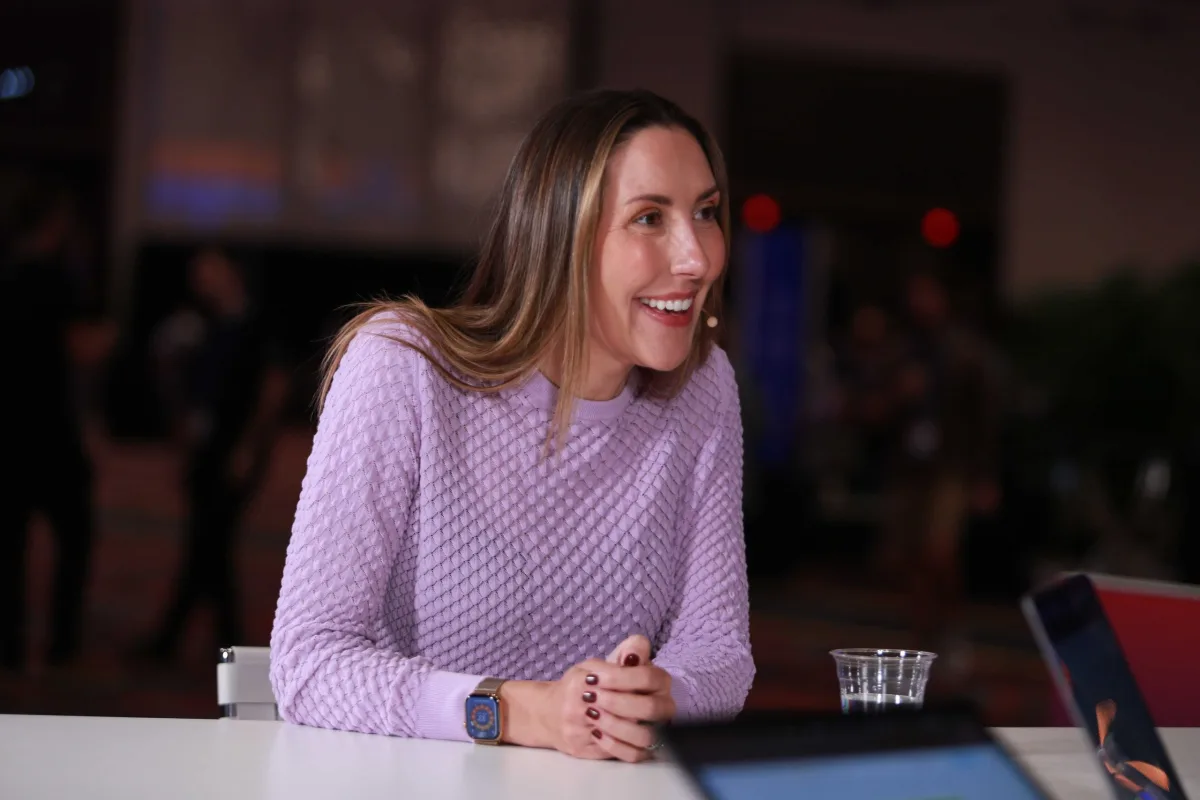
The challenge reaches beyond the boundaries of traditional enterprise security, according to Charlotte Wylie, senior vice president and deputy chief security officer at Okta. She emphasized that the industry must communicate its approach to audiences far wider than security professionals and conference attendees.
I'm hoping that some of the messaging that we've got out there … about how we're steering into this bleeds well beyond the conference and well beyond the attendees here. Hopefully, they're going back to their families and saying, 'Hey, I know how we're going to do this now.'
Charlotte Wylie, Okta
Wylie made these remarks during an exclusive interview at Okta's Oktane event, speaking with theCUBE Research's Krista Case and co-host Rebecca Knight. The conversation centered on cross-industry cooperation, agentic AI security and governance mechanisms for autonomous systems.
Blueprint Alliance connects security across platforms
The Blueprint Alliance unites Okta with founding members Amazon Web Services Inc., CrowdStrike Holdings Inc., Salesforce Inc. and ServiceNow Inc. The alliance's goal is to ensure that security controls and risk signals function seamlessly across agentic systems.
Rather than trying to solve that problem alone, there is a recognition that we have to galvanize as an industry to solve this problem for our customers at a speed that they are scrambling to run after. We want to make sure that we provide an architecture, a referenceable position [for] how to use the technology that we all offer in a way that we can secure the entire agentic stack.
Charlotte Wylie, Okta
The framework requires three core elements: each agent must have a distinct identity, its permissions must be restricted to necessary functions, and its actions must be continuously monitored. These three layers work together to enable organizations to identify when an agent strays from its intended behavior.
https://www.youtube.com/embed/iDWYaRTpwho?feature=oembed
When you can scope the right permissions for an agent and you can govern those permissions effectively with products like Okta for AI Agents and you have the right visibility of how they are performing those actions … you can stop that rogue agent in its tracks. This is, I think, how we're trying to solve for that idea [of] how do you trust an agent in a way that you can use it effectively.
Charlotte Wylie, Okta