VMware Exit Hinges on Data Layer, Not Just VM Migration
Companies ditching legacy hypervisors discover that relocating virtual machines represents only the starting point; success depends on a unified data management platform that spans containers and VMs alike.
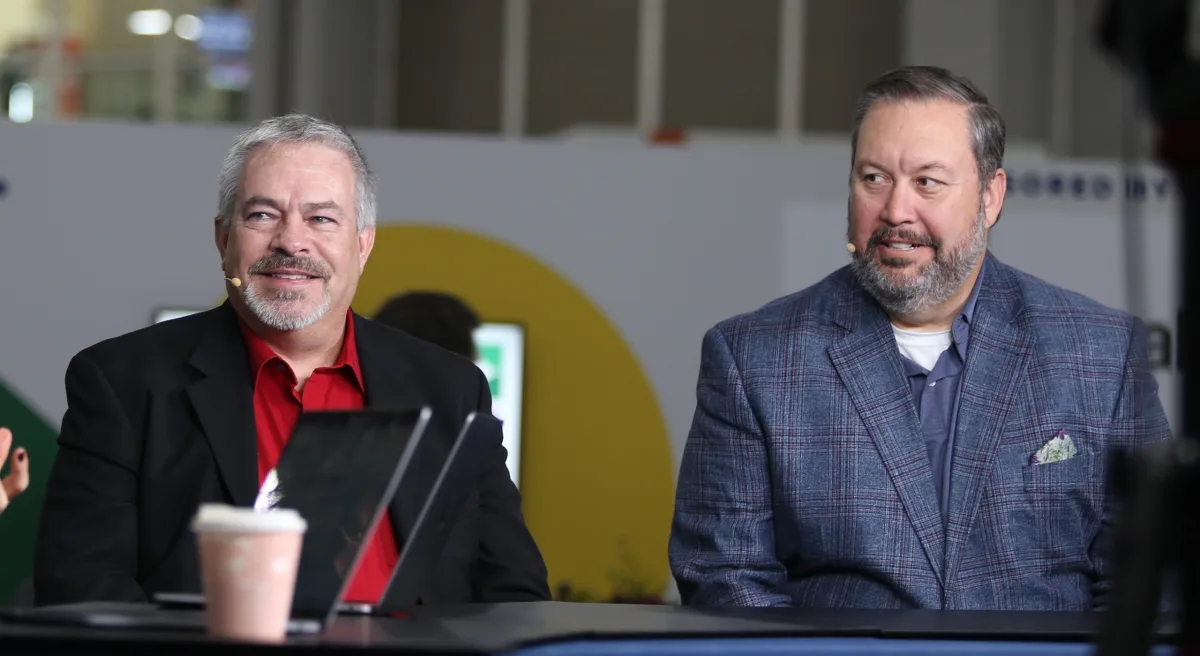
Organizations abandoning traditional hypervisors face a harder challenge than simply transferring their virtual machines. The real determinant of whether a shift to Kubernetes succeeds lies in deploying a portable data management layer that can handle both containerized and virtualized workloads. Mounting expenses tied to licensing fees are motivating teams to consolidate containers and VMs onto a single infrastructure.
Mouser Electronics Inc., a major global distributor of electronic components, exemplifies this transition. The company has operated Red Hat Inc.'s OpenShift container platform for roughly five to six years and is now constructing a production OpenShift Virtualization environment to transition workloads away from Broadcom Inc.'s VMware infrastructure, according to Ronald Waller, a systems engineer at Mouser.
It doesn't matter if we're running containers or VMs, we're running it on the same foundation, which really works well. Because we can manage those things with the same tool sets and same skill sets.
Ronald Waller, systems engineer at Mouser
A data management layer for VMs and containers
Kubernetes has emerged as a standard control plane for containerized AI applications, and extending it to encompass VMs brings the same standardization to legacy systems. Everpure Inc., which underwent a rebranding from Pure Storage Inc. this year as part of a shift toward data-focused solutions, positions Portworx as the corresponding abstraction layer for storage infrastructure.
Kubernetes provides that ubiquitous control plane for all of them, and that's what customers are asking us for. The one thing that was missing was the same thing but for data.
Jon Owings, assistant vice president of global technical presales, cloud and data services, at Portworx by Everpure
The transition from VMware administration to Kubernetes demands substantial learning, a path Waller has navigated over the past year. When constructing Mouser's proof-of-concept cluster, storage proved surprisingly straightforward to implement.
I asked the storage guy what I needed from him, and he handed me a user ID and an API key. I went to Portworx Central. I configured my spec for the operator and the storage cluster, created my secret, and boom, Portworx Enterprise did everything else on the backend. I didn't even have to think about it.
Ronald Waller
Portworx continues expanding its capabilities for this scenario. The company integrated data management natively into OpenShift in May and introduced fresh AI and VM functionalities at KubeCon. For organizations pursuing Mouser's strategy, the departure from legacy hypervisors represents an opportunity to redesign operational practices using a data management layer that functions consistently across multiple cloud environments and Kubernetes distributions.
https://www.youtube.com/embed/FAEGk8G0wec?feature=oembed
What can we change that we didn't like about the last 15 years? … Were we dependent on a vendor? Were we dependent on shell scripts or PowerShell? We have this great opportunity to do something new, and Kubernetes has that open API that allows you to be creative.
Jon Owings