Nvidia's board explores Arm CEO Rene Haas as potential successor to Jensen Huang
Nvidia's board has approached Arm chief executive Rene Haas as a candidate to replace Jensen Huang, according to the Financial Times, though it remains uncertain whether he will receive a formal offer.
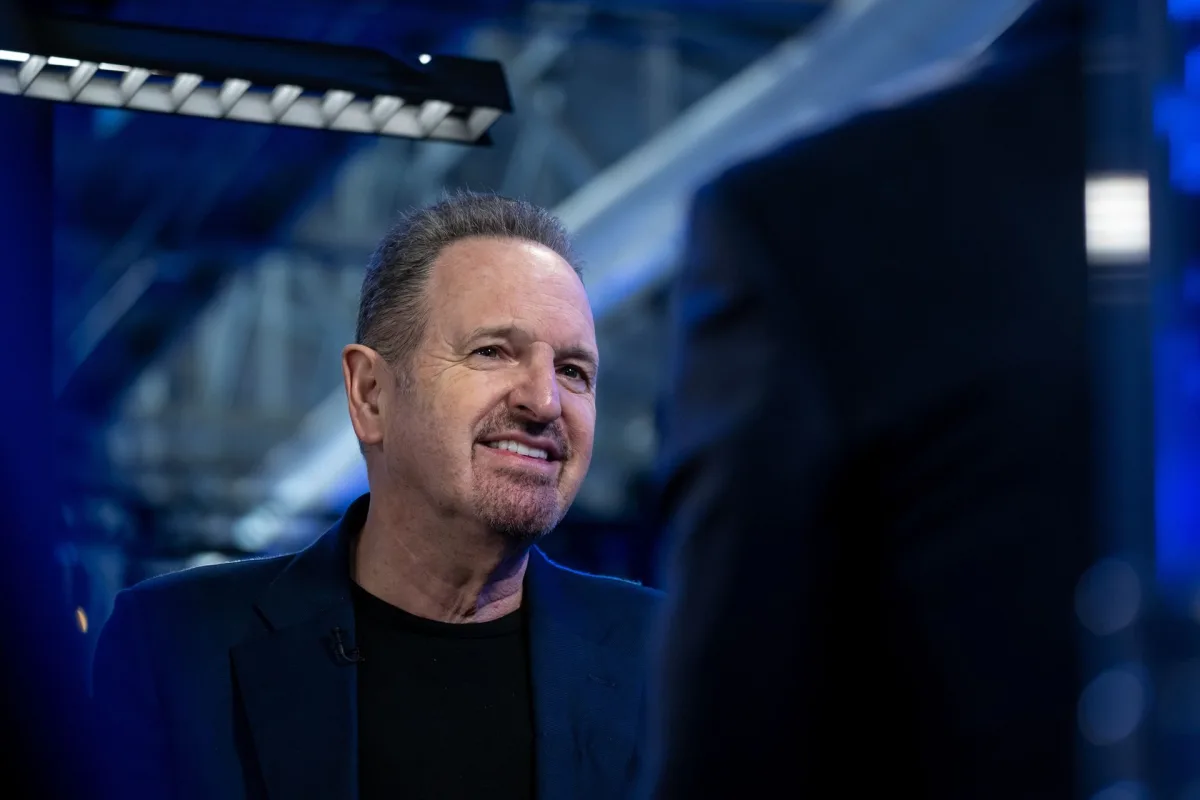
Nvidia's board of directors has reached out to Rene Haas, who leads Arm, as a possible contender to succeed Jensen Huang in the chief executive role, according to reporting by the Financial Times citing sources with knowledge of the matter. Haas stands among multiple candidates being evaluated, though whether he will be formally offered the position or accept it remains unresolved.
The hunt for Nvidia's next chief executive follows Jensen Huang's recent exit from the role. Colette Kress, Nvidia's chief financial officer, is currently serving as interim CEO while the board pursues both internal and external candidates for a permanent successor. Arm and Nvidia declined to comment to the Financial Times on the matter.
Haas brings substantial familiarity with Nvidia from his seven-year tenure there before departing in 2013. During his time as vice president, he oversaw work on notebook GPUs, Windows-on-Arm, and Tegra system-on-chips. His background in senior management roles at Nvidia means he understands the company's operational practices, internal culture, and established relationships across the industry.
His professional background encompasses both consumer and data center CPU and GPU development, along with GPU intellectual property—an uncommon skill set in the sector. Haas maintains ongoing relationships with Jensen Huang and several Nvidia board members, potentially making him an appealing choice for a corporation whose strategic direction and leadership have been centered on its founder for over thirty years.
At Arm, Haas has shown a capacity for implementing major strategic shifts since assuming leadership in 2022. The company has rolled out its Compute Subsystems initiative, which delivers complete and validated processor platform designs to simplify market entry for new participants. Arm has also launched its own branded AGI CPU, positioning itself in direct competition with several longtime customers. These moves represent substantial breaks from Arm's conventional approach, yet they signal Haas' comfort pursuing fresh revenue streams despite inherent risks and potential strain on longstanding partnerships.
Haas possesses deep knowledge of the semiconductor landscape broadly. Arm's CPU and GPU technologies power system-on-chips manufactured by hundreds of organizations with varying needs, spanning Nvidia itself, Apple, Qualcomm, and MediaTek, among others. His experience also includes steering Arm through its 2023 initial public offering, giving him exposure to investor and regulatory dynamics. Additionally, Haas serves as CEO of SoftBank, Arm's parent company.
Still, Haas' potential appointment would face real obstacles. Most significantly, he has not previously led an organization as large as Nvidia. Arm operates with roughly 10,000 employees globally and concentrates on developing and licensing semiconductor intellectual property, chiefly CPU and GPU technologies, to a varied customer base. Nvidia, by contrast, manufactures CPUs, GPUs, networking hardware, complete AI systems, and software platforms, employing approximately 42,000 people. Should Haas take the helm at Nvidia, he would oversee a substantially larger workforce managing a far more intricate product range and supply chain. Additionally, succeeding Huang—who has directed Nvidia since its founding in 1993 and personally molded its technological trajectory and business approach—represents an enormous challenge for virtually any executive.
An ironic element would emerge should Haas' appointment materialize: Nvidia would then be led by the chief executive of the company it sought to purchase in 2020 and ultimately abandoned the acquisition of in 2022 following regulatory hurdles.