Micron Signals Memory Price Increases Amid AI and Data Center Boom
Micron is raising prices for DRAM and NAND flash memory, with increases expected to extend through 2025 and 2026 as artificial intelligence and data center demand intensifies.
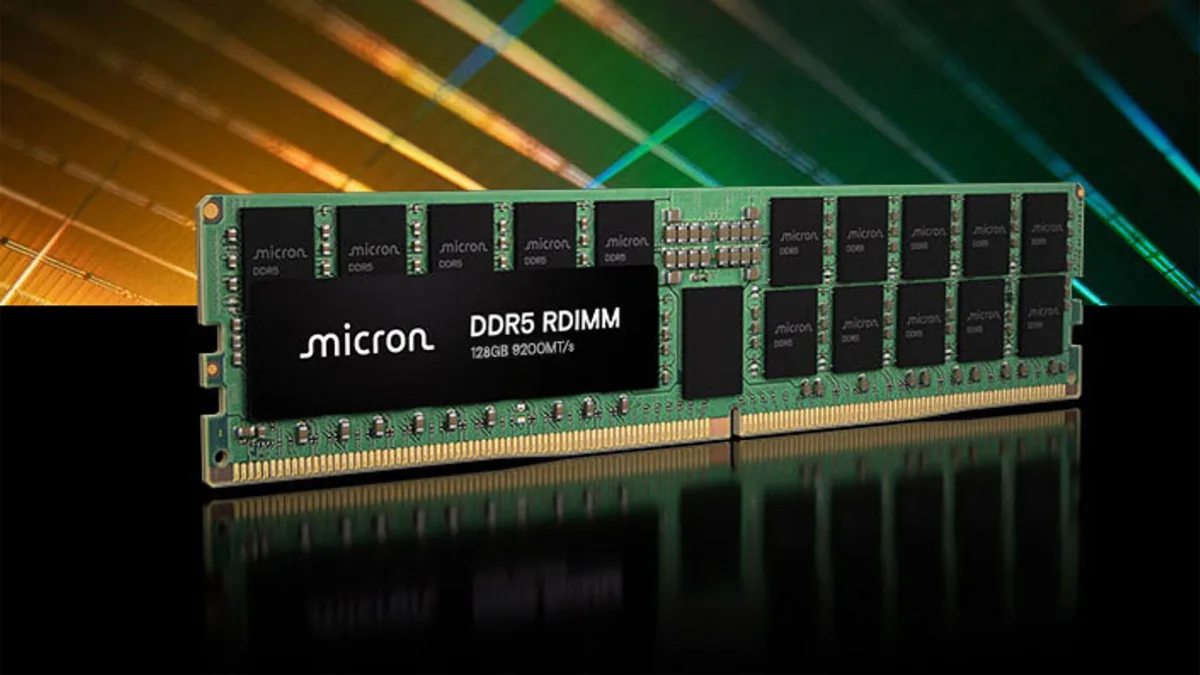
The price hike may prompt other manufacturers to follow suit
Micron announced plans to increase memory prices, pointing to robust demand for DRAM and NAND flash moving forward. According to the company's latest guidance, pricing will climb throughout 2025 and 2026, driven by constrained supplies and surging demand from artificial intelligence, data center operations, and consumer device makers.
The increase represents a shift for the memory sector, which has been recovering from an earlier glut of inventory and revenue declines. During the past twelve months, both DRAM and NAND flash have seen steady price recovery as major producers cut output and demand for high-performance systems and AI applications has accelerated. With Micron now committing to price increases, competitors including Samsung and SK Hynix are anticipated to make similar moves, cementing the upward trajectory in the market.
In communications with channel partners, Micron attributed the adjustment to "un-forecasted demand across various business segments." The company emphasized rising interest in AI-driven solutions and the importance of keeping its product lineup competitive as reasons for the pricing shift. Micron also urged partners to share longer-term demand projections to help stabilize supply availability in the years to come.
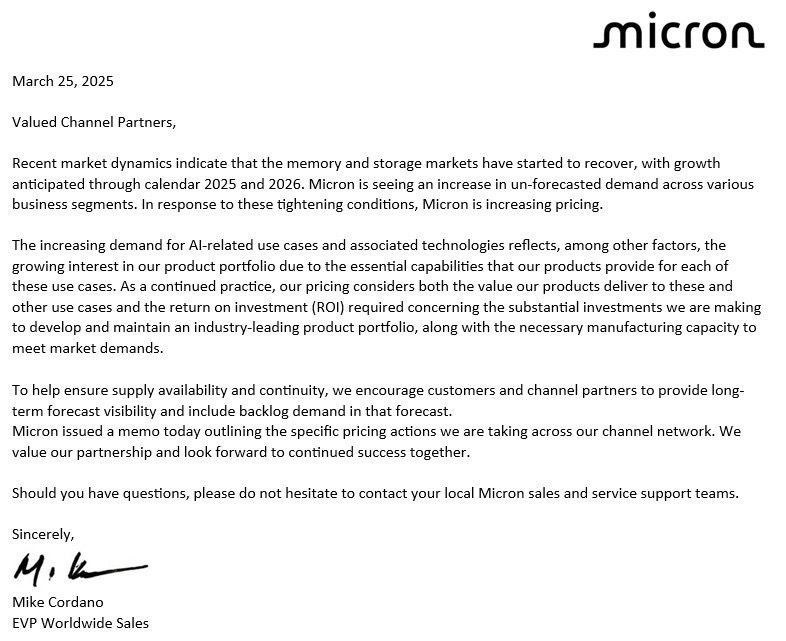
The consumer electronics sector is anticipated to experience renewed momentum as well, with manufacturers of personal computers and mobile devices stepping up purchases of DRAM and NAND flash. Device makers preparing for product introductions in the latter half of 2025 and into 2026 are expected to maintain elevated memory demand, lending further support to Micron's pricing strategy.
As Micron establishes this new pricing direction, attention turns to how rivals and customers will adapt. Should demand hold steady, the memory industry could experience sustained price growth, affecting everything from gaming systems to large-scale data center infrastructure over the coming years.
Source: Tom's Hardware