Memory Capacity Drops for First Time as AI Demand Drives DRAM Prices Higher
CPU-Z data shows a significant contraction in high-capacity RAM configurations, with 64GB systems falling 18% year-over-year as artificial intelligence workloads strain the global memory supply.
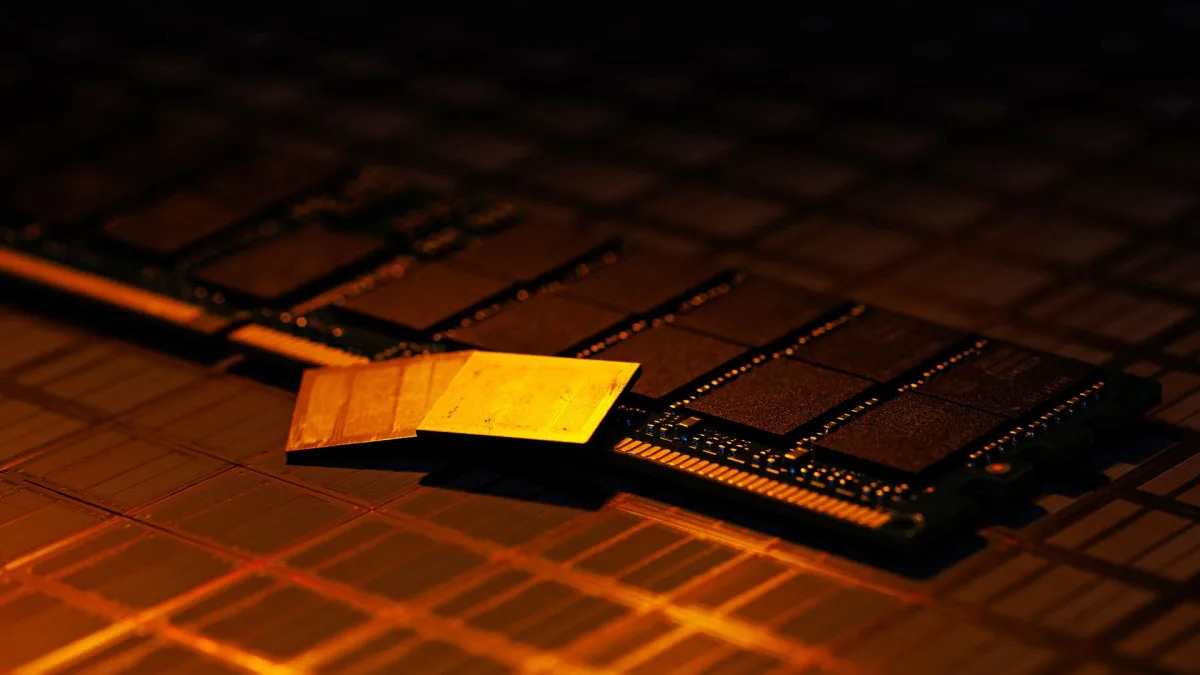
A fresh survey from CPU-Z reveals an unprecedented shift in personal computer memory adoption patterns. For the first time in the tracking program's history, the prevalence of higher-capacity RAM installations has declined, with 32GB and 64GB setups dropping 2.5% and 18% respectively on a year-over-year basis. The culprit behind this reversal is straightforward: the artificial intelligence boom has created intense competition for DRAM supplies worldwide, sending prices for premium memory modules—across both DDR4 and DDR5 standards—to record levels.
CPU-Z functions as a free diagnostic utility that inventories the hardware components within individual machines. The program's dataset reflects only systems where the software actively runs, meaning it captures a snapshot of the user base rather than retail transaction volumes. Consequently, these figures should not be interpreted as market sales data, but rather as a representation of the installed base among CPU-Z's active user community.
The memory landscape has evolved considerably over recent years. Among CPU-Z users, 32GB installations dominate with 37.2% market share, trailed closely by 16GB configurations at 33%. This distribution reflects the growing computational demands of contemporary software and gaming titles. The 16GB tier has long served as an entry point for mainstream computing, while 32GB has emerged as the preferred capacity for a broad spectrum of users, from enthusiasts to casual gamers.
At the lower end of the spectrum, 8GB systems have experienced persistent erosion, now representing just 11% of surveyed machines. These configurations have become increasingly scarce, appearing mainly in older hardware, basic productivity workstations, or extremely cost-constrained builds where performance compromises are acceptable. Meanwhile, premium tiers including 64GB and 24GB remain niche, accounting for 7.3% and 2.3% of the user base respectively.
Fresh stats from CPU-Z! 🔎For the first time ever, RAM capacity on PCs has declined year-over-year : -2.5% for 32 GB and -18% for 64 GB!
CPU-Z developer, November 6, 2026
The downturn in premium memory tiers marks a watershed moment for CPU-Z's historical records. The 32GB segment contracted by 2.5% annually, while 64GB plummeted 18%—a sharp decline attributable to the escalating cost of high-capacity memory modules, which has prompted consumers to reassess the value proposition of larger configurations.
As per-gigabyte pricing climbs, purchasers are gravitating toward more economical capacity options. Lower-tier memory has staged a modest resurgence in response. The 16GB configuration, long viewed as a practical minimum, rebounded 12.9% year-over-year. Similarly, 8GB kits, which had been in sustained decline, grew 5.5%. The 24GB tier has emerged as an attractive middle ground, posting a 19.7% increase as consumers seek additional capacity beyond 16GB without committing to premium 32GB pricing.
DDR4 Dominance Persists Amid Adoption Shift
The current split between DDR4 and DDR5 memory technologies underscores the continued prevalence of the older standard. DDR4 maintains commanding presence at 54.5% of CPU-Z's tracked systems, while DDR5—despite its status as the latest generation—remains in early-stage adoption at 32.9%. DDR4's decade-long tenure as the industry standard means the transition will require substantial time.
Recent movement in the data suggests price sensitivity is reshaping platform preferences. DDR4 grew 6% while DDR5 declined 2.9%, indicating cost-conscious builders are favoring systems that continue supporting DDR4, particularly AMD's Zen 3-based Ryzen 5000 processors (internally designated Vermeer) and Intel's 13th Generation Raptor Lake lineup. CPU-Z processor statistics document significant gains among Zen 3 chips, with the Ryzen 7 5700X, Ryzen 5 5600, and Ryzen 5 5500 each posting increases of 42.8%, 36.1%, and 67.3% respectively.
Despite price increases affecting both memory standards, DDR4 retains a cost advantage. Industry participants are reinforcing this trajectory through strategic moves: AMD has revived the Ryzen 7 5800X3D, manufacturers have resumed DDR4 and DDR4 motherboard production, and Intel is preparing refreshed Raptor Lake Next variants scheduled for 2027 release.