Mac Studio M5 Ultra versus DGX Spark: The local AI inference showdown at $10K and up
Apple's latest Mac Studio with M5 Ultra delivers impressive performance and efficiency on smaller AI models, but larger models reveal gaps in software maturity compared to Nvidia's clustering-capable platform.
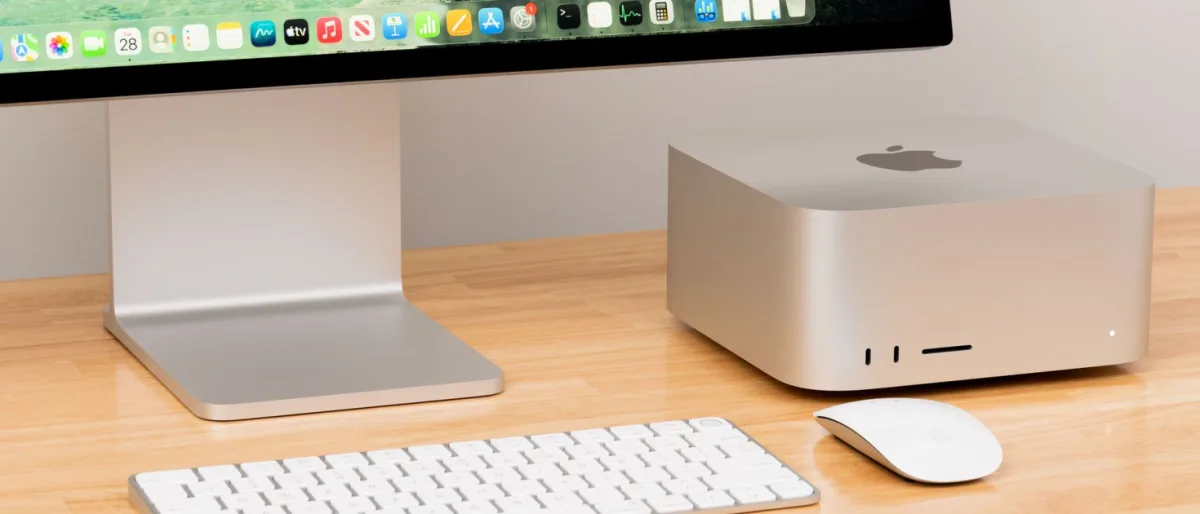
The refreshed Mac Studio featuring Apple's M5 Ultra processor has emerged as a formidable contender in the local AI inference space, equipped with a 36-core CPU, 80-core GPU with Neural Accelerators, and configurations supporting up to 512GB of unified memory. Current shipping delays stretch between 13 to 15 weeks, yet prospective buyers face a critical question: does the $12,300 price tag justify the investment for those building on-premises AI systems?
Testing revealed that earlier benchmarks using the Qwen 3.8 27B model barely tapped the machine's 256GB memory capacity. To fully evaluate the system's capabilities, testing expanded to include larger, state-of-the-art open models such as DeepSeek V4.1 Flash 1017 and GLM 5.3 Flash. Fresh performance data also emerged following evaluation of Microsoft's Surface Laptop Ultra with Nvidia's RTX Spark chip, providing new comparative benchmarks for GPU-based agentic tasks.
Agentic AI performance and power efficiency
Testing began with Artificial Analysis' AgentPerf-Local benchmark, which replays recorded inference traces across various agentic AI workloads. The benchmark emphasizes prompt processing over token generation, favoring systems with substantial raw computational capacity. The M5 Ultra's 80-core GPU substantially exceeds the DGX Spark's 48 Blackwell SMs, while its 1.2 TB/s memory bandwidth provides more than four times the decode bandwidth of the Spark's 273 GB/s. However, raw specifications often diverge significantly from real-world delivered performance in AI applications.
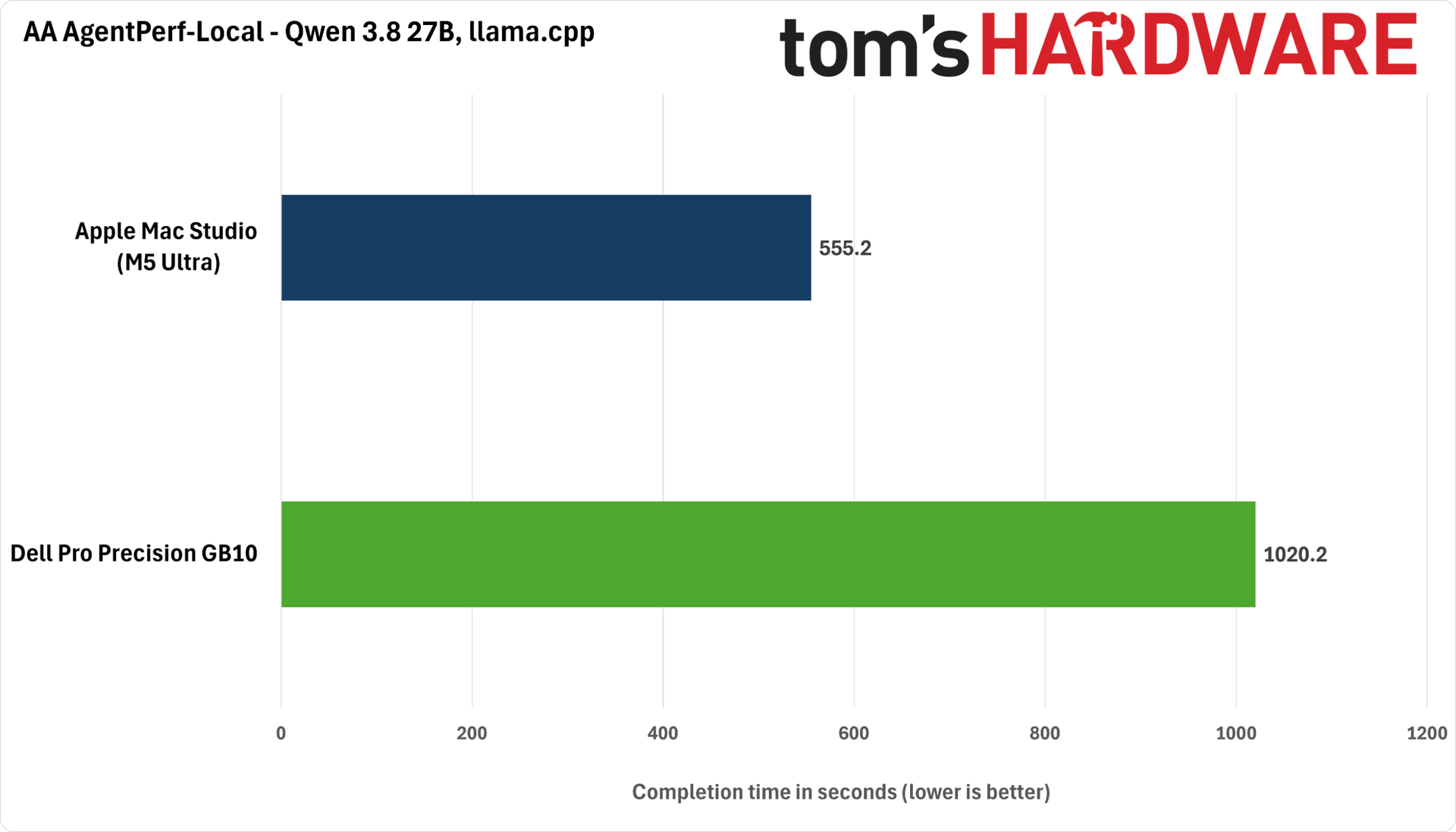
Both systems ran the dense Qwen 3.8 27B model using llama.cpp as the inference backend, with native multi-token prediction enabled for decode acceleration. Against a single DGX Spark-equivalent system, the M5 Ultra Mac Studio completed the agentic test in roughly half the time—a striking outcome. While the computational imbalance between these platforms might suggest an unfair comparison, the economics tell a different story: a Dell Pro Precision GB10 system with 4TB storage now commands approximately $10K, bringing it within striking distance of the Mac Studio's $12K price point.
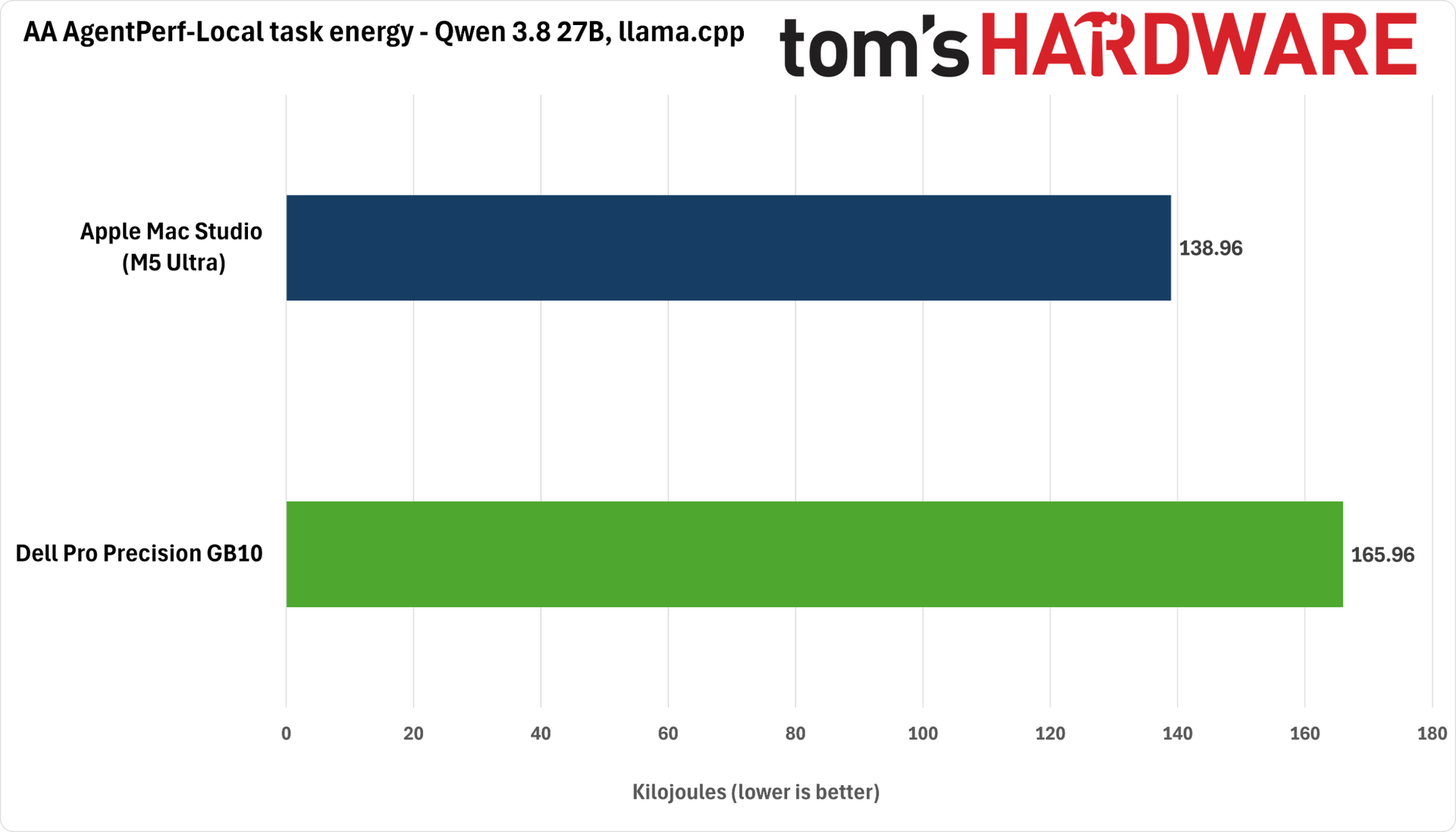
Since AgentPerf-Local executes a fixed workload on each system, direct power efficiency comparisons become possible by measuring wall power consumption and converting results to task energy in kilojoules. The Mac Studio not only finished substantially faster but also consumed roughly 16% less task energy than the DGX Spark when using llama.cpp—a significant advantage favoring Apple's system.
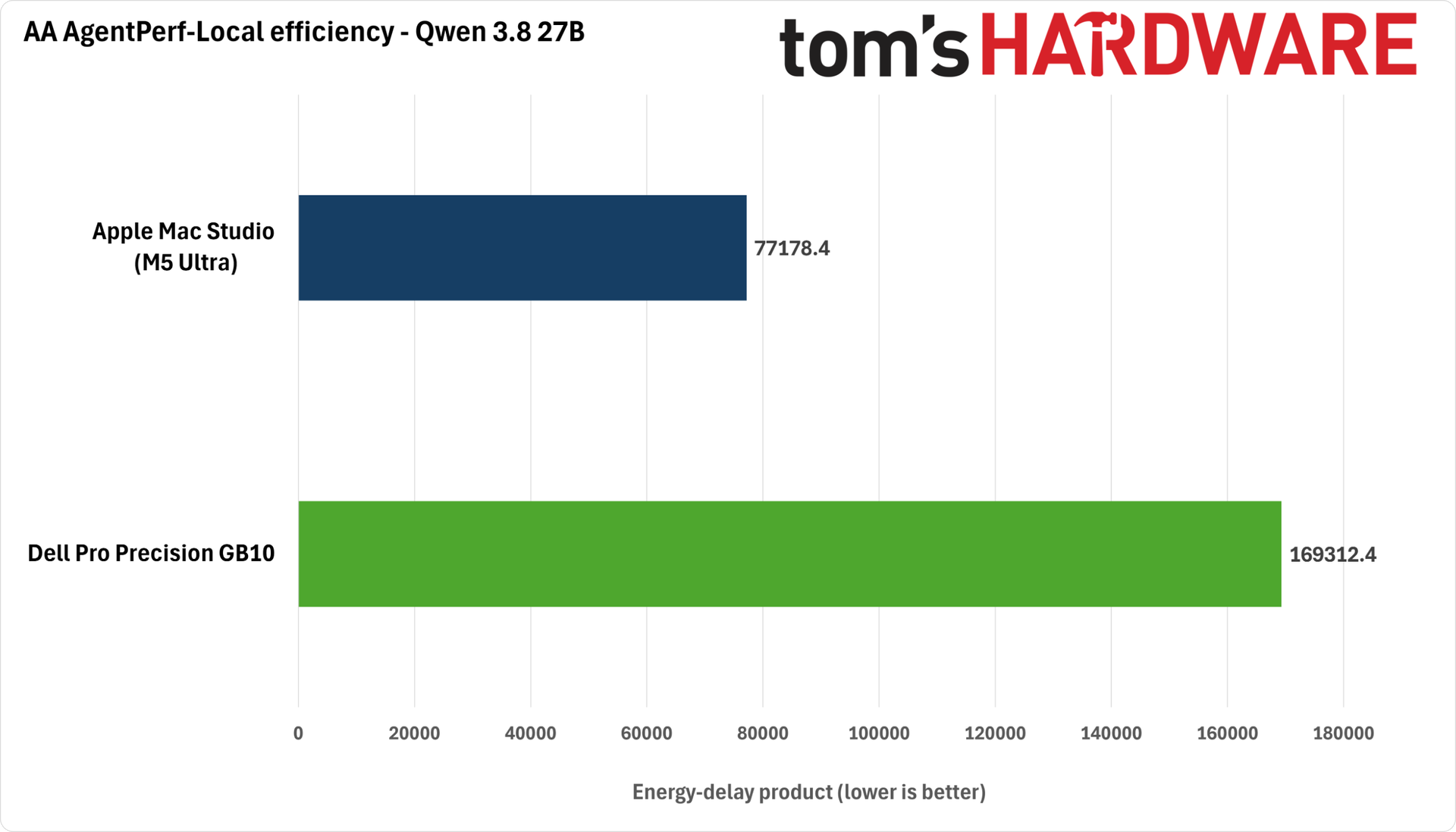
Multiplying task completion time by energy consumed yields the energy-delay product, a unified metric combining speed and efficiency. The Mac Studio's EDP fell below half that of the DGX Spark, reinforcing its impressive efficiency profile with this dense model and workload.
Going big with DeepSeek V4.1 Flash 1017 and GLM 5.3 Flash
The Qwen 3.8 27B model requires far less than the Mac Studio's 256GB capacity. To properly stress-test the system, evaluation shifted to two larger open models ranking among the highest-performing options available: GLM-5.3 Flash and DeepSeek V4.1 Flash 1017. The M5 Ultra can natively accommodate quantized versions of both—four-bit quantization for GLM 5.3 and two-bit quantization via Unsloth for DeepSeek V4.1 Flash—within its 256GB memory. A single 128GB DGX Spark cannot fit even these compressed versions, making Nvidia's clustering capability essential for comparison.
Pricing volatility has complicated the value analysis throughout testing. Lenovo shifted its ThinkStation PGX systems to "coming soon" status during evaluation, while Dell Pro Precision GB10 units reached eye-watering $10K price points. No indication suggests other GB10 systems will cost substantially less once current market turbulence settles. Even a pair of DGX Sparks with 4TB SSDs will exceed the single Mac Studio's cost; realistic pricing for such a cluster ranges from $15K to $20K or more, representing a 25% premium over the M5 Ultra configuration tested.
End-to-end agentic benchmarks for these larger models remain unavailable, though prompt processing and decode performance provide directional insights into which systems would deliver faster agentic response times. The Mac Studio's limited inference engine options force reliance on llama.cpp for DeepSeek V4.1 Flash 1017. Additionally, the system cannot simultaneously hold both the DeepSeek V4.1 Flash 1017 model weights and the DSpark speculative decoding model needed for token output acceleration, even with two-bit quantization, leaving performance on the table.
The DGX Spark cluster, by contrast, leverages DSpark speculative decoding and the TensorFold inference engine, both delivering superior performance compared to llama.cpp. The community two-Spark serving recipe from Mia's AI Lab using TensorFold represents a major advantage for those systems, despite the additional setup and management overhead.
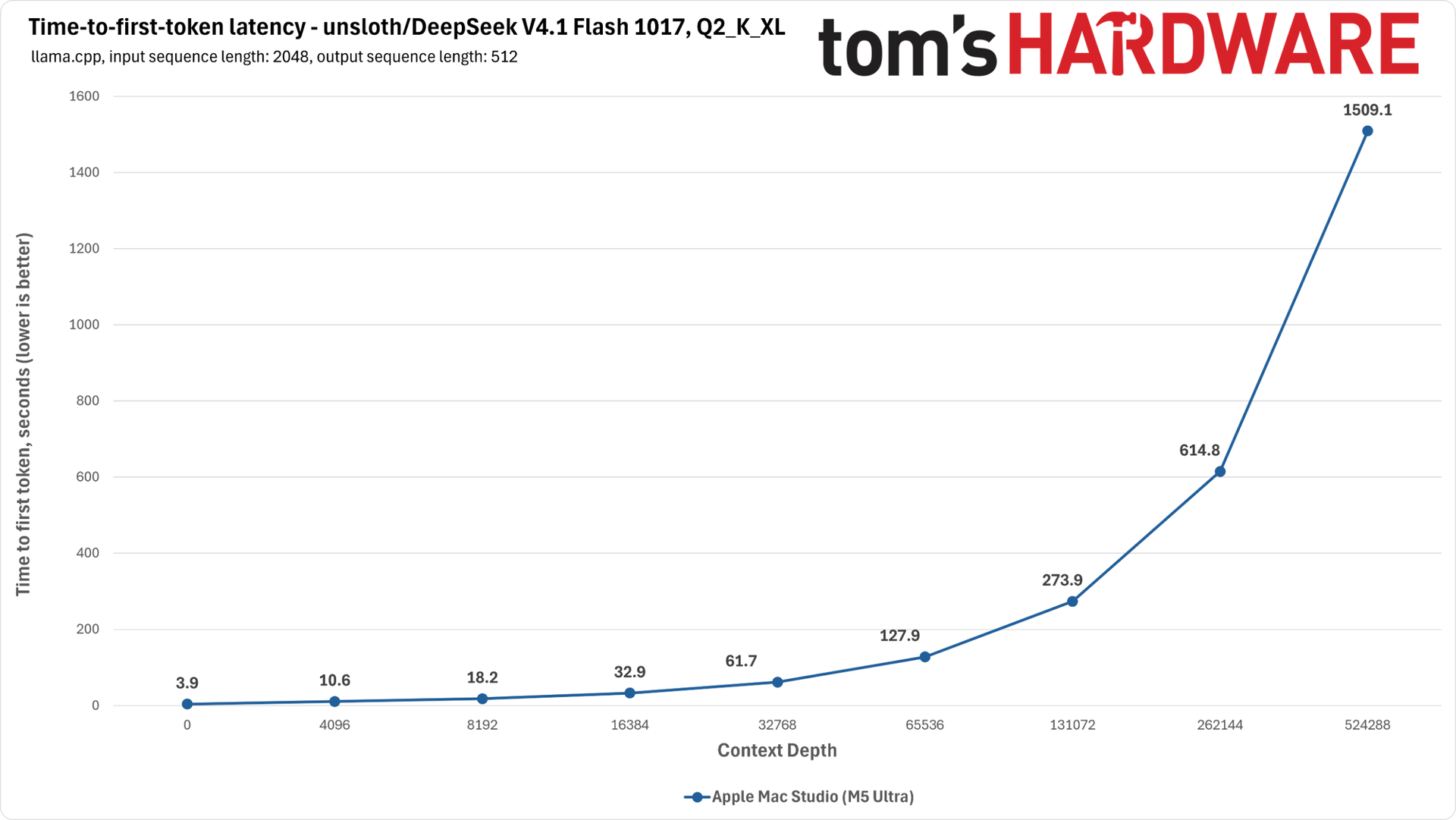
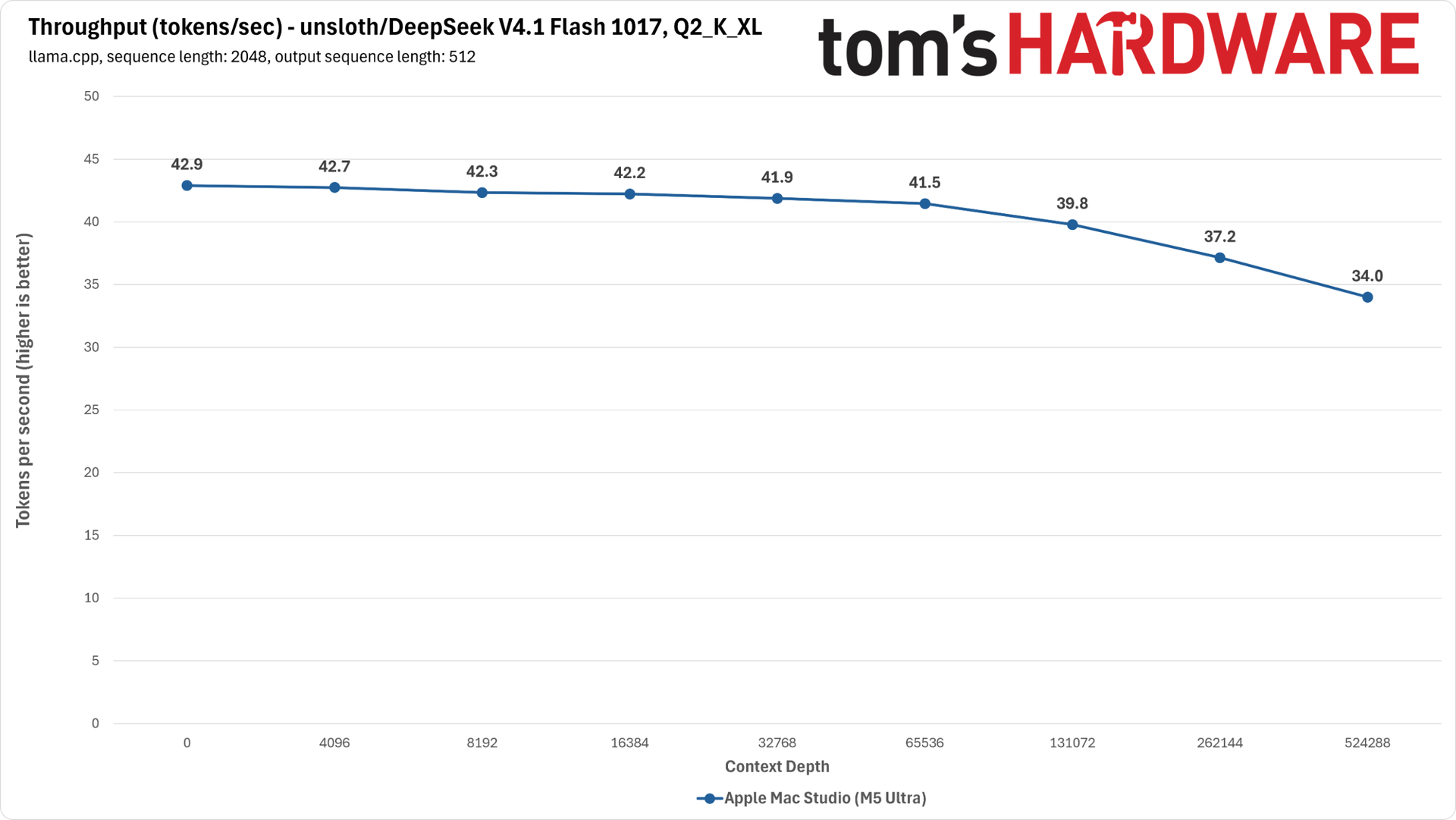
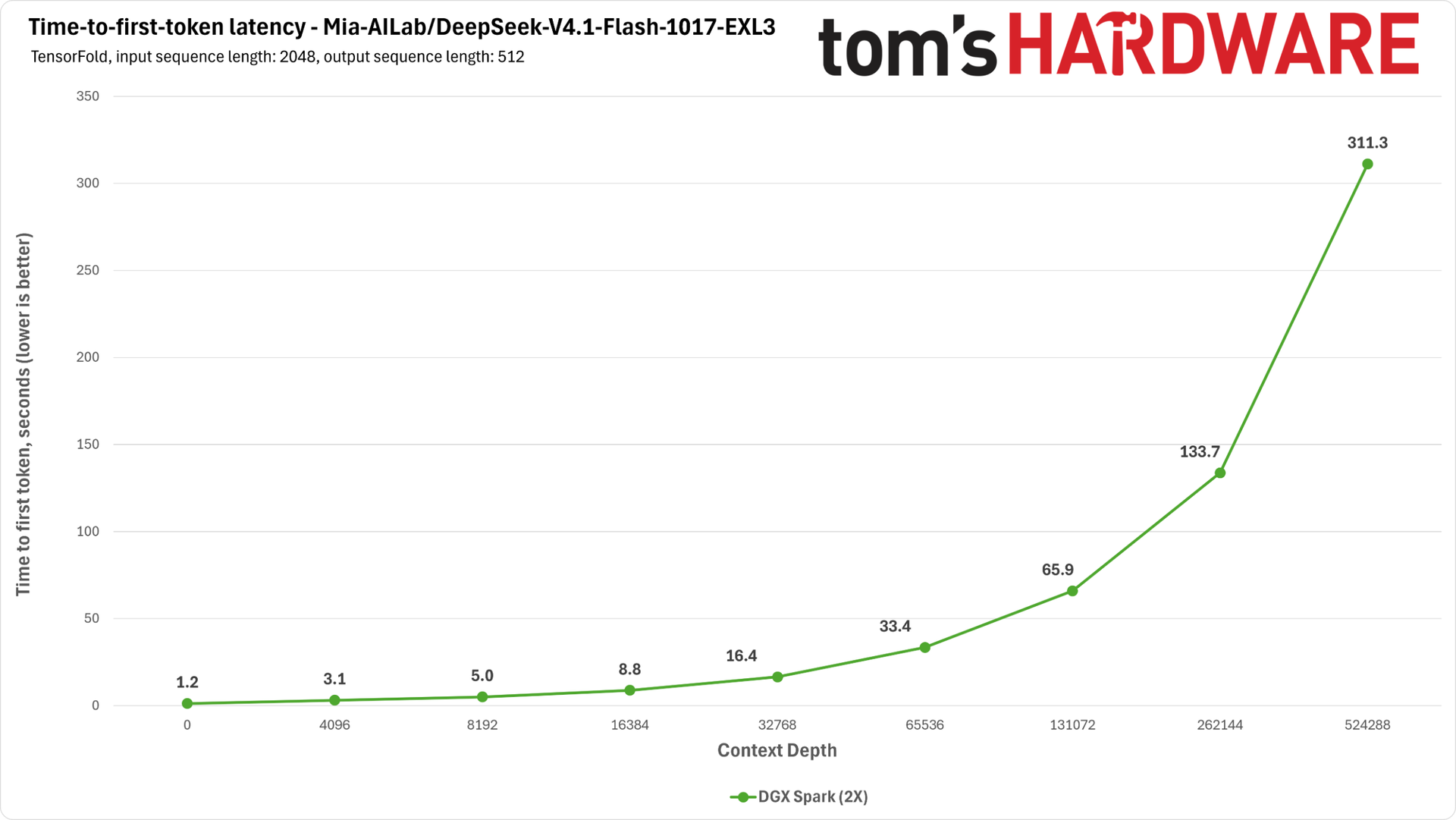
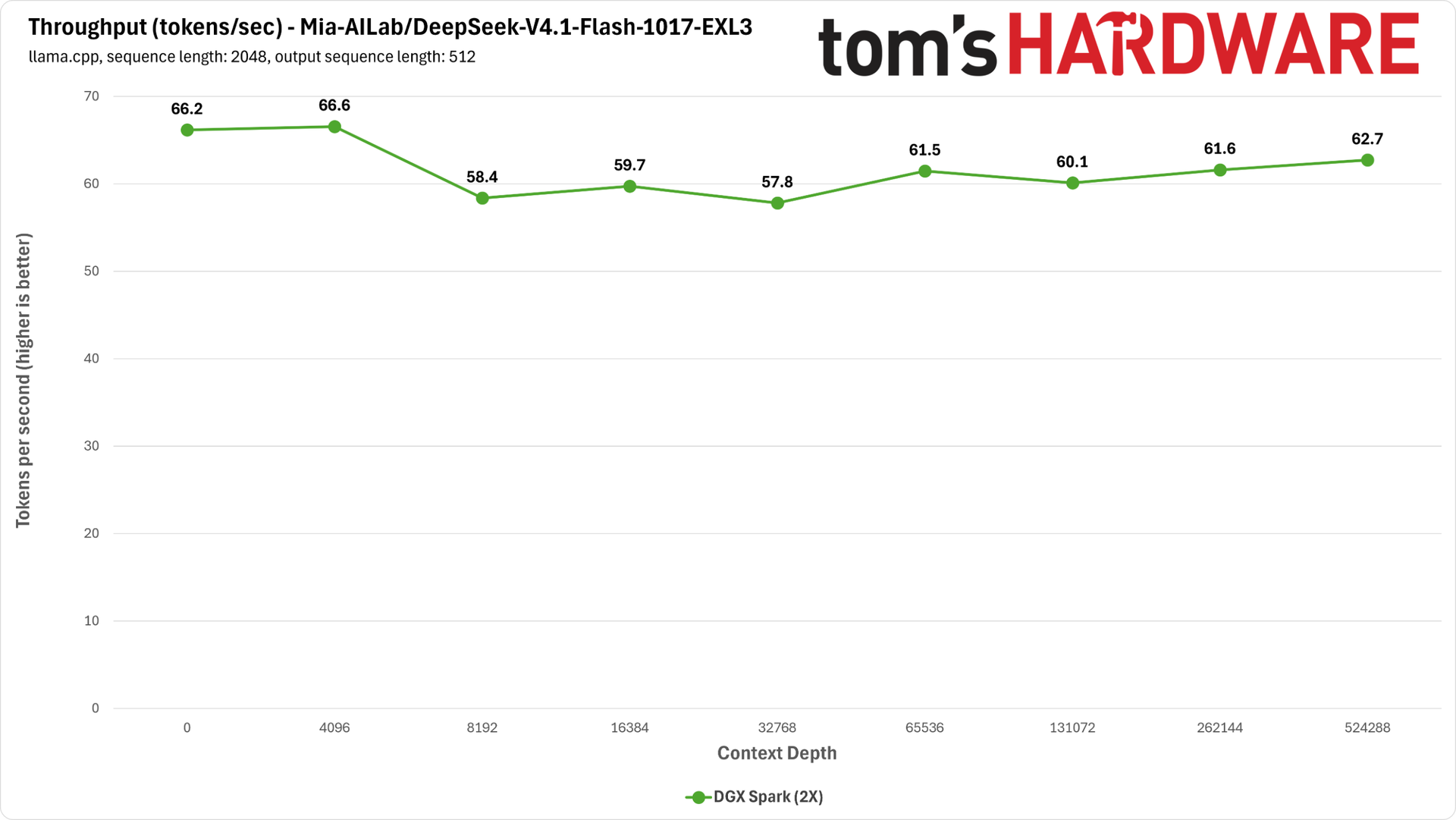
Processing the longest context lengths for DeepSeek V4.1 Flash required 10 to 25 minutes on the Mac running llama.cpp, whereas the Spark cluster completed identical tasks in under five minutes using the TensorFold recipe. The TensorFold engine also substantially outpaces llama.cpp on the decode side. For local DeepSeek V4.1 Flash deployment, a pair of Sparks emerges as the clear winner.
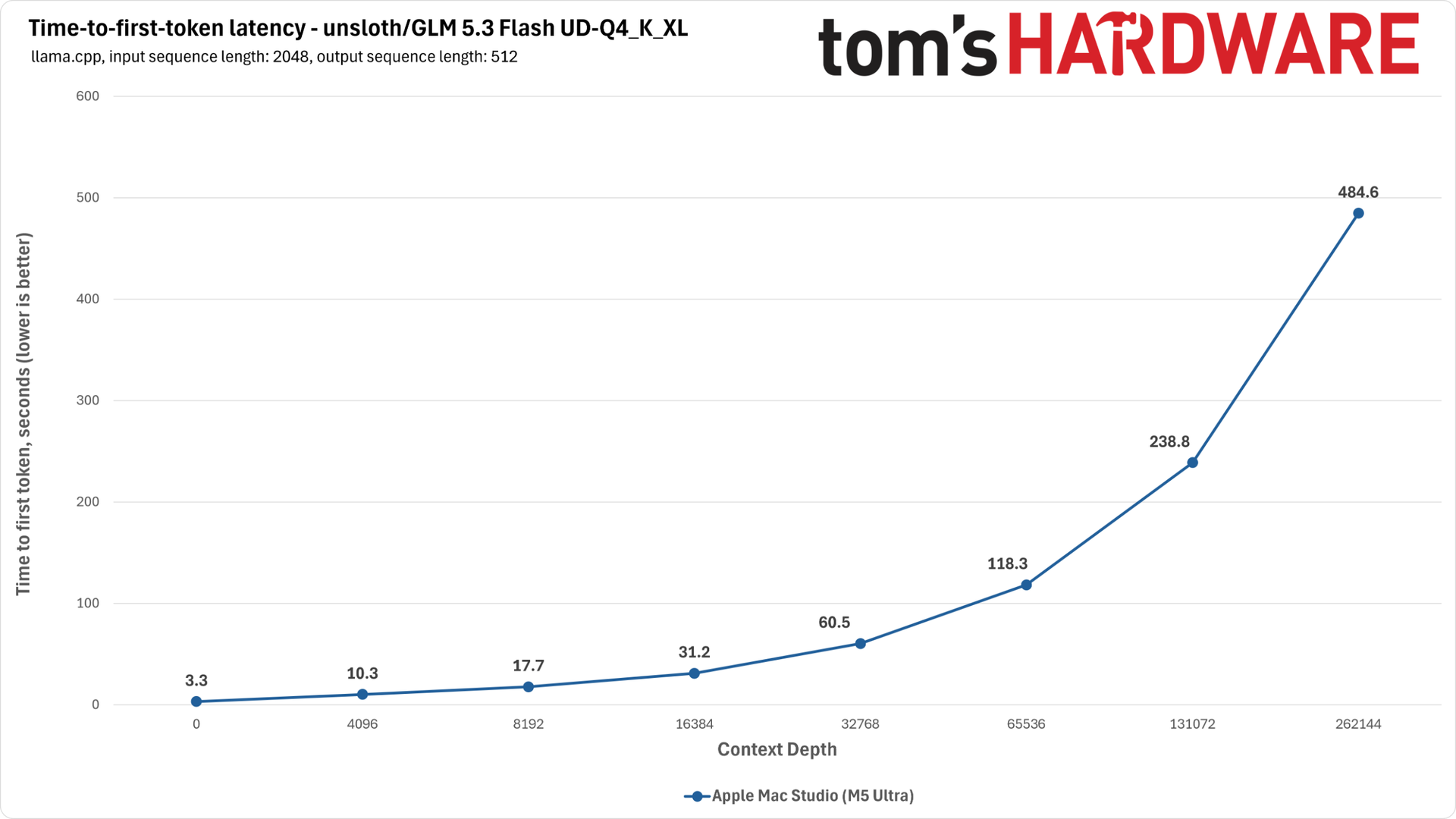
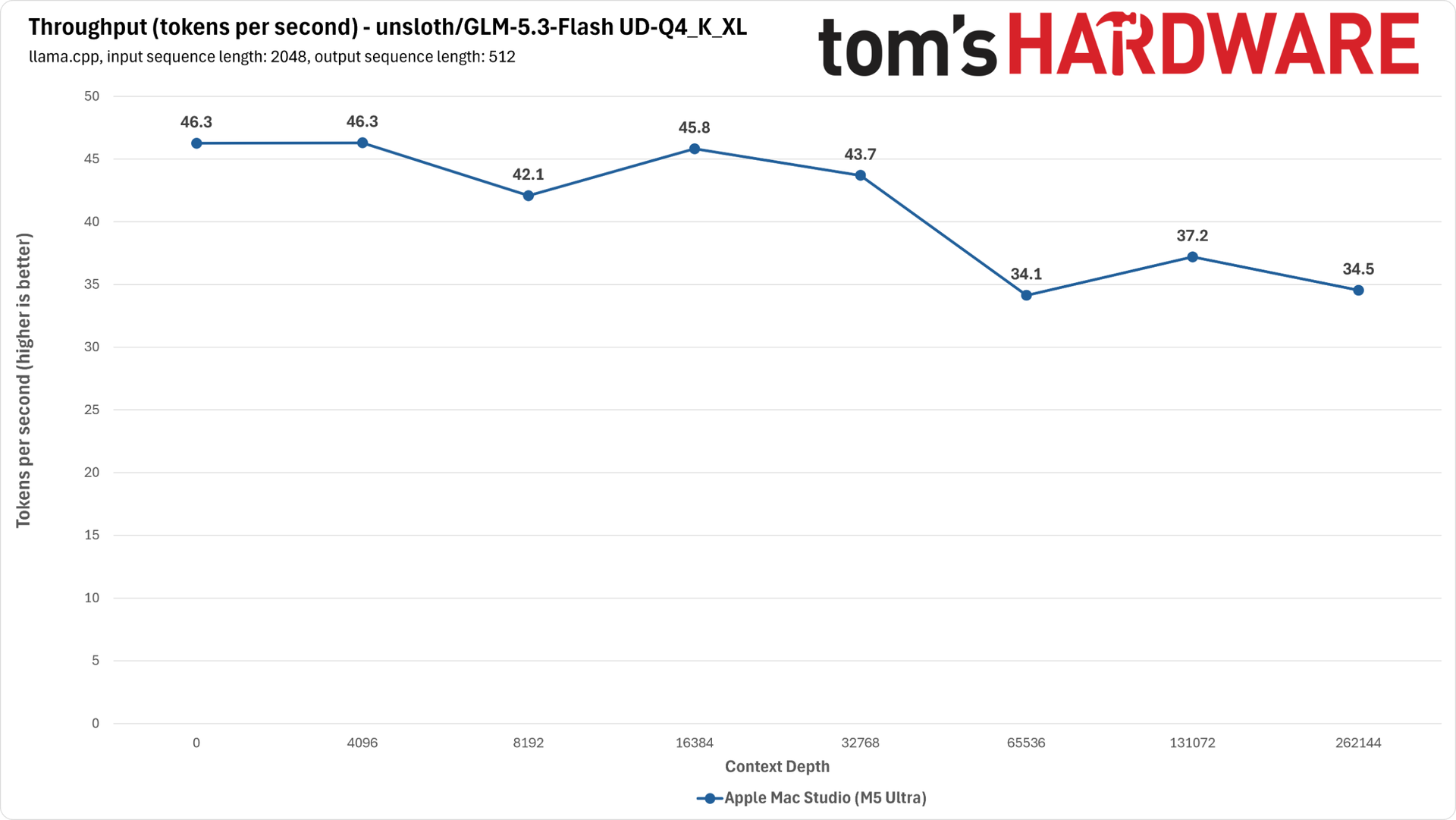
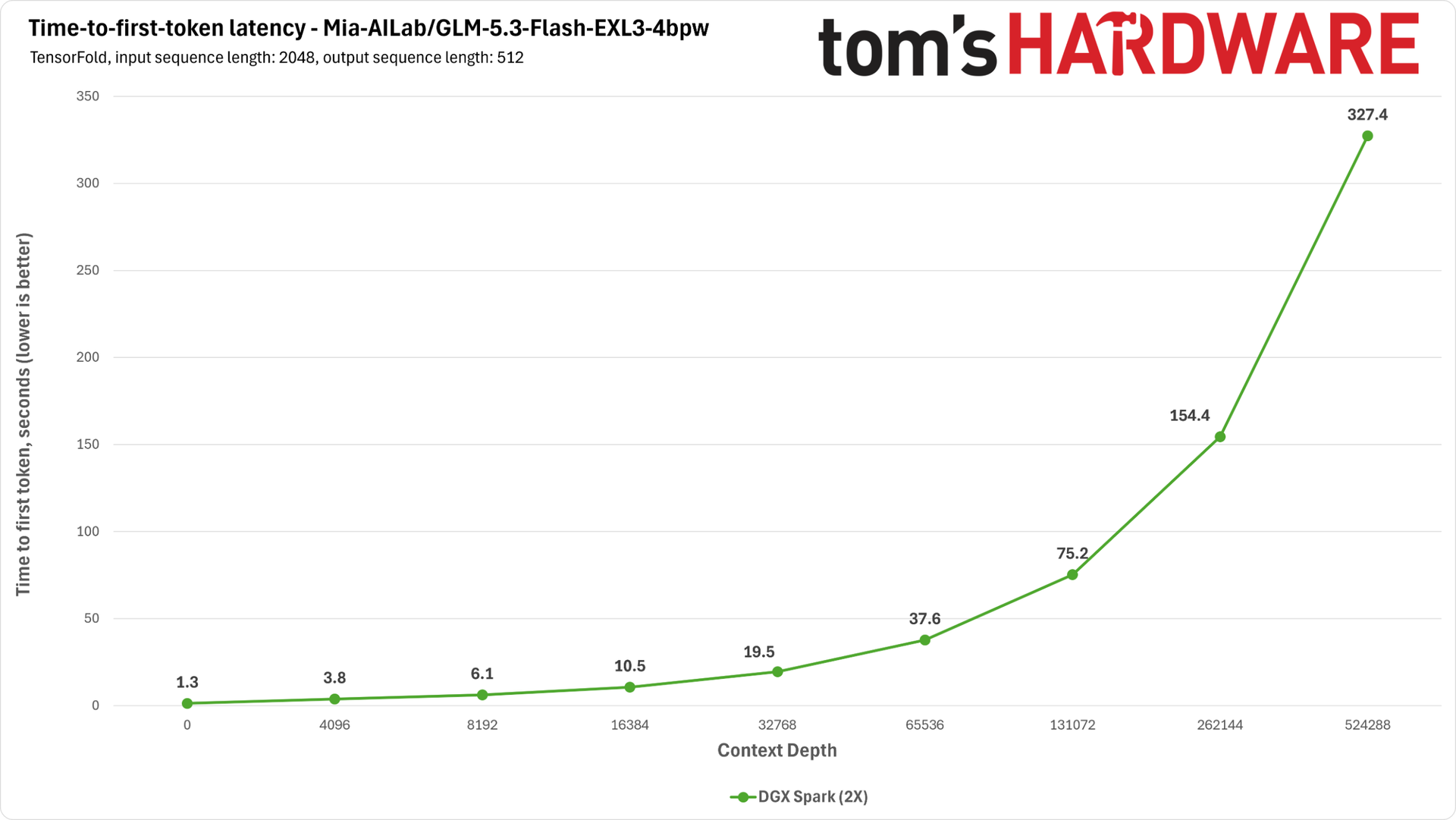
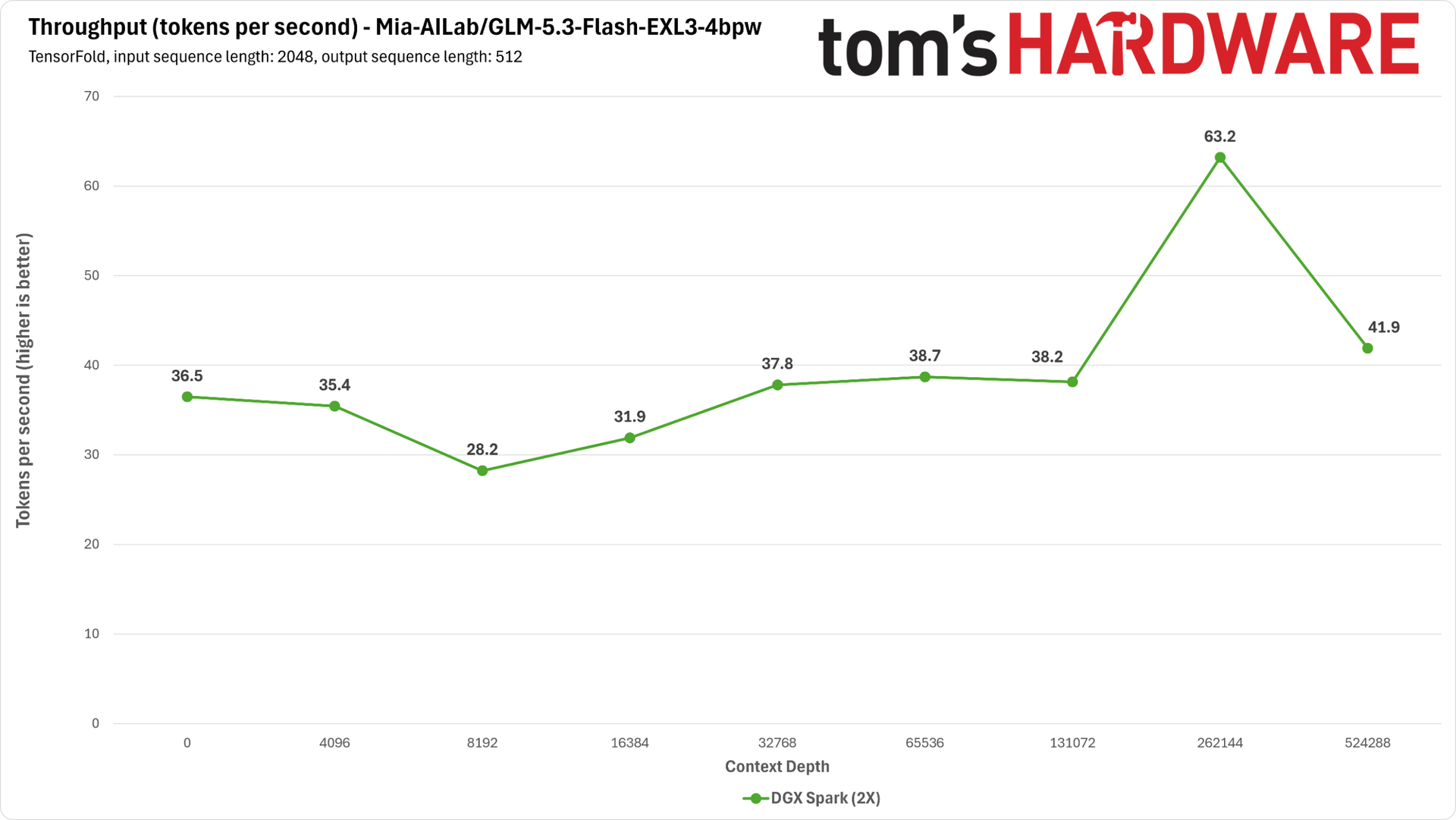
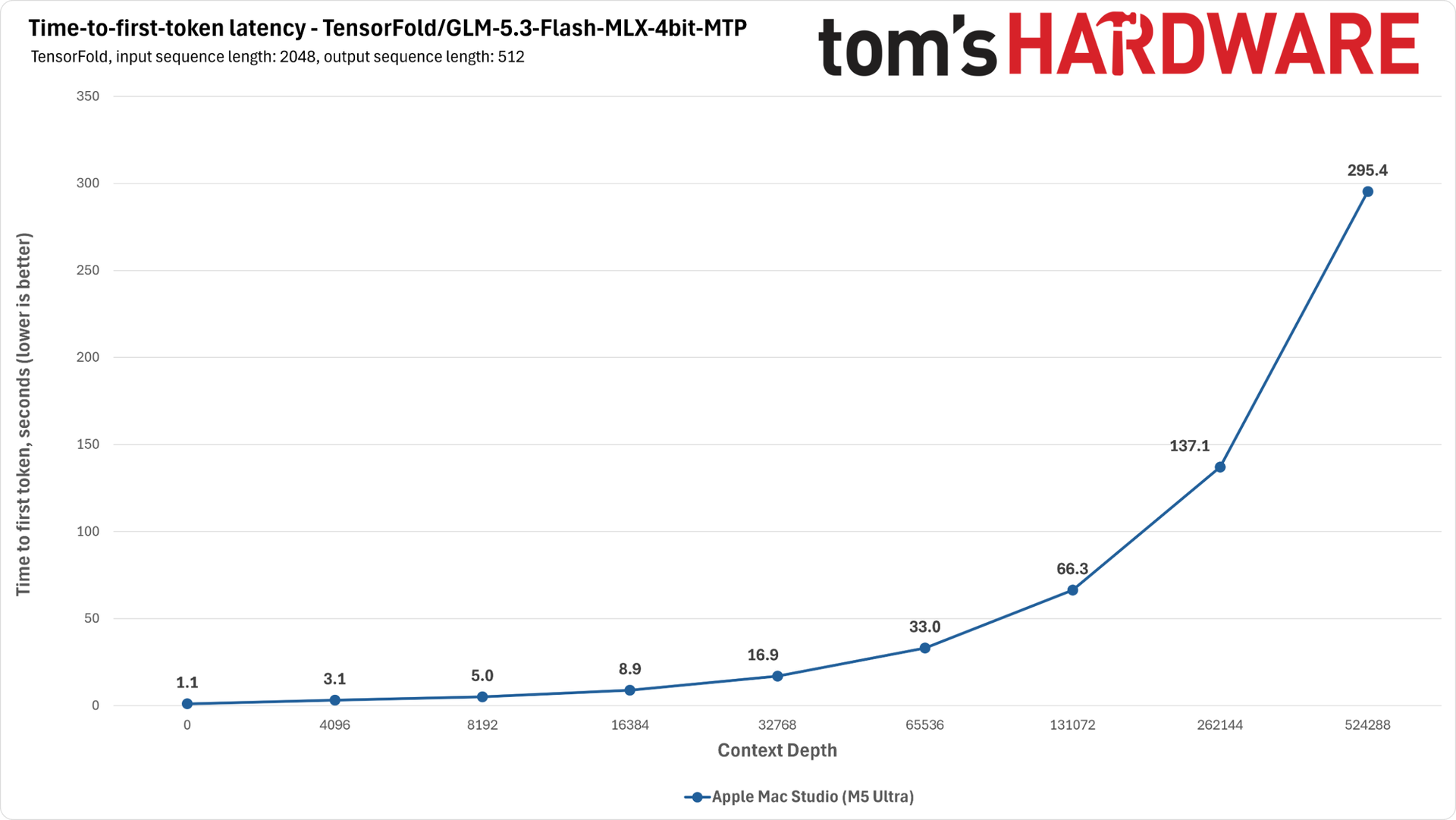
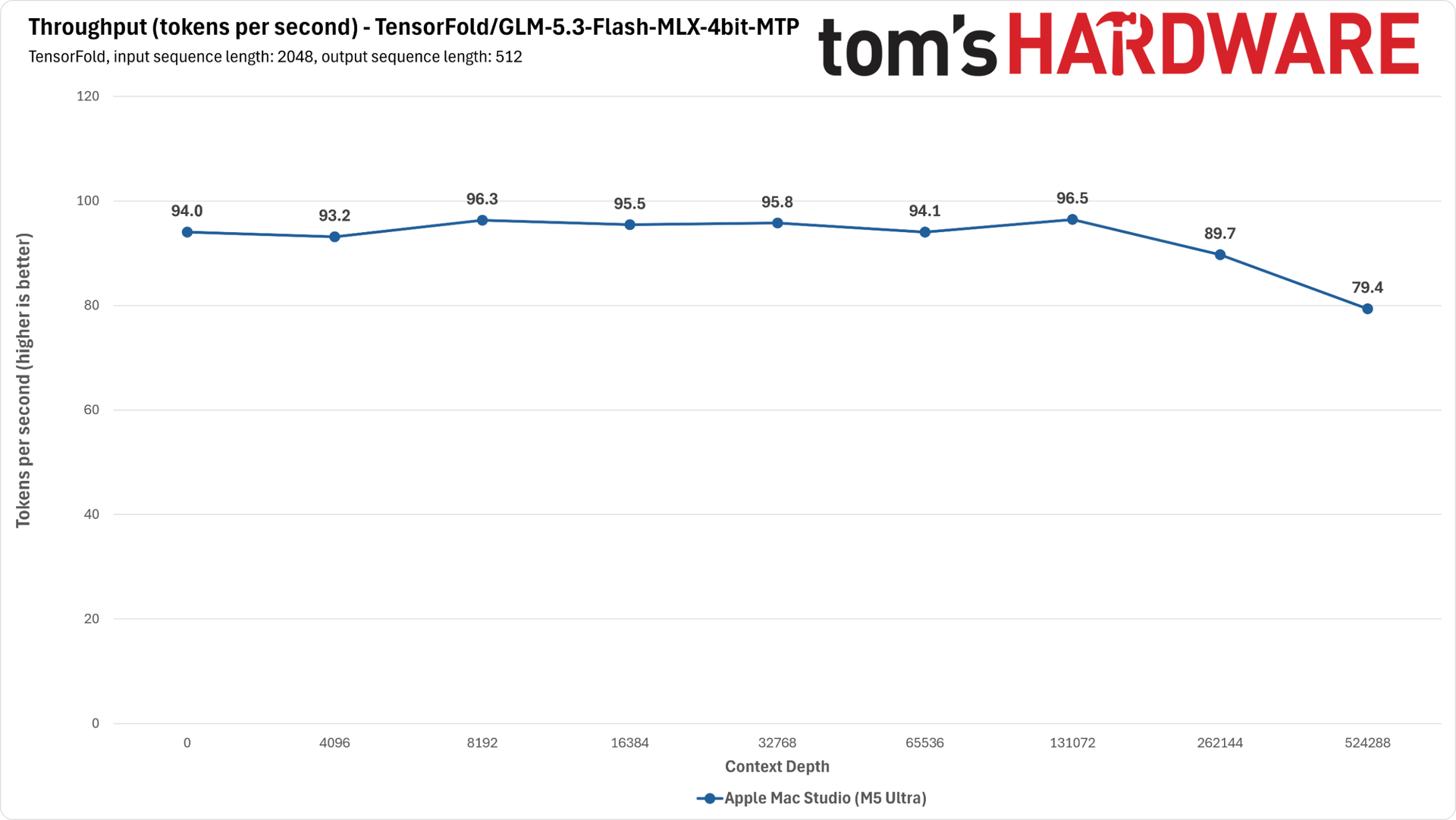
GLM 5.3 Flash presents a different picture. Multi-token prediction for this model requires no separate drafting model, allowing the Mac Studio to achieve decode acceleration without the memory constraints encountered with DeepSeek V4.1 Flash. The Spark cluster runs GLM 5.3 Flash using a recipe developed by Mia's AI Lab. While llama.cpp performs better with GLM 5.3 Flash than with DeepSeek V4.1 Flash, the DGX Spark cluster still delivers substantially faster prompt processing across all tested scenarios. The M5 Ultra's memory bandwidth advantage yields higher tokens per second during decode, though agentic turns would likely complete faster on the Spark cluster overall.
A TensorFold serving recipe exists for GLM 5.3 Flash on Apple Silicon, enabling evaluation of additional performance gains from MLX-specific four-bit quantization and theoretically superior inference engine performance. This recipe dramatically accelerates Mac Studio performance relative to llama.cpp, bringing prompt processing times substantially closer to the Spark cluster while delivering roughly three times faster decode throughput on average.
Improved inference engine support and serving recipes for DeepSeek V4.1 Flash 1017 on the M5 Ultra will likely emerge as the community applies development resources to this hardware, given the clear performance potential residing in Apple Silicon.
Bottom line
A single M5 Ultra Mac Studio can deliver exceptional local AI performance and power efficiency compared to a single DGX Spark when the complete software-hardware stack aligns properly. This comparison proves less absurd than initial impressions suggest, given that a Dell Pro Precision GB10 with 4TB storage now exceeds $10K, approaching the Mac Studio's $12K-ish configuration price.
Broader testing demonstrates that the M5 Ultra's impressive performance remains contingent on model selection and inference engine availability, particularly for larger, more capable models destined for 256GB memory. The Mac excels with llama.cpp and smaller models like Qwen 3.8 27B, but larger models such as GLM 5.3 Flash and DeepSeek V4.1 Flash 1017 demand higher-performance serving recipes. TensorFold executes GLM 5.3 Flash exceptionally well but lacks DeepSeek support entirely.
Memory bandwidth represents just one component of AI inference performance. Comprehensive evaluation requires examining the entire hardware-software stack to accurately assess performance and model compatibility from these expensive unified memory configurations.
While Apple narrows the performance gap for AI inference, the MLX software ecosystem still lags considerably behind the maturity, performance breadth, and model-inference engine options available on Nvidia hardware. The DGX Spark platform's enduring value extends beyond raw performance and scalability to encompass the breadth and velocity of community software development. Users can virtually count on finding a way to run newly released models shortly after weights appear on Hugging Face, assuming sufficient Spark clustering for required memory capacity.
This assurance of community software support, combined with DRAM and NAND supply constraints, sustains high demand and escalating prices for 128GB GB10 systems. Two Sparks with 4TB drives command $15K to $20K or more depending on partner system and storage choices, with prices likely continuing upward. This trajectory potentially positions a single Mac Studio as an attractive alternative, provided Apple maintains current pricing.
For users requiring strong local AI performance alongside one of the world's fastest CPUs and capable GPU for general-purpose workstation tasks within a compact, efficient, quiet chassis, the Mac Studio represents a remarkable option. Those willing to await software maturation and accept potentially narrower model and inference engine support compared to DGX Spark setups should prepare for lead times extending into February 2027.
However, for those specifically allocating well over $10K toward building a local AI inference setup—whether for personal use or a small office—clustering a pair of Sparks delivers the memory capacity and compute power needed alongside robust software support and broad model compatibility. These assurances may justify the investment despite the Mac Studio's superior raw performance potential.