Liqid's Dynamic Memory Pooling Tackles AI Inference Economics
As AI models become harder to predict, companies are moving away from fixed GPU-to-memory configurations toward pooled resources that can be dynamically allocated across inference workloads.
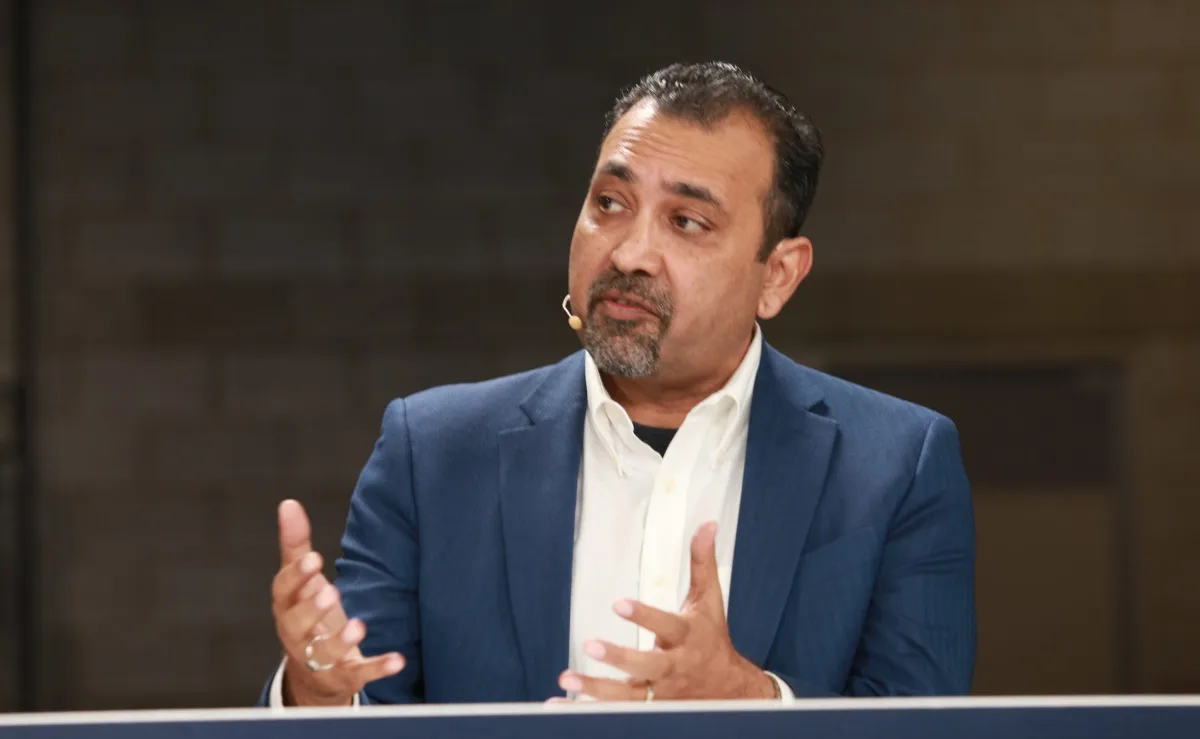
The race to maximize efficiency in AI inference is driving a shift toward memory pooling, a strategy that lets operators extract more value from each graphics processing unit by decoupling compute from storage.
Traditional AI servers arrive with a fixed ratio of GPUs to memory that remains locked in place throughout the machine's lifetime. This architecture creates problems when deployment plans remain uncertain, said Sumit Puri, co-founder and chief technical officer at Liqid Inc.
Our core fundamental technology is around pooling and sharing the most critical resources in the data center, which are now GPU and memory. Rather than statically deploying these things inside of a server, our vision is simple. Let's put pools of resources in the rack, GPUs and memory, and dynamically assign them to any server that needs it based upon the model or the workload that we are looking to deploy.
Sumit Puri, Liqid
Puri discussed the approach during an exclusive interview at SC26, speaking with theCUBE Research's John Furrier and Gemma Allen on theCUBE, SiliconANGLE Media's livestreaming studio.
Tokenomics and supply constraints
Liqid frames the value proposition around tokenomics—measuring success through tokens per second, tokens per watt, and crucially, tokens per dollar. Memory represents one of the most constrained components in the AI infrastructure expansion, and allocating only what each application requires can help stretch limited supplies.
Supply chain is a massive constraint for all of us — memory being a giantly massive constrained thing. If we can do things like pool memory, share memory, optimally deliver memory to the server in the right amount of memory as required by the application, we can directly address some of those supply chain issues.
Sumit Puri
At SC26, Liqid unveiled Liqid as a Service, a fully managed single-tenant offering, while also moving toward preconfigured appliances. The company's thesis assumes most enterprises will run existing models rather than develop new ones, meaning they will need dedicated capacity.
https://www.youtube.com/embed/ERXkBsWsjF0?start=2&feature=oembed
The world went to unlimited consumption of minutes, and that's where we believe tokens are headed. Everybody's going to own their own token machine so they can consume these tokens at will.
Sumit Puri