JEDEC Reveals DDR6 Memory Standard: Smaller Modules, Quadruple the Bandwidth
The memory standards body has unveiled specifications for DDR6, showing a 44% reduction in physical size alongside a dramatic leap in performance, with baseline speeds of 12.8 GT/s and potential capacities exceeding 1 terabyte per module.
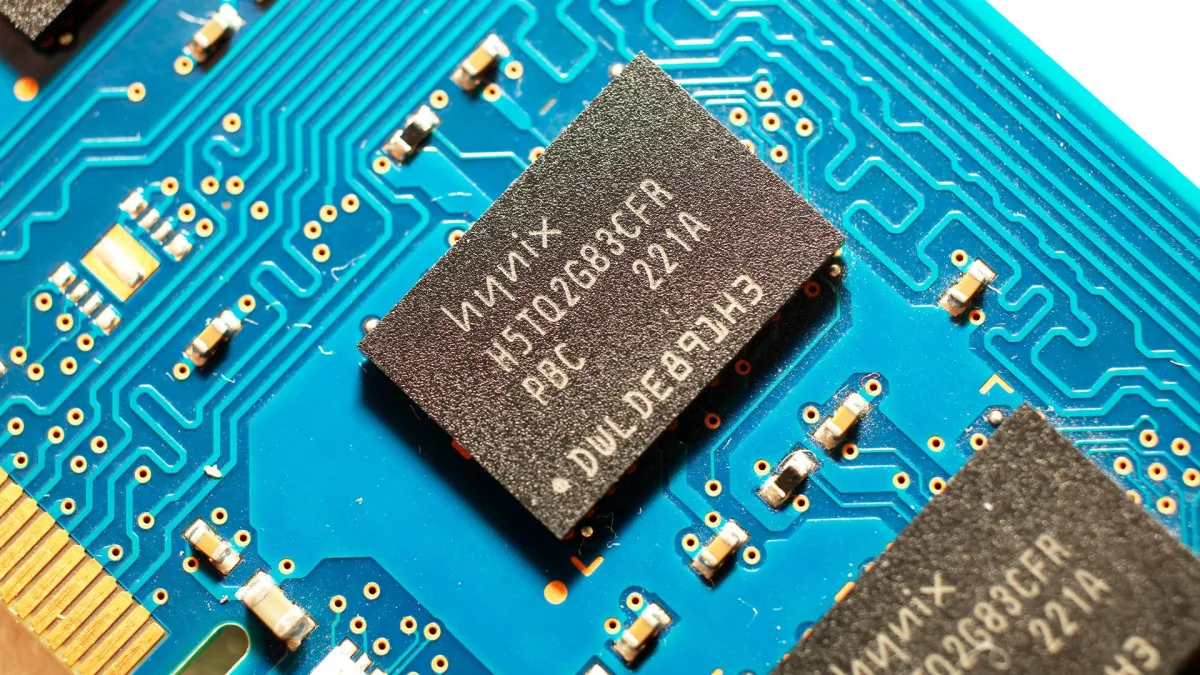
Memory modules will undergo a significant transformation with the arrival of DDR6. JEDEC has unveiled a preview of the DDR6 specification, revealing that the next generation will shrink to just 74mm in length—a 44% reduction compared to DDR5's 133mm form factor. Beyond the physical redesign, DDR6 introduces substantial performance gains, launching at 12.8 GT/s and delivering four times the memory bandwidth per module through architectural innovations.
The JEDEC preview encompasses enhancements spanning performance, capacity, reliability, and power consumption, mirroring the kinds of improvements that characterized DDR5's introduction to the market.
The dramatic size reduction positions DDR6 modules at only 6% longer than DDR5 SO-DIMM variants, the compact form factor common in laptops and small-form-factor computers. This physical transformation raises questions about the module's internal architecture. While JEDEC has maintained 288 pins across DDR4 and DDR5 generations, the substantial length reduction combined with increased data capacity suggests DDR6 will require a fundamentally different pinout and density structure. The standards body has not yet disclosed the pin count for DDR6.
Earlier speculation centered on DDR6 being restricted to CAMM form factors to support artificial intelligence workloads. JEDEC's announcement does not eliminate other possibilities. The organization appears to still be evaluating which form factors will support DDR6, with potential candidates including RDIMM, UDIMM, and CAMM designs, consistent with DDR5's ecosystem.
DDR6 Specifications
A fundamental architectural shift distinguishes DDR6 from its predecessors. The data bus width expands to 96 bits, representing a 50% increase from DDR5's 64-bit width. Channel design undergoes equally significant revision. Where DDR4 and DDR5 employed a single 64-bit channel paired with two 32-bit sub-channels, DDR6 adopts a four-channel design with 24-bit sub-channels each.
These architectural changes translate into substantial bandwidth improvements. At baseline specifications, DDR6 delivers up to 153.6 GB/s of total module bandwidth, compared to DDR5's 38.4 GB/s—a fourfold increase. When comparing high-end variants, DDR6-12800 RDIMMs achieve just over double the bandwidth of DDR5-9200 RDIMMs, which peak at 73.6 GB/s per module.
On the server side, DDR6 RDIMMs will commence at DDR6-12800, surpassing the DDR5 RDIMM ceiling of DDR5-9200. JEDEC projects DDR6 will reach DDR6-14400 and higher speeds in server and enterprise deployments. The consumer market's entry point remains uncertain; DDR5 consumer modules launched at DDR5-4800.
Despite its compact dimensions, DDR6 compensates through doubled bank counts, enabling higher data rates and greater capacities. The standard will support 128Gb (16GB) dies, a dramatic advancement representing four times the density of early DDR5 modules. Rather than arranging chips horizontally on the circuit board, DDR6 enables vertical die stacking through Through-Silicon Vias (TSVs), allowing multiple dies to occupy the same footprint.
Current consumer DDR5 modules max out at 64GB per module, while server RDIMMs have reached 512GB. DDR6 could expand consumer modules to 128GB or 256GB, with server RDIMMs potentially reaching 1TB or exceeding that capacity per slot.
DDR6 has not received an official launch timeline. Industry observers generally regard 2029 as a plausible commercialization target, though delays remain a significant possibility given the complexity of the transition.