Google Cloud Pitches AI Agents to Bridge Fragmented Supercomputing Resources
As artificial intelligence and high-performance computing converge, researchers face a new challenge: orchestrating compute across multiple clouds and on-premises systems. Google Cloud is positioning AI agents as the connective layer.
The intersection of artificial intelligence and high-performance computing is accelerating faster than many research organizations can keep pace with. Access to sufficient computational resources remains constrained, and scientific workloads increasingly span both cloud environments and local infrastructure. The measure of success in this space is no longer raw computational throughput but rather the speed at which researchers can move from hypothesis to validated results.
This transformation took center stage at SC26 in Chicago, where cloud vendors are promoting AI agents as a unifying technology for distributed computing. According to Annie Ma-Weaver, head of high-performance computing product at Google Cloud, a unit of Google LLC, researchers face a fundamental problem: they require more computing power than any single facility can deliver, yet lack the expertise to manage complex orchestration across heterogeneous environments.
We are powering that flexibility. and we understand that researchers really need access to compute, but they don't necessarily wanna learn all the nitty-gritty of how to tie that compute together, how to get it orchestrated across all their different clusters.
Annie Ma-Weaver, Google Cloud
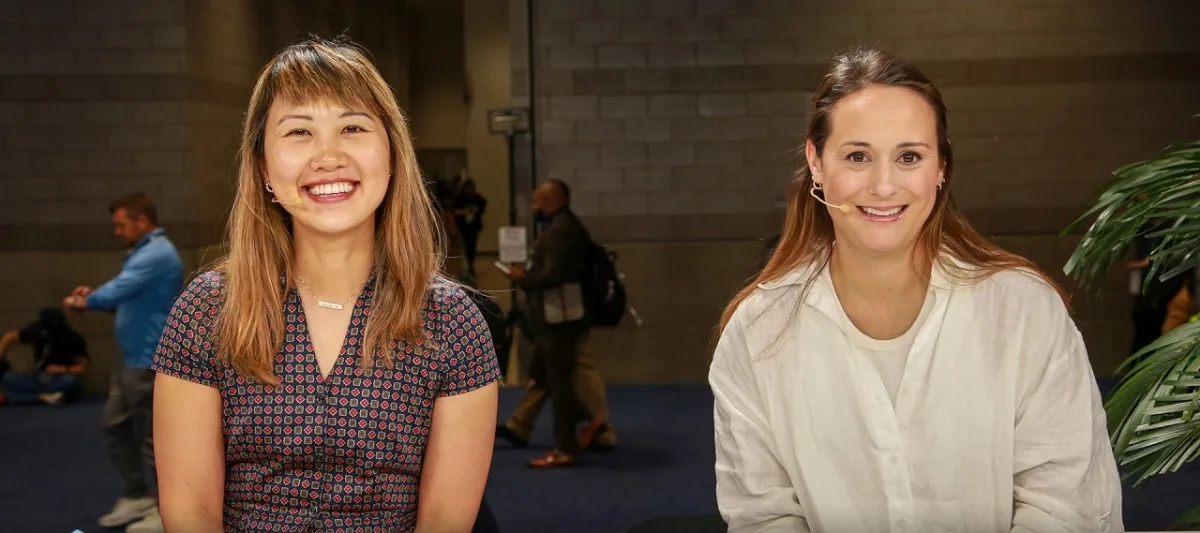
Ma-Weaver and Megan Gawlik, high-performance computing product manager at Google Cloud, discussed these developments during an exclusive conversation at SC26 with theCUBE Research's John Furrier and Gemma Allen, broadcast on theCUBE, SiliconANGLE Media's livestreaming platform.
Agentic HPC shifts the focus from flops to discovery
Google Cloud's approach to agentic high-performance computing rests on three foundational elements: specialized computing hardware, open-source resource management tools including Slurm and Kubernetes, and intelligent AI agents designed for collaborative research. The company unveiled this framework through announcements made at SC26. According to Gawlik, these agents now enable scientists to rapidly survey scientific literature, identify and fix code problems, and formulate research hypotheses—work that previously consumed weeks but now takes minutes.
You're able to go explore more scenarios and you might be using that same time to just go sanity test that hypothesis that's coming out. I think it's not only a speed thing, but I think it's an accuracy thing that you're able to really get from that additional speed.
Megan Gawlik, Google Cloud
The transformation extends to computational simulation workflows. Traditionally, engineers would execute simulations across the full range of possible parameter combinations. The new approach leverages AI to filter candidates upfront, identifying which scenarios warrant computational investment. Ma-Weaver described how this reshapes computer-aided engineering: "What we're seeing, for example, with computer-aided engineering, is that you can actually identify ahead of time which are non-essential parameters and you don't run the simulation, thereby reducing the total simulation time. We also find that if you're doing design and you have initial prototypes, you can generate new, novel and creative prototypes."
Weather prediction systems have already begun deploying these methods at scale. The National Oceanic and Atmospheric Administration's forecasting infrastructure, which historically operated exclusively on local systems due to tightly integrated computational demands, now executes on Google Cloud. Gawlik highlighted a concrete example: the National Hurricane Center deployed Google's WeatherNext model in October 2025 to forecast the trajectory and strength of Hurricane Melissa.
https://www.youtube.com/embed/gRdHACEvoyI?feature=oembed
Yet this reliance on machine-generated outputs introduces new risks. Gawlik cautioned that emerging researchers may increasingly depend on algorithmic output rather than cultivating independent analytical judgment. She noted that AI systems remain imperfect, and their outputs can be unreliable: "AI is still not perfect. I think even though there's an output, we call it AI slop. It could still be slop."