Tachyum's Prodigy processor project faces uncertain future as Slovak subsidiary files for bankruptcy
The developer of the long-delayed universal Prodigy processor has initiated bankruptcy proceedings in Bratislava, though the fate of the chip's intellectual property and continued development remains unclear.
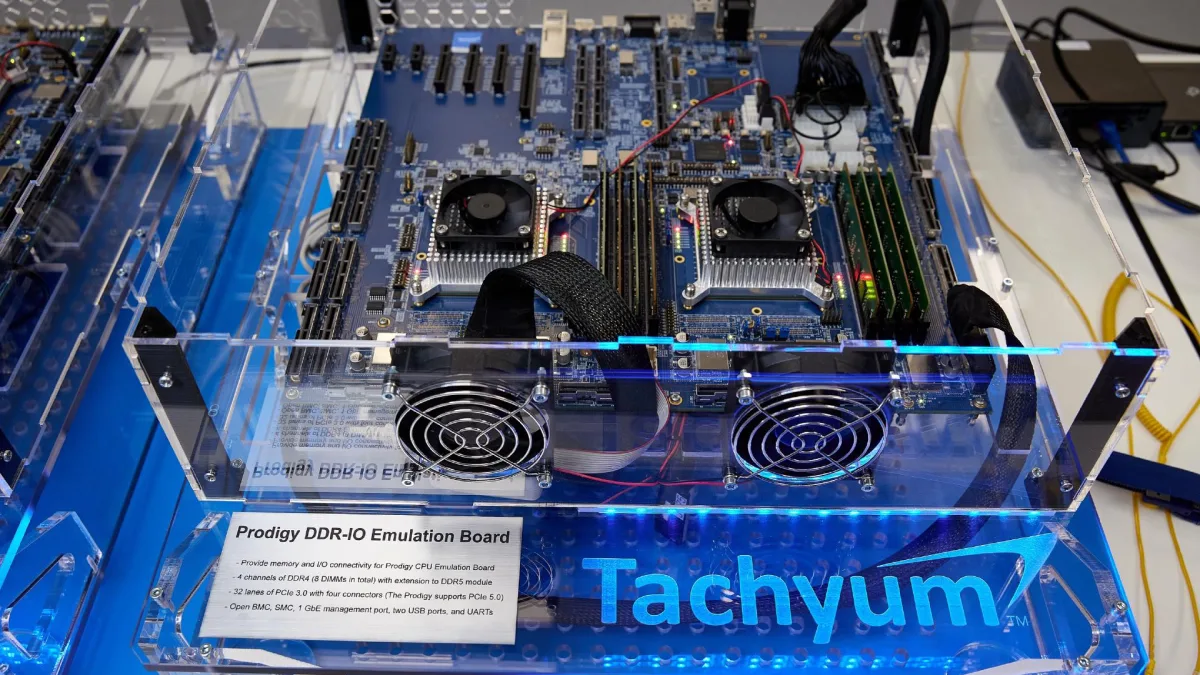
Tachyum, creator of the much-hyped but perpetually delayed universal Prodigy processor, has voluntarily filed for bankruptcy in Bratislava, Slovakia. The Bratislava III Municipal Court has begun bankruptcy proceedings following the company's petition, which met the legal requirements for insolvency under Slovak law. The filing comes after years of missed development targets and repeated postponements of the processor's commercial launch.
Since its introduction in 2018, the Prodigy project has experienced a long history of delays and shifting timelines. The company initially targeted a 2019 tape-out and 2020 market availability, but subsequently pushed back the launch date multiple times—to 2021, then 2022, 2023, 2024, and eventually 2025. Throughout this period, Tachyum has never demonstrated working silicon for the processor.
The processor's design specifications have undergone dramatic transformations across the eight years of development. What began as a 64-core design evolved into a 128-core processor on a 5nm-class process, then a 192-core variant with 16 DDR5 memory channels. In late 2025, Tachyum announced yet another fundamental redesign: a chiplet-based architecture featuring 1,024 cores, 24 DDR5 memory channels, and a 1,600W thermal design power, manufactured on TSMC's 2nm-class node. This latest overhaul would have necessitated substantial additional engineering effort and pushed commercial availability to 2030 or beyond.
According to court documents, Tachyum Slovakia filed for bankruptcy on October 22, 2026, without awaiting creditor petitions. Under Slovak law, a company that voluntarily initiates bankruptcy proceedings is presumed insolvent, making Tachyum Slovakia technically bankrupt. Should the court formally declare the company bankrupt, a court-appointed trustee would assume control of its assets for creditor repayment.
The company's asset portfolio could theoretically include intellectual property related to Prodigy, patents, and other technologies alongside development hardware. Without additional financing or a buyer willing to fund continued work, development of the processor could effectively cease. However, the bankruptcy of Tachyum's Slovak subsidiary does not necessarily affect affiliated entities operating elsewhere.
The intellectual property underlying Prodigy could potentially survive the bankruptcy through new ownership or transfer to another entity, theoretically allowing development to resume. Alternatively, Tachyum's owners could use bankruptcy proceedings to eliminate debts while acquiring the IP through a separate legal structure to pursue future commercialization efforts.
The corporate structure adds another layer of complexity to the situation. Tachyum Slovakia operates as a subsidiary of the U.S.-based Tachyum Inc., according to reporting by Dennik N. If the American parent company holds the Prodigy intellectual property while the Slovak subsidiary employs the engineering staff, manages development, and carries accumulated debt, bankruptcy could allow the group to shed significant liabilities while preserving its most valuable technological assets. Conversely, if the Slovak subsidiary owns the IP, the American parent could theoretically purchase it from the bankruptcy estate.
Additional complications arise from the American parent company's own financial troubles. According to Dennik N, Tachyum Inc. has faced pressure from its own creditors, some of whom have sought the company's liquidation. This situation creates substantial uncertainty regarding the ownership and future of the Prodigy intellectual property.
The trajectory of the Prodigy processor now hinges on critical questions about IP ownership—whether Tachyum Inc. or Tachyum Slovakia holds the rights—and whether the American parent company continues operating or faces liquidation. These answers will determine whether this bankruptcy marks the end of Prodigy or represents a corporate restructuring intended to preserve the project's future.