InfoScale pushes enterprises beyond server recovery toward continuous operational trust
As AI accelerates attack cycles and automation deepens into critical business processes, companies are discovering that restoring infrastructure isn't enough—they need platforms that protect operations in real time.
Merely bringing servers back online and restoring data no longer suffices when a business faces disruption. This realization is forcing enterprises to fundamentally reconsider how they approach operational resilience, particularly as adversaries harness AI to amplify their attacks and organizations weave automation throughout their most vital systems.
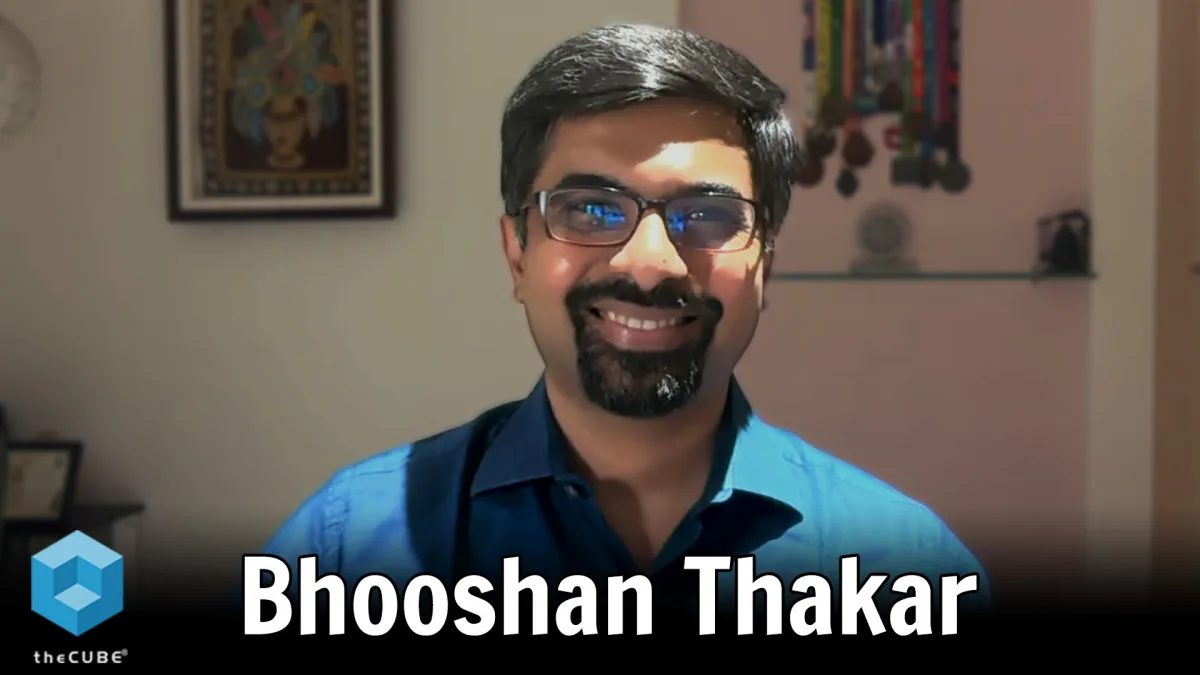
Yet many businesses have not caught up to this shift. Traditional disaster recovery focuses on protecting individual components—servers, storage, networks—one at a time, a model that breaks down as AI accelerates the threat landscape and operational complexity grows. According to Bhooshan Thakar, senior vice president and general manager of InfoScale at Cloud Software Group Inc., the gap between restored infrastructure and operational capability has become the central vulnerability.
The infrastructure survived, but the operational state did not. From the business perspective, the main question becomes: 'Can the business continue to operate with confidence?' Ultimately, resilience is about maintaining the trust in the operational state.
Bhooshan Thakar, InfoScale
Thakar shared these insights during an exclusive interview with theCUBE's Krista Case at the AI Cybersecurity and Resilience Summit, part of SiliconANGLE Media's livestreaming coverage. The conversation examined why static disaster recovery playbooks fail in environments shaped by AI and constant change.
Operational resilience shifts from recovery to runtime
The velocity of change itself presents a core challenge. Organizations that once executed planned failovers every half year now deploy security patches to mission-critical applications on a weekly or daily basis, Thakar observed. AI is compressing this timeline further. In June, Cloud Software Group, InfoScale's parent, joined Anthropic PBC's Project Glasswing to leverage the Claude Mythos Preview model for security applications.
In the past, the disruption or downtime was an 'if, not when' kind of an event. Today, it is not 'if,' it's 'always.' What I mean by that is you have to always plan for a disruption, whether it's a planned or an unplanned.
Bhooshan Thakar
Cloud infrastructure creates a misleading sense of protection. Many application owners mistakenly believe that cloud service providers ensure their resilience, overlooking the fact that business applications consist of interdependent layers. When any single layer fails or data becomes corrupted, operations halt even as the underlying infrastructure reports normal status, Thakar explained.
If you really look at the fine print, what the CSPs guarantee is resiliency of the cloud, but resiliency in the cloud is your responsibility, meaning an application owner's responsibility. Ultimately, what you're looking for is whether your business is resilient as opposed to a component of the stack being resilient.
Bhooshan Thakar
This understanding informs InfoScale's platform philosophy. Rather than intervening only after failure occurs, a true resilience solution should operate continuously alongside production applications, monitoring dependencies, tracking runtime conditions and validating data integrity. Real-time replication combined with immutable checkpoints enable teams to return rapidly to a verified, uncorrupted state, Thakar noted. He contended that conventional spending on prevention and recovery alone leaves a critical blind spot.
If you think about the last decade, our buyers have spent billions of dollars of their budget into two silos: prevention, which is on the security side, and recovery, which is on the backup and infrastructure side. If you really think of it, prevention is leaky and recovery is too slow.
Bhooshan Thakar
How organizations measure resilience requires transformation as well, Thakar noted. Outages now carry regulatory consequences alongside financial damage and customer loss. Rather than measuring how quickly a virtual machine restores, he proposed tracking the time elapsed before the first validated, trustworthy business transaction completes following an active disruption—a metric that anchors operational resilience to actual business impact.
https://www.youtube.com/embed/mE4EHQylI-I?feature=oembed
Today, when I talk to the [chief information security officers] and [chief information officers] in this context, they're not asking vendors, 'How fast can you restore my data after I take an outage?' I think that is yesterday's question. They are asking, 'How does your platform guarantee that my mission-critical application or operation keeps running right through an active disruption?'
Bhooshan Thakar