Hobbyist Powers Up Functioning Vacuum Tube Computer Loaded With 460 Soviet-Era Components
An electronics enthusiast named Mike has constructed a working 8-bit computer using recycled 1950s vacuum tubes instead of modern semiconductors, requiring a 15-minute warm-up period and filling the room with the smell of burning dust.
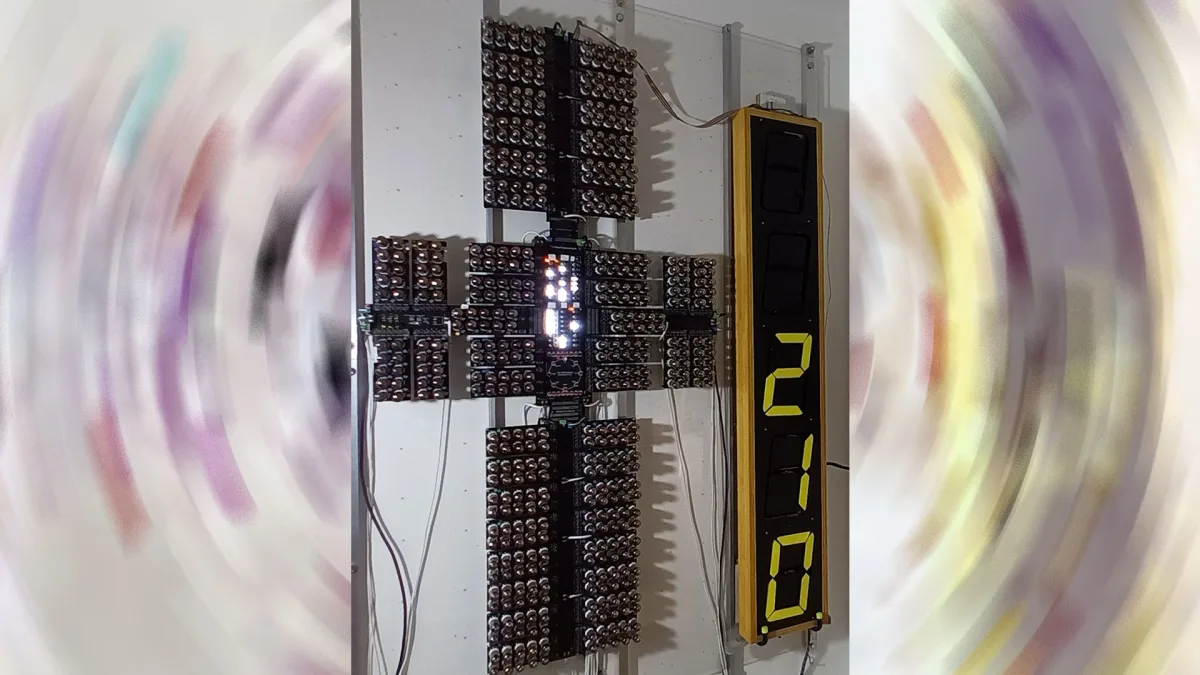
Authentic vintage computing relies on vacuum tubes rather than transistors, with their characteristic glow and intense heat. Electronics hobbyist Mike recently unveiled his tube-based computing project through Hackaday, showcasing a machine that deliberately avoids contemporary components such as microprocessors and microcontrollers. The device represents "a modern 8-bit design, built with recycled 1950s vacuum tubes." The system incorporates 460 Soviet-manufactured 6N3P (Cyrillic 6Н3П-ЕВ) double triode tubes from approximately five decades ago, paired with germanium diodes matching the era's standards.
This wall-mounted tube-based system marks Mike's third such computer project completed within the current decade. Earlier versions have occasionally experienced catastrophic failures. Throughout computing history, numerous landmark machines relied on similar tube or valve arrays, which performed comparable functions to the transistors that eventually displaced them. The industry's transition from tubes to transistors and subsequently to silicon integrated circuits occurred for practical reasons, though enthusiasts remain unconstrained by such considerations.

Mike acknowledges several significant limitations inherent to vacuum tube technology. The straightforward 8-bit architecture demands all 460 of these delicate, space-consuming, intensely hot tubes for operation. The recycled 6N3P units possess approximately 500 hours of functional lifespan, necessitating backup tubes on hand and a stepladder for accessing the entire tube array, which may fail unexpectedly. Continuous heat generation from the tubes maintains elevated room temperatures regardless of external weather conditions. A fire suppression device remains permanently stationed nearby, and the environment carries a persistent odor of burning dust.
Computational performance aligns with expectations for such a design. Powering on The Tube Computer (MK3) requires 10 to 15 minutes for the tubes to reach operational temperature. Following this warm-up interval, a mandatory system reset synchronizes the tubes into consistent operating conditions.
The architecture employs an arithmetic logic unit executing five fundamental operations required by its instruction set: sum, carry, not, increment, and XNOR. The instruction cycle utilizes a non-pipelined structure incorporating a six-step fetch phase and a single-execute phase.
System Components
- 460 × 6N3P vacuum tubes
- 46 × 10 tube printed circuit boards
- 1 × 190cm × 130cm 4mm acrylic panel
- 3 × 2m 30mm × 30mm aluminium box section
- 5 × backplane printed circuit boards
Interaction with the wall-mounted device depends on the loaded software. Currently, the system runs an Airship Simulator controlling a British R80 airship traveling between Brighton and Paris. "By pressing controls on the image of the bridge of the R80, you can direct the airship software," Mike explains. "These membrane buttons simply put 5 volts directly to the input board of The Tube Computer. You can control the ballast, gas release, engine power, elevators, rudder and the bow mooring gear, which is used to release the airship from the tower."

An additional nostalgic element accompanies this admittedly "build it now, fix it later" design: an audible ex-British Rail flip-digit display. This accessory introduces a distinctly different variety of retro appeal for many observers.
Source: Tom's Hardware