Five9 Pivots to Human-AI Partnership Model for Contact Centers
Five9's new CEO argues that the contact center industry has been chasing the wrong metric: rather than maximizing automation, the company is building systems where humans and AI agents collaborate on different types of customer interactions.
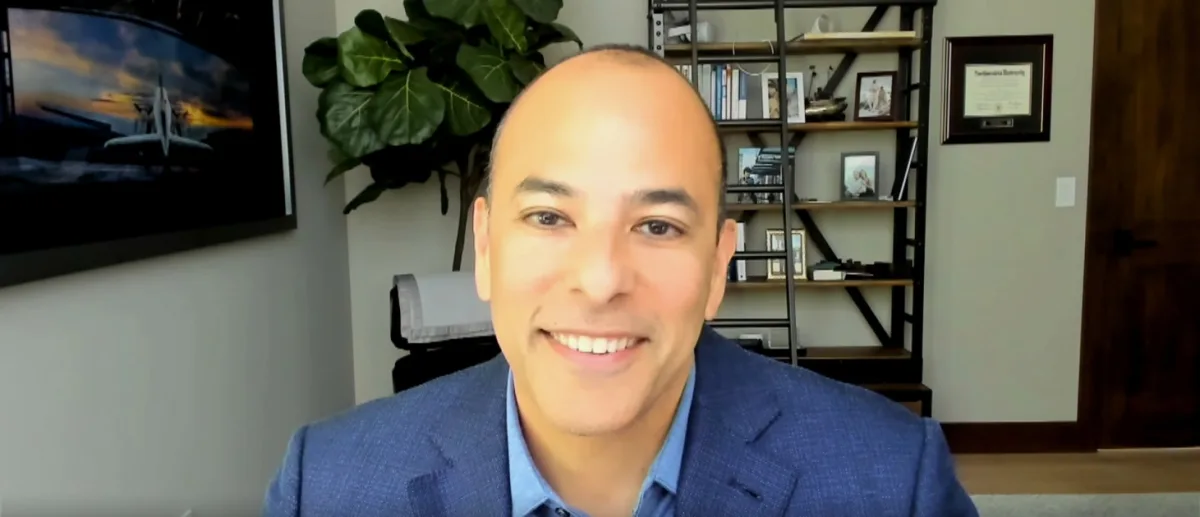
The industry's obsession with automating contact center calls has created a measurement problem. The most valuable, intricate, and emotionally sensitive customer interactions remain ones that people prefer to handle with a human being. Five9 Inc., a provider of cloud-based contact center software, is rejecting the full-automation playbook in favor of what it terms Humantic—a framework where human agents and AI systems operate as partners rather than competitors for the same work.
Amit Mathradas took the helm at Five9 in February, arriving from Nintex Global Ltd., where he had previously held roles at Avalara Inc. as president and chief operating officer. Mathradas characterizes the shift toward Humantic as a market recalibration, noting that the push for complete automation was always misguided, even if momentum suggested otherwise.
We at Five9 have a very strong belief that the future world is what we are calling Humantic. Humantic is the combination of humans and agentic sitting in your contact center. I think there is a misconception that all humans are going away in the contact center. That is not true.
Amit Mathradas, CEO of Five9
Mathradas shared these views during an appearance at "The AI ROI in Contact Center Summit," where he spoke with Bob Laliberte of theCUBE Research and Zeus Kerravala of ZK Research. The conversation, broadcast live on theCUBE, SiliconANGLE Media's streaming platform, explored Five9's rationale for building customer experience around human-AI collaboration rather than pursuing complete automation, and what distinguishes contact center implementations that gain traction from those that falter.
Why Humantic keeps three kinds of calls in human hands
Five9's framework identifies three categories of interactions that belong with human agents: complexity, value, and vulnerability. Mathradas explained that calls involving a company's most important customers, individuals dealing with personal loss, or requests demanding navigation through intricate financial products should remain with people. Meanwhile, AI handles high-volume, low-risk transactions such as password resets and account balance inquiries.
From the research we have done, we found one stat really amazing. Ninety-nine percent of business practitioners who are deploying AI think their contact centers and their serviceability has gotten better. Only 66% of actual users think the contact center has gotten better. More than 50% of them are saying the reason is, 'I want to access a human. and I don't get that.'
Amit Mathradas, CEO of Five9
This disconnect has shaped Five9's strategy. Rather than forcing customers to adopt an entirely new technology stack, the company has embraced an open platform approach. Recent initiatives, including the expansion of its AI Agent Connect program to include third-party voice AI vendors, reflect this philosophy. PODS Enterprises LLC, a moving and storage company, exemplifies the model's potential: the company is tracking toward routing over 100,000 calls through Five9's Voice AI Agents by year's end, achieving a 44% containment rate that surpassed internal expectations.
https://www.youtube.com/embed/CnUvrWus7Xw?feature=oembed
The next big thing is around how these systems of record all work together to enable the next shift that is coming. Orchestration is the next big layer that a lot of customers should be thinking about and companies like us are thinking about in terms of where it needs to go.
Amit Mathradas, CEO of Five9