Dell's New Tools Shift AI Infrastructure Management From Servers to Racks
As AI clusters scale to supercomputing proportions, managing the operational complexity of thousands of interconnected devices has become the real challenge. Dell is moving beyond individual server management to rack-scale orchestration.
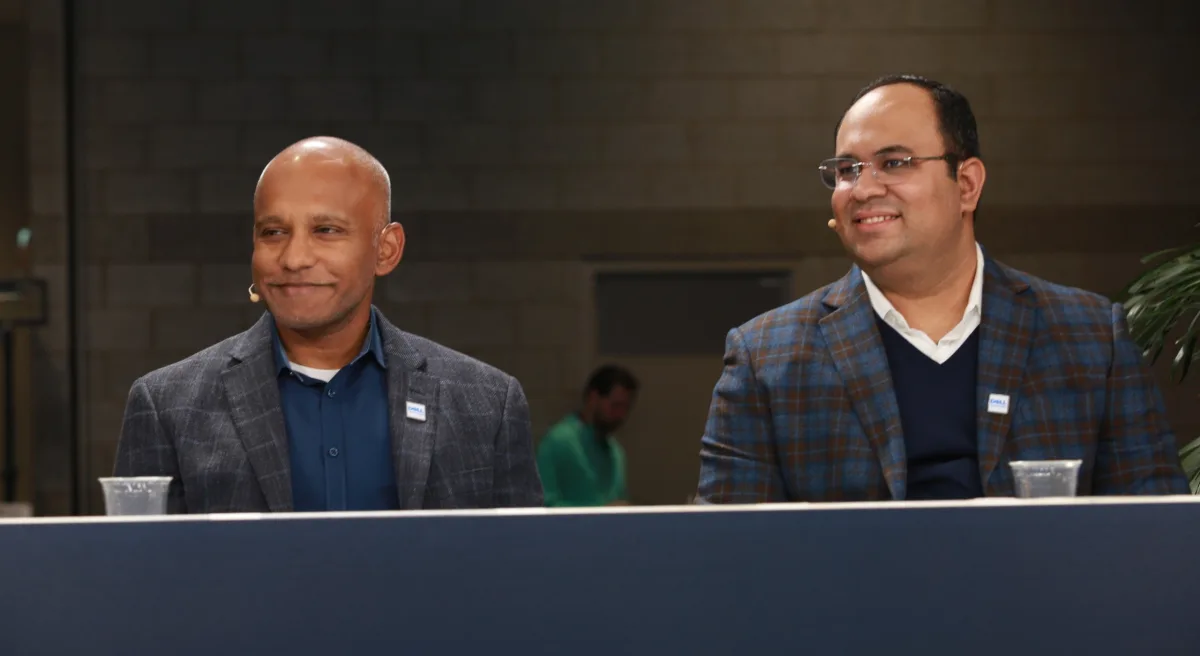
The bottleneck in building artificial intelligence infrastructure has shifted. Procuring the hardware—servers, GPUs, switches and cooling systems—is no longer the hard part. The real difficulty lies in deploying and maintaining these systems once they arrive at the data center, according to Dell Technologies Inc. executives.
This operational reality is forcing infrastructure vendors to rethink their product strategies. Over the past year, Dell has expanded its AI Factory initiative beyond traditional server and storage offerings. Customers increasingly want guidance and tooling to deploy and operate the sophisticated systems they purchase, said Andrew Vaz, vice president of product management for the Telecom Systems Business at Dell.
What we are seeing is a fundamental shift from procuring supply to actually standing up and running these very complicated AI clusters and data centers. One of the interesting things that we've seen is it's actually now impossible to manage these things with just a few scripts, manually, in an old world manner. The toolsets are becoming more important.
Andrew Vaz, Dell Technologies
Rack-scale management for the supercomputing era
Dell unveiled two new management platforms at SC26: Dell OpenManage Rack Scale and Dell Fabric Manager. These tools handle the full lifecycle of AI infrastructure, from initial deployment through ongoing operations. The new OpenManage Rack Scale can manage 100,000 devices in its initial release, a dramatic leap from the 8,000 servers supported by its predecessor, OpenManage Enterprise, according to Saurabh Kapoor, director of product management and strategy for AI compute and networking solutions at Dell.
The shift reflects how AI infrastructure has fundamentally changed. Systems like Nvidia Corp.'s NVL72 racks integrate compute, power distribution, switches and cooling into unified units. This bundled approach requires a different management philosophy than the server-centric tools of the past.
OpenManage Enterprise, the previous product we had, was perfect for servers. Server was the unit of compute. But you have seen in the last 18 months, the world has moved very quickly to larger ecosystems and infrastructures. Rack is the new unit of play.
Saurabh Kapoor, Dell Technologies
Comprehensive visibility into system health has become equally critical. Dell's iDRAC controller collects more than 320 metrics from each server. An AI-powered chatbot can analyze this telemetry using local large language models to surface insights that raw metrics alone cannot reveal. The stakes are high: a single cooling failure can destroy millions of dollars in equipment, making every component's health status essential to monitor.
It could be something as simple as, 'Hey, this transceiver's about to die that you can't diagnose with metrics you have today.' You need to use AI to go look at it. You need telemetry off the system to go collect all of that, correlate it, run your algorithms on them, train it and understand what's happening.
Andrew Vaz, Dell Technologies
Network infrastructure has become the critical constraint in AI clusters. Dell Fabric Manager converts validated reference designs developed with Nvidia and Advanced Micro Devices Inc. into deployable configurations that work across different network operating systems and silicon platforms. The pressure on network capacity is intensifying as agentic AI workloads reshape traffic patterns.
We're getting blown away by it. It's more like nine to 10x. It's going everywhere: east, west, north, south.
Andrew Vaz, Dell Technologies
https://www.youtube.com/embed/FkYg7ZywuPs?start=1&feature=oembed
Enterprise bandwidth consumption is far outpacing the previously projected 3.5-fold increase, with traffic flowing in all directions across the data center. This explosive growth underscores why network management has moved to the critical path for AI infrastructure operations.