Contact centers shift from call deflection to actual problem-solving with AI
Zoom and implementation partners are moving past the containment metric that dominated contact center strategy, focusing instead on whether AI agents actually resolve customer issues end-to-end.
The contact center industry has long relied on containment as its primary success metric—the percentage of customer interactions handled without escalation to a human agent. Yet this approach increasingly fails to capture what matters most: whether customers actually get their problems solved. A new framework gaining traction measures conversation to completion instead, assessing whether an interaction genuinely resolved the customer's underlying need rather than simply avoiding a live handoff.
Ram Rajagopalan, head of product, AI for Zoom CX at Zoom Communications Inc., has spent the past year embedding this philosophy into the company's virtual agent platform. He argues that the industry's fixation on containment metrics alone misses the point of what AI agents should accomplish. "Many customers, even about a year, 18 months ago, focused on purely measuring containment," Rajagopalan explained. "Where I see conversations these days going is not just looking at containment, but end-to-end resolution. This is what we are calling within Zoom conversation to completion, where we are not just answering the basic inquiries, deflecting the call from going to a human agent, but actually completing the task that the consumers are calling in for."
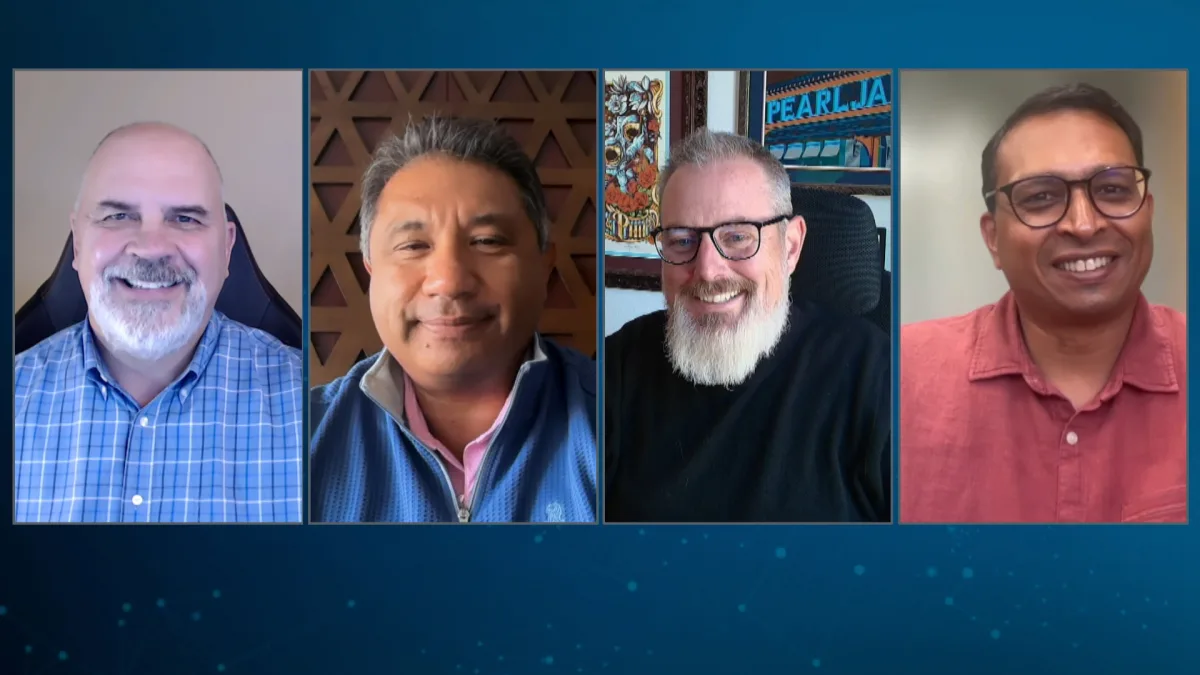
Rajagopalan and Joe Rittenhouse, co-chief executive officer of Converged Technology Professionals Inc., a Zoom implementation partner, discussed this shift during "The AI ROI in Contact Center Summit" at theCUBE, SiliconANGLE Media's livestreaming studio, in conversation with theCUBE Research's Bob Laliberte and ZK Research's Zeus Kerravala.
Starting small with the right first use case
From the implementation perspective, Rittenhouse emphasizes that achieving genuine resolution depends on selecting the appropriate initial use case rather than pursuing the most complex one. "Usually where we try to start is, where's the low-hanging fruit?" he said. "Just a simple question of what do you do after hours? We're usually staffed, we follow the sun from the East Coast to the West Coast, but then after hours we just have a general mailbox. And the answer is typically, I don't know."
Rittenhouse noted that roughly half of his firm's clients have established formal AI committees, while others remain uncertain whether AI strategy should flow from executive mandate or emerge through cross-departmental coordination. Zoom faces similar governance challenges as it scales its AI Companion across customers operating thousands of seats. "These tools work. You just can't boil the ocean," Rittenhouse said. "We use the analogy of eat the pizza piece by piece. You don't fold it in half and scarf it down. It's one bite at a time. Start small, and it'll grow."
https://www.youtube.com/embed/08tsCFH4t5c?feature=oembed
This incremental approach extends to transitions between virtual agents and human representatives. When a customer needs to speak with a person, the complete context of the conversation must transfer along with the engagement. Rajagopalan stressed the importance of this handoff: "You want to transfer the full context, the reason why they're calling, the collected variables that you need to pass on to a human being so that human being can get on with the job and get it done without having to repeat themselves or look at 10 different places of record just to answer a simple question."