Cloud-Native Skills Will Separate Winners From Losers in AI Infrastructure Market
As GPU-backed data centers proliferate, emerging cloud providers are discovering that building capacity is far simpler than operating it. Kubernetes expertise and large-scale software capabilities will determine which neoclouds survive the coming shakeout.
The rush to build AI infrastructure has spawned numerous new cloud providers, yet many lack the operational maturity to compete at scale. While deploying GPU capacity has become straightforward, running it as a managed service remains a different challenge entirely. Kubernetes has become the de facto operating system for AI workloads, and the cloud-native community's deep experience with the platform now represents a critical competitive advantage that newer entrants often lack.
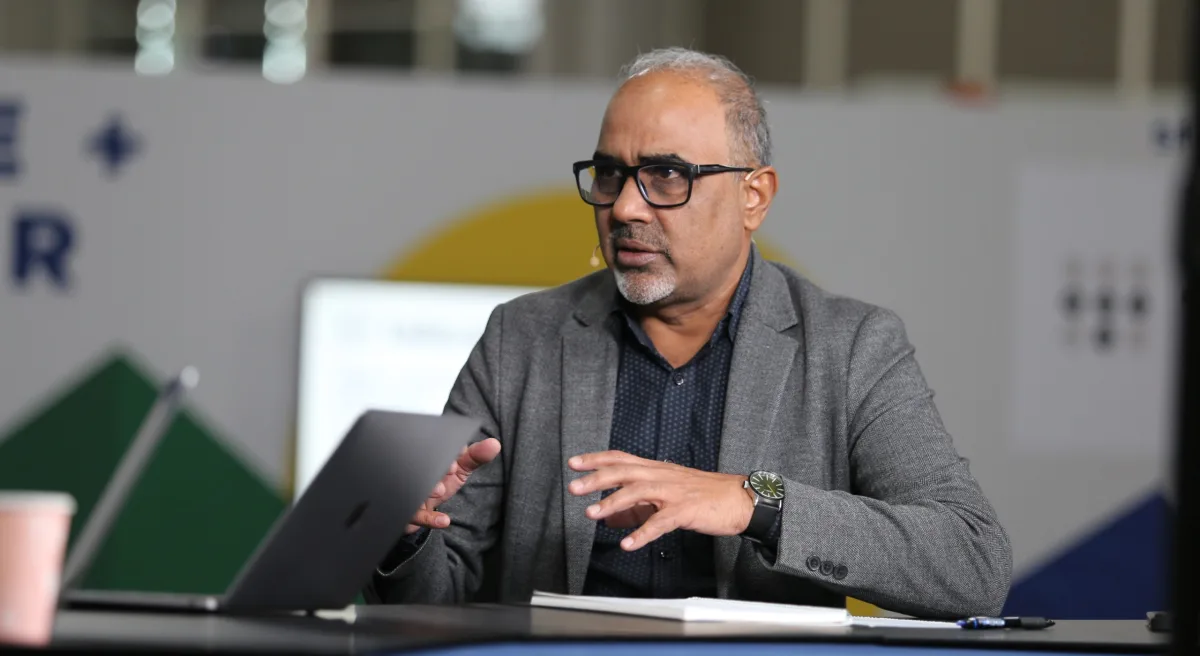
The shift is visible at industry gatherings: KubeCon has increasingly become an AI infrastructure event, with container orchestration for AI and distributed inference now dominating the agenda. According to Sarbjeet Johal, chief executive officer of Stackpane, the newer AI clouds operate on the same fundamental computing principles as established hyperscalers, but many have carved out narrow specializations and lack the integration with enterprise systems that will ultimately drive demand for their capacity.
I'm afraid that the neoclouds, if they don't partner with the ones who are appreciating the brownfield, they will suffer. They can't survive on their own because, who is going to take that compute from them? It's the hyperscalers. The neoclouds are the overflow.
Sarbjeet Johal, CEO of Stackpane
Software expertise will determine which AI infrastructure providers endure
Kubernetes matured over more than a decade, and its evolution is now paying dividends in the AI sector. The Cloud Native Computing Foundation added a dedicated track for AI inference and agentic systems to this year's KubeCon North America schedule, reflecting where the industry's focus has shifted. The platform now operates across roughly two-thirds of enterprises, sits embedded in Nvidia Corp.'s reference designs and serves as the foundation for emerging cloud providers. Years of operational experience with Kubernetes are translating directly into the commercial deployment of AI infrastructure, where the bulk of capital investment is flowing.
The maturity of Kubernetes matters enormously given how much capital is flowing toward new providers. SoftBank Group Corp. announced plans to enter the U.S. neocloud market this summer, adding to an already crowded landscape. Many existing operators began by running data centers for cryptocurrency mining or exploiting spot market pricing rather than managing large-scale software systems. This background creates a vulnerability: acquiring GPUs is straightforward, but operating them as a true cloud service is not.
Half the neoclouds will fail. To run a big neocloud, you've got to look like CoreWeave. Well, guess what CoreWeave is? The founders know data centers. … People who know large-scale software stacks at scale win.
John Furrier, theCUBE Research
The cloud-native community represents the most likely source of salvation for struggling providers. CoreWeave Inc. exemplifies this model, with its engineering led by Chen Goldberg, a former Google Cloud LLC executive, combining data center expertise with sophisticated software capabilities. Private equity could also play a role by acquiring smaller Kubernetes-focused companies to fill operational gaps. Such acquisitions could justify billion-dollar valuations as data center operators with physical assets seek assistance with network connectivity, managing multiple generations of Nvidia hardware and coordinating workloads across distributed facilities.
https://www.youtube.com/embed/lUQKGyP5s8I?feature=oembed
Johal, drawing on his experience at Rackspace Technology Inc., emphasized that software capabilities will ultimately separate survivors from failures in the neocloud market. "We have seen this movie earlier. So if you want to be a good hyperscaler, if you don't have the software chops, you're dead," Johal said. "We knew how to run data centers at Rackspace, but we didn't have software chops. … Without software chops, you're dead in the water."