Boutique Launch Providers Find Eager Customers Among Satellite Operators
As SpaceX reduces its Falcon 9 cadence and Starship's timeline remains uncertain, satellite companies are turning to smaller, specialized launch providers to meet their unique orbital requirements.
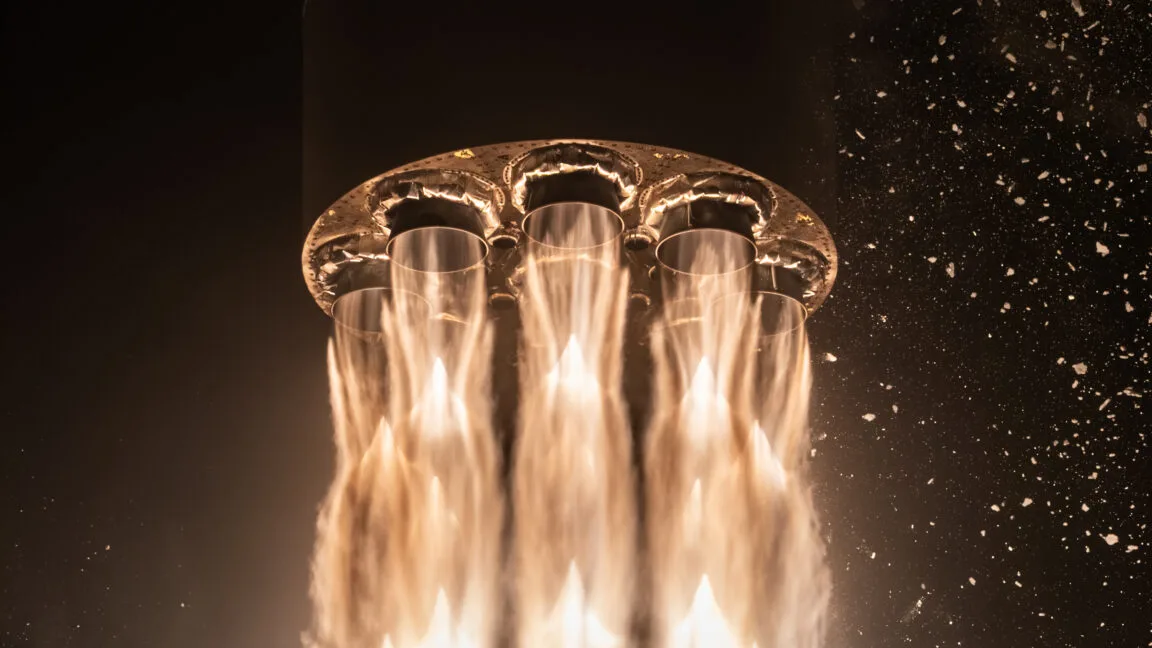
Across the satellite industry, a consistent refrain emerges when executives discuss launch capacity: the world lacks sufficient options for reaching orbit. Yet this complaint persists despite an unprecedented launch tempo in recent years, dominated by SpaceX's Falcon 9 rocket. Ordinarily, market participants welcome new competitors, anticipating that rivalry drives down costs and allows superior operators to flourish. That theory appears validated by current events. SpaceX is curtailing its Falcon 9 manifest, while its next-generation Starship vehicle remains unproven for commercial payloads beyond the company's own Starlink constellation.
The result has energized satellite operators seeking alternatives. Germany's Isar Aerospace provided reason for celebration recently by reaching orbit for the first time with its Spectrum launcher, deploying CubeSats to low-Earth orbit from a Norwegian spaceport. The achievement came after the company's inaugural test flight failed the previous year. Isar's breakthrough signals opportunity for Europe's space sector, which has long relied on Arianespace and Avio as its primary launch pathways. Competing German startup Rocket Factory Augsburg, Spain's PLD Space, and the Franco-German venture The Exploration Company are all pursuing their own routes to orbit.
Early Believers
On Sunday morning at 5 a.m. Japan time, executives at Tokyo-based satellite servicing company Astroscale monitored Isar's launch webcast from Norway. Days before that successful flight, Astroscale had announced a contract with Isar to conduct a mission as soon as the following year. This represented Astroscale's second agreement with the German launcher; the companies had previously signed a deal in March for another Spectrum flight carrying a different Astroscale satellite. Remarkably, both contracts preceded Isar's demonstration of orbital capability.
Astroscale was not alone in backing Isar early. Government-backed missions from the European Space Agency, the European Union, and the Norwegian and German governments comprise the bulk of Isar's launch backlog, reflecting official interest in supporting the company's market entry. However, Astroscale operated independently of such government backing, making its selection of an unproven rocket for two critical missions particularly noteworthy. The company's focus on satellite servicing and space debris mitigation aligns well with the dedicated launch capacity that Spectrum provides.
US-based Katalyst Space similarly pursued a specialized launch solution. In July, the company deployed a spacecraft aboard Northrop Grumman's seldom-used air-launched Pegasus XL rocket to pursue NASA's aging Swift observatory, which was falling from orbit. Like Astroscale, Katalyst required a dedicated trajectory to a specific orbital location. Technical difficulties ultimately prevented Katalyst from completing its rescue mission.
Astroscale's two Isar-bound missions carry significant weight. ELSA-M, managed by Astroscale's UK division, will capture and deorbit a satellite from Eutelsat's OneWeb constellation to validate end-of-life servicing techniques. ADRAS-J2, partially funded by Japan's space agency, will attempt to grapple a defunct Japanese rocket body and remove it from orbit, following up on the highly successful ADRAS-J demonstration mission that inspected the same rocket in 2024. Both missions are central to establishing Astroscale's credentials in what the company views as a lucrative market segment.
Ars Technica spoke with Chris Blackerby, Astroscale's chief operating officer, about the company's satellite servicing objectives and launch strategy. Below is an excerpt from that conversation.
Interview: Chris Blackerby, Astroscale Chief Operating Officer
On Isar's successful first orbital flight
It was Sunday morning, 5 am or so Japan time, and I was up watching. They did a fantastic job in everything from the PR side of it, having the chief engineer on there to explain everything. Even just watching them explain through as I was sitting on my couch early in the morning on Sunday, my confidence was growing as I was watching the team explain everything they'd done, all the prep they had taken to get to that point. We'd done a lot of background research. We had teams go out there to do due diligence research at their manufacturing site and talk to a lot of their technical leaders. So we were pretty confident already. Certainly, the launch was incredible. Checking off all the markers, all the milestones, deploying the payloads—it was everything we could have hoped for. Obviously, congratulations to them. But yeah, you're right. We have two big missions set up on Isar, and we're excited to see them continue to improve and show success and get to launch with them.
Chris Blackerby
On why Astroscale chose Isar over proven alternatives like Rocket Lab
Launch, as you well know, is the big issue around the industry writ large. First of all, to answer the specific question, yeah, you're right, dedicated launch is pretty essential for us for most of our missions. We could do a rideshare, but it's much more complicated. So a dedicated launch makes it much better. Then we have to factor in capacity for the payload, and that can answer your second question. Right now, for Rocket Lab current capability, we've expanded beyond it. ADRAS-J was smaller, mass-wise, so it could fit into an Electron. ADRAS-J2 and ELSA-M cannot. Of course, they could fit into (Rocket Lab's) Neutron, but they're not ready yet.
Chris Blackerby
And when we look around at other options, Stephen, for all of the talk about the ubiquity of launch and the dropping prices and the capacity that's everywhere, I don't know. I don't see it yet. There are not a lot of consistently reliable options that are out there. I don't think that's anything that's too controversial to say. So we had to look for something that fit our budget. It had to fit our capacity in terms of size. It should be dedicated, as you mentioned. So when you get that Venn diagram that throws in all of those various requirements, Isar really fit the bill. And yes, choosing a launch provider that hasn't proven consistent success yet is definitely a risk. But as I said, we did a lot of checking on them, a lot of due diligence, and we're very confident what we what we decided.
Chris Blackerby
That's exactly right. Our missions are around that area, under a ton, but in the 500 to 700 kilogram area. And yeah, there's not much. There were a bunch that were out there that were in that area for a while, including Relativity, they were aiming for that, and Astra was in that. There were a few others that were in that range at one time. But everybody is going bigger now, so there's not a lot. There are still a few small ones out there, but to fit into that dedicated 1-ton class, there's not a lot. We're hopeful. We're thinking about launch vehicles, which we all have to be thinking about, especially with all of the SpaceX news recently, and the uncertainties that have been widely reported about how available rideshares are going to be with SpaceX. We're just excited to see proof from a lot of different operators. Blue Origin, we saw the big Stoke fundraise recently, so yeah, we'll see. But you're right. As far as 500-kilogram to 1-ton class, there are not a lot of options.
Chris Blackerby
On lessons learned from the ADRAS-J mission
It was such an incredible mission. I love talking about it. It was pretty ground-breaking. We are extremely excited and extremely grateful to JAXA (the Japan Aerospace Exploration Agency) for driving this, and this is the first step toward proving out an on-orbit servicing capability toward more sustainable use of space and debris removal, which was the foundation of Astroscale. But beyond that, the capabilities to identify, approach, rendezvous with an object in orbit, which is fairly unprecedented from a commercial company, especially a non-communicative one like the ADRAS-J client was, as it will be again for ADRAS-J2.
Chris Blackerby
In terms of what we learned, boy, we need a whole conversation on this. But just building out a mission that needed to approach an unprepared, uncommunicative object, everything that goes into that from the hardware side, from the ConOps (concept of operations) development, making sure that we make it as as safe as possible, so that there is fault identification analysis to say, 'OK, detect the problem, make sure that the spacecraft knows that when it's autonomously approaching, as it gets close, it can identify where there's any kind of anomaly, and it knows we need to try again. Safety is the paramount issue when we're doing anything like this, approaching an object in orbit. That was key, and all of those learnings from designing, building, manufacturing, launching, operating the satellite. It was everything. We learned so much from that.
Chris Blackerby
The pictures, which you've seen, the images that we took from ADRAS-J are so exquisite, and it helped us to build ADRAS-J2. We now know what the client object looks like. We know it's not rotating. That was a key step. We built ADRAS-J to be able to rotate around the client object in orbit, so that if we had to find that payload adapter as we're spinning around, we could go in and grab it for ADRAS-J2. What we learned with ADRAS-J is the client object is pretty stably pointing down toward the Earth. We got a very clear image of what the object looks like right now. We know it's not degraded. We know that there's a clear path toward grabbing it at the payload adapter. All of those are things that we learned over the development of ADRAS-J that have helped building ADRAS-J2, I won't say easier because none of this is easy, but easier than it would have been without that kind of capability and that kind of knowledge.
Chris Blackerby
On the ISSA-J1 mission and its technical differences
ADRAS-J2 is going to an oblong rocket body. It's not spinning. ISSA-J1 is going to satellites, and it's going to have to approach something that has a solar array sticking out, so we're expecting that it could be spinning. So the RPO (rendezvous and proximity operations) is definitely going to be more complex. We need to be able to develop this tech to precisely approach this large piece of debris that likely is not going to be a stable object, and we're also going to a couple of them with ISSA-J1. A lot of the technical capabilities that we've developed by building out all of our missions… they share a common baseline in terms of technology as we think about the guidance, navigation and control, and the visualization and the RPO that's necessary to do this identification and approach. But there are all these little differences, and that's why each mission is unique in its own way, and it all builds to this larger dataset of learnings that we're developing, and all of this is in pursuit of this servicing ecosystem. If we're going to get to this level of servicing ecosystem for all aspects of security and economics and the sustainability of the space environment, we need to have this large dataset of approaching objects, of identifying objects, and of capturing objects, and so that's what we're building out across the board in the portfolio of our missions.
Chris Blackerby
On the progression toward operational servicing capabilities
I'm assuming you mean like repeatable, consistent servicing. Every step we take is another step toward that goal. It's hard for us to give a specific date on that or a timeframe. But the fact is, we've got eight, nine missions under manufacturing right now around the world. We have a variety already that are out there. None of them are on the level of, say, a repeatable multi-order service yet. That's going to come. It's just a matter of time. The missions that we're doing now, we've taken these incremental steps. ELSA-D, our first mission, was fully internally funded. That was funded by the money that we raised on the equity markets. ADRAS-J, the second mission, that was that was jointly funded with JAXA, so we worked on that together. ELSA-M, we're working on that together with ESA and the UK Space Agency. With ADRAS-J2, we're getting toward being revenue-positive with these missions. Our missions going forward, for the most part, are revenue-positive. If we look at that from the perspective of sustainability, not of space, but of our company, economic financial sustainability, we're already getting to that point. We need to get more toward a commercially repeatable mission, and we're not there yet. But we'd like to see, by the early part of the next decade, the early 2030s, that we're going to start seeing a more consistent, commercially viable servicing ecosystem being developed.
Chris Blackerby
On military and government demand for servicing capabilities
Provisioner is big. We're really excited about that. That's launching soon as well, and it's going to demonstrate the capability of refueling. We think there's going to be a growing market for that, and the demand signal is coming in from the US. When we think about where that next technology and demand is going to be, refueling is a big one. You've seen what some of the other contracts are that are out there. There's a deorbit-as-a-service study that's been put out (by the Defense Innovation Unit). There are some life extension mission interests that we see. We see a lot coming out in terms of close-in inspection, making sure that the customer can understand where the threats are, and whether that's debris or some other kind of threat, they want to be able to have the the capability to do close-in RPO. So we're excited for all of these kinds of missions that governments are showing an interest in that require a close-in RPO.
Chris Blackerby
To be clear, we're talking about the capability to identify and station-keep and come in close to an object. This is not about flying by an object and snapping pictures as you go, or getting to within a couple kilometers and taking pictures. We got to within meters of ADRAS-J. That's the kind of really incredibly exquisite capability that we're building out. We see that there's going to be interest in docking, taking pictures, all of that. We're seeing interest from not just the US government, but from governments and even the commercial sector across all of the regions where we're located globally.
Chris Blackerby
Source: Ars Technica