Blackwell GPU on the road: Testing Microsoft's Surface Laptop Ultra for local AI inference
Microsoft's Surface Laptop Ultra pairs an Nvidia N1X Blackwell GPU with up to 128GB of unified memory. We ran local AI models on the device to see if it can match the performance of high-end desktop machines.
The Surface Laptop Ultra represents Microsoft's bid to challenge Apple's MacBook Pro lineup, targeting creatives, developers, and particularly those working with AI. The machine combines Nvidia's N1X-based RTX Spark platform with a Blackwell RTX GPU featuring up to 6,144 cores, a CPU with up to 20 cores, unified memory reaching 128GB, and pricing that undercuts Apple's offerings. For developers interested in running local AI models while maintaining capability for video editing and gaming, the combination of raw power and cost presents a compelling case.
Testing focused on AI workload performance using the high-end $4,300 configuration with 64GB of RAM and a 1TB SSD over the course of a week, including mobile use. Standard tools for local model inference—Unsloth Studio, Ollama, Hermes Agent—installed and ran without friction. The Blackwell GPU frequently outpaced a Mac Studio equipped with the M4 Max chip, which typically handles most local models within its 48GB memory constraint.
Inference speed depends on model architecture
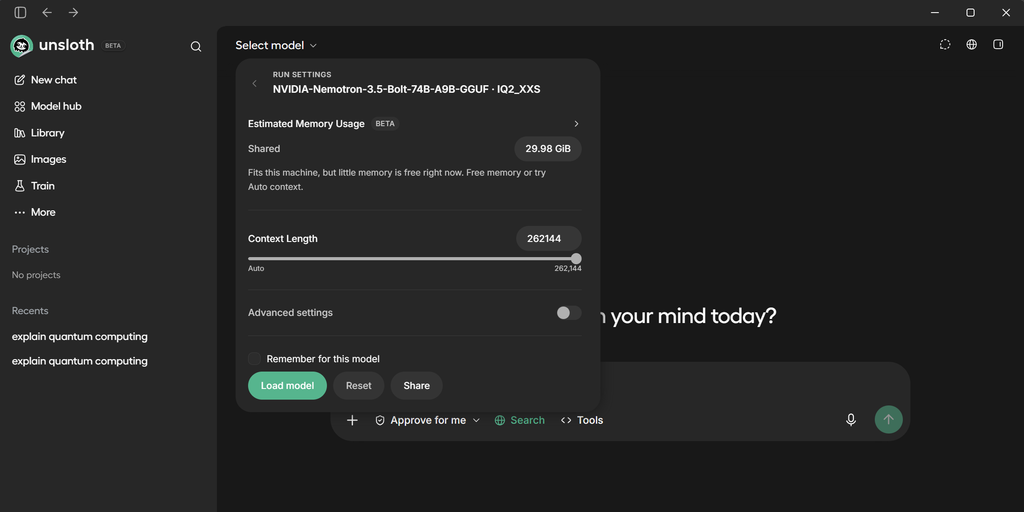
The newly released Nemotron 3.5 Bolt model demonstrated the laptop's capabilities, achieving 56 to 60 tokens per second or higher. This heavily quantized model with 9B active parameters naturally performs well on the hardware. However, the dense Qwen 3.8 27B model at 8-bit quantization produced only 8 to 9 tokens per second in Unsloth Studio—a limitation rooted in memory bandwidth rather than raw compute. Reducing quantization to 4-bit improved throughput to 25 to 28 tokens per second. The 8-bit Gemma 4 26B-A4B, leveraging mixture-of-experts architecture, reached approximately 40 tokens per second, illustrating how model design fundamentally shapes performance on the hardware.
Battery performance shows significant degradation
All previous measurements relied on the 140W charger. Microsoft claims its tuning preserves 99.6% of performance on battery power, yet real-world AI workloads told a different story. The 4-bit Qwen 3.8 model dropped from 25-28 tokens per second to around 18 tokens per second unplugged. Nemotron 3.5 Bolt fell to 42 to 45 tokens per second. Across tested AI workloads, expect roughly 20% to 25% performance loss when running on battery—a figure consistent with gaming performance as well. Microsoft advertises 12 hours of active web usage, but sustained local AI inference would likely exhaust the battery in a few hours based on observed consumption.
Memory configuration creates an awkward middle ground
The 64GB configuration leaves users in an unusual position. Current smaller models cluster around 27B to 30B parameters, providing ample headroom for KV cache and other applications. Yet few models exist in the 32GB to 48GB range that would fully exploit the additional capacity. Upgrading to 128GB pushes the Surface Laptop Ultra's price to $5,900.
Thermal and acoustic trade-offs emerge under load
The machine's up to 1 petaflop of FP4 AI performance generates considerable heat. Dual fans activate during AI workloads, producing noise that becomes noticeable during extended inference tasks—particularly when coding agents process complex queries. The noise level is not extreme but sufficient to distract during work. The Surface RTX Spark Dev Box, built on the same N1X platform, features a thousand air vents partly to manage thermal output and potentially exceed the laptop's performance envelope. Outside of intensive compute, the device remains quiet and fans stay off during typical daily tasks, powering down rapidly once GPU load decreases.
Additional findings from extended testing
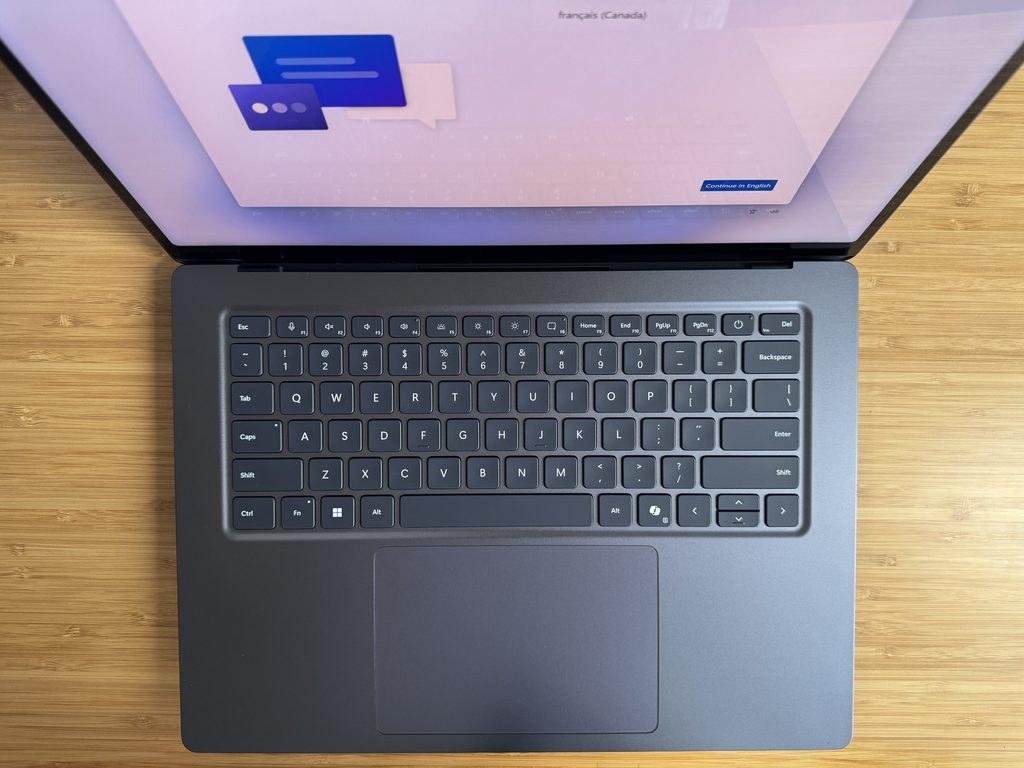
- The touchpad is expansive with haptic feedback support. Few applications currently leverage this feature, though DaVinci Resolve demonstrates its value—feeling the playhead snap into place accelerates editing workflows.
- Speaker design creates an unexpectedly wide stereo field through side vents near the front, noticeably enhancing gaming and media playback.
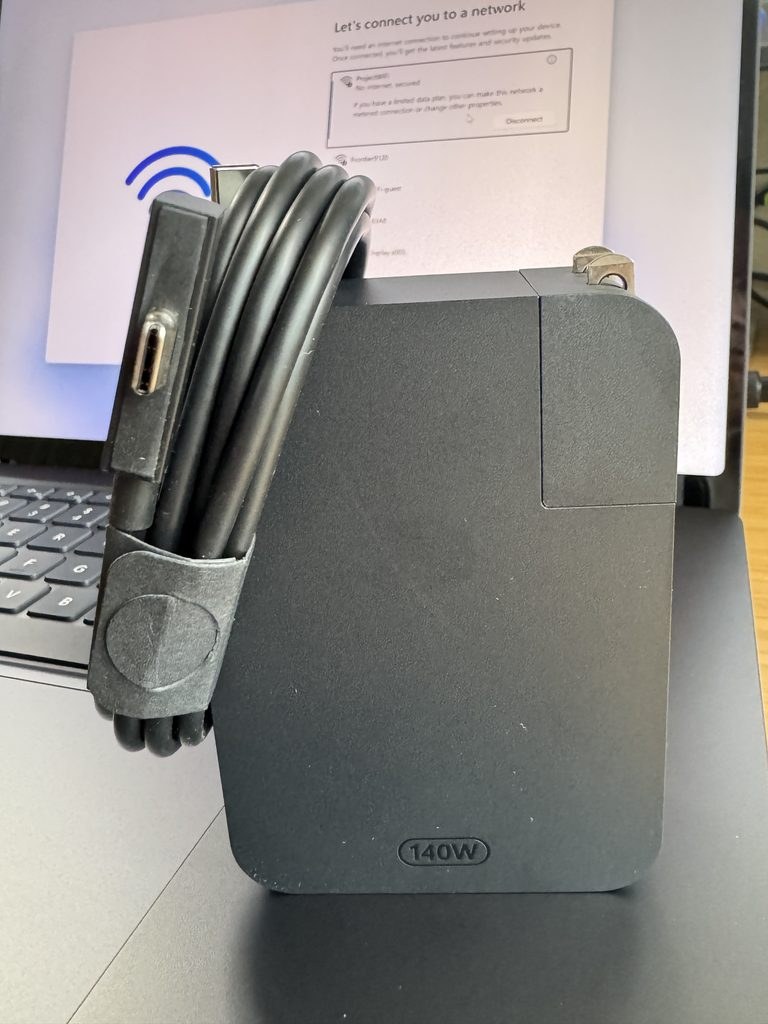
- A new magnetic USB-C charging connector mirrors the magnetic Connect found on other Surface devices, though cable loss remains a practical concern.
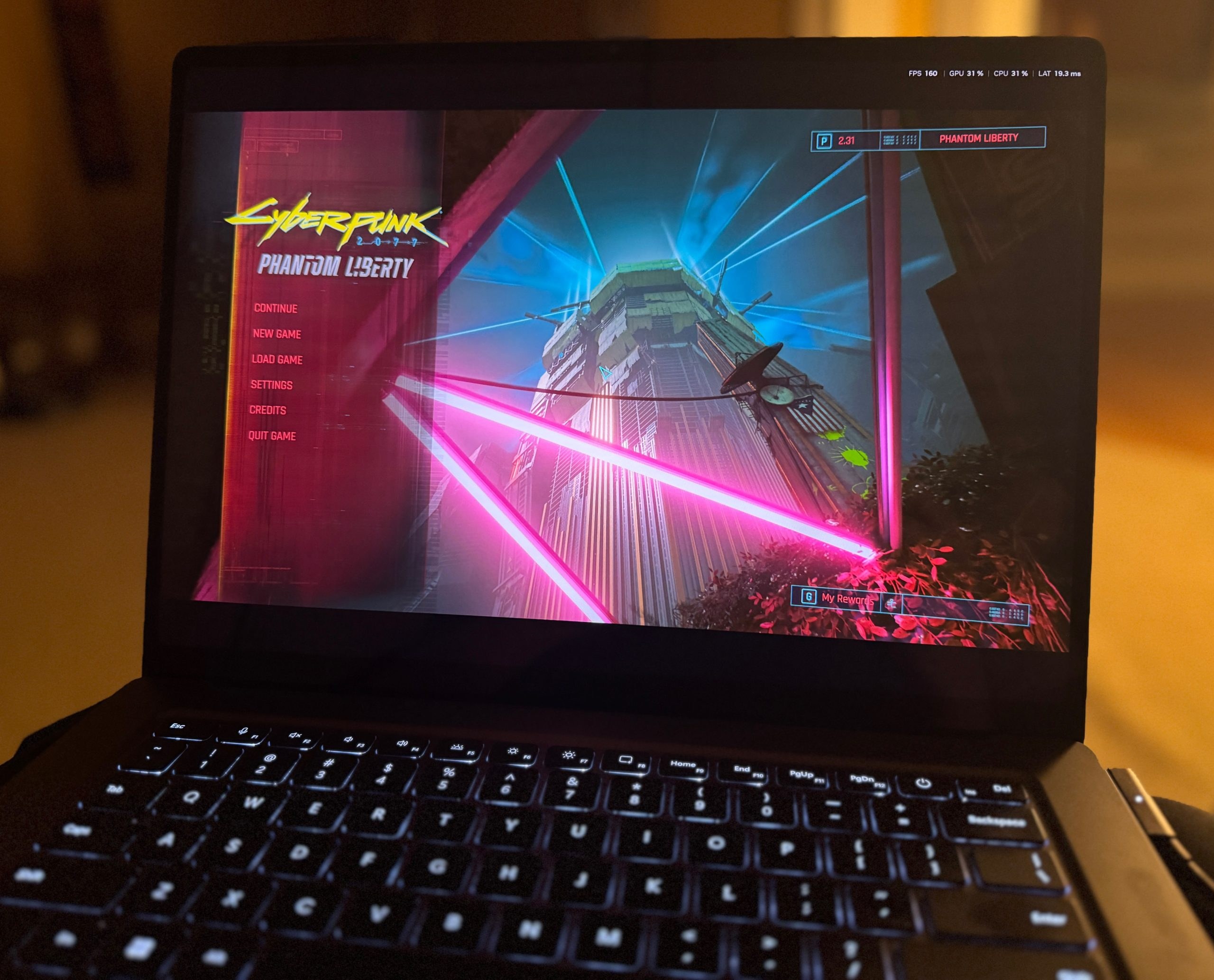
- Gaming on Windows ARM remains early-stage, but emulation overhead stays manageable. GPU-intensive titles perform better than CPU-bound games. Cyberpunk 2077 ran at approximately 60fps in 2K with ray tracing enabled; The Witcher 3 remaster achieved 60fps in 4K with ray tracing disabled. The 15-inch 3:2 touchscreen (3270×2180) functions as a high-quality 3K display, making 4K gaming unnecessary without an external monitor.
- Windows on ARM has matured significantly over the past year. While some applications and games remain incompatible or perform poorly, no critical issues emerged during testing. Developers increasingly offer Windows ARM64 versions, with OpenCode being a notable example.
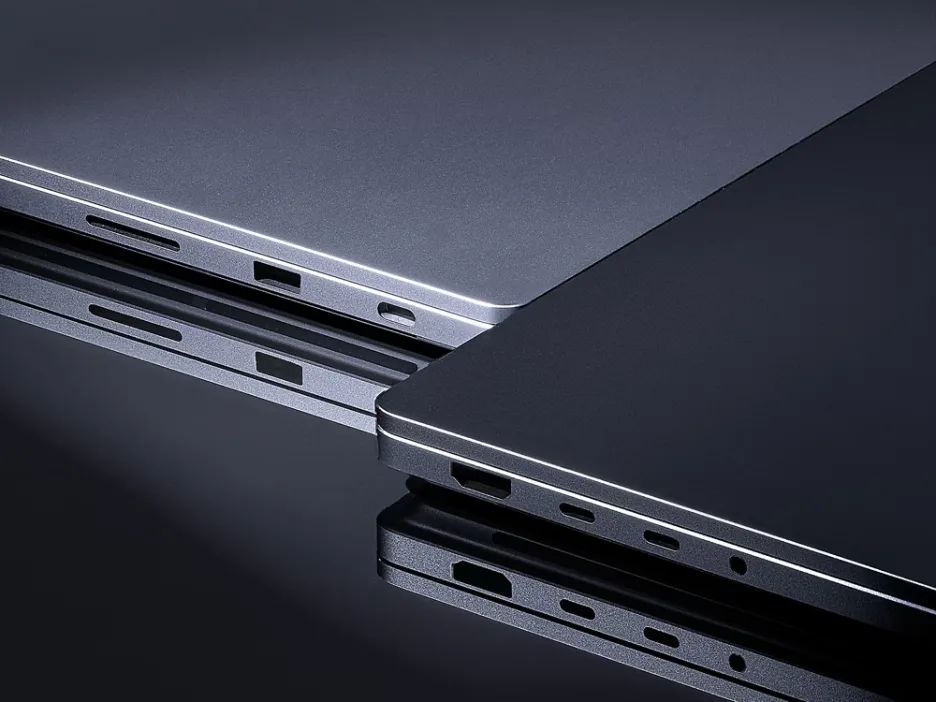
- Port selection includes two USB-C, one USB-A, HDMI, a headphone jack, and SD card reader—eliminating the need for a USB-C hub when using legacy accessories.
- At 4.41 pounds (2kg), the laptop is noticeably heavier than a MacBook Air.
- The SSD is user-replaceable via four screws on the underside without voiding the warranty—a design choice Apple should consider.