Bargain-hunting coder finds abandoned mining rig for $35, builds local AI inference setup with 54GB of GPU memory
A Russian buyer scored nine Nvidia P106-100 graphics cards from a garage for 3,000 rubles, then successfully ran a 35-billion-parameter language model on the repurposed hardware at a cost of roughly 65 cents per gigabyte of VRAM.
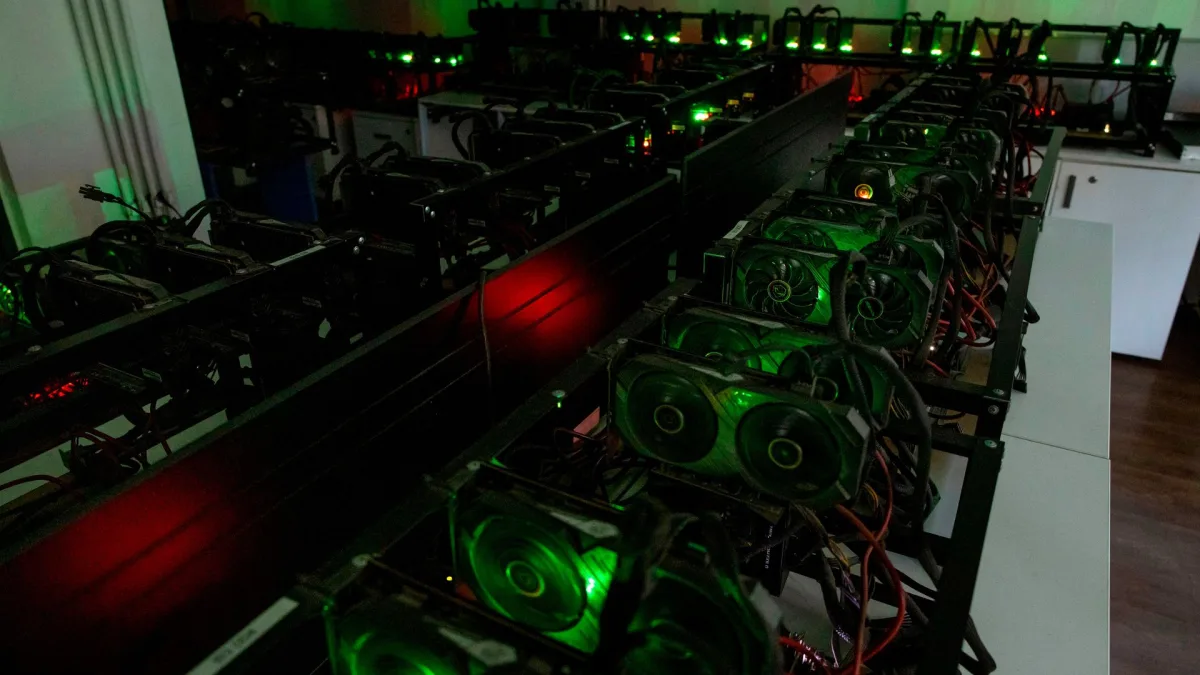
A Reddit user identified as markpronkin acquired an aging cryptocurrency mining rig for 3,000 rubles—approximately $35—after discovering it listed on Avito, a Russian classifieds platform. The hardware had been sitting in a damp garage, and neither the seller nor the buyer had any certainty it would function. The seller declined a pre-purchase inspection, but the negotiated price was low enough to justify the gamble. When powered on, all nine Nvidia P106-100 GPUs came to life without issue, delivering a combined 54GB of GDDR5 memory.
The buyer immediately tested the rig by running Alibaba's Qwen3.6-35B-A3B model through Ollama, a local inference framework. The mixture-of-experts model, which activates 3 billion parameters out of 35 billion total, processed text at over 30 tokens per second. The P106-100 cards, which the buyer describes as "basically gtx 1060 6gb," are Pascal-generation chips from around mid-2017, each equipped with 6GB of GDDR5 memory and 192 GB/s of bandwidth per card. Gigabyte's variant operates at 8,008 MHz memory speed with a 192-bit bus width.
The hardware carries some technical baggage. Nvidia removed offline compilation support for Pascal GPUs in CUDA 13.0 due to their compute capability falling below 7.5. Driver branch 580 represents the final version supporting these older cards, though Nvidia continues security updates through October 2028. The motherboard's PCIe 2.0 x1 slots create another constraint, limiting bandwidth between the host system and the GPU cluster. The main CPU—a weak Celeron with minimal system RAM—further bottlenecks performance.
Despite these limitations, the economics are compelling. At $35 for 54GB of VRAM, the buyer paid approximately 65 cents per gigabyte. By contrast, Nvidia's RTX 5090, which launched in early 2025 with 32GB of VRAM and 1,792 GB/s of memory bandwidth, costs $1,999. The mining rig delivers 1.7 times the memory capacity for less than 2 percent of that price, though each card provides roughly one-ninth the bandwidth. The P106 cards typically trade for about half the price of their GTX 1060 counterparts on the used market.
Performance expectations depend on the model architecture. The Qwen3.6-35B-A3B mixture-of-experts model proved ideal for this setup. A denser model like Qwen3.8-27B would struggle, but the buyer notes that "it should run any MoE model that fits entirely into VRAM decently well." Qwen3.6-35B-A3B at 8-bit quantization requires 36.9GB; Llama 3.3 70B at 4-bit needs 42.5GB. At 5-bit, the 70B model consumes just under 50GB, leaving minimal headroom for context. Larger models become impractical, and even the 70B 4-bit variant would hit around 4.5 tokens per second before other bottlenecks emerge, since each token reads the full 42.5GB across all cards at approximately 192 GB/s.
One commenter estimated the combined GPUs draw 1,080W at peak load. The buyer reports paying nothing for electricity and notes that power costs remain generally low across Russia. This advantage significantly improves the economics of running the system continuously.
The buyer's next phase involves upgrading the chassis to accommodate up to an Intel i7-7700K CPU and 32GB of system RAM. The new case supports up to 12 GPUs, opening the possibility of adding three more P106-100 cards for a total of 72GB of VRAM. According to the buyer, the appeal lies in "unlimited usage and actual privacy"—a self-hosted alternative to cloud-based AI services. Repurposing discarded mining hardware for local inference represents a practical path for enthusiasts seeking computational freedom without vendor lock-in.