Artemis II Crew Describes the Grueling First Day: From Naps on the Pad to Testing Orion in Deep Space
The four astronauts bound for the Moon on NASA's Artemis II mission have outlined what awaits them during an exhausting opening 24 hours of flight, from launch preparations through critical spacecraft testing and the decision point for lunar injection.
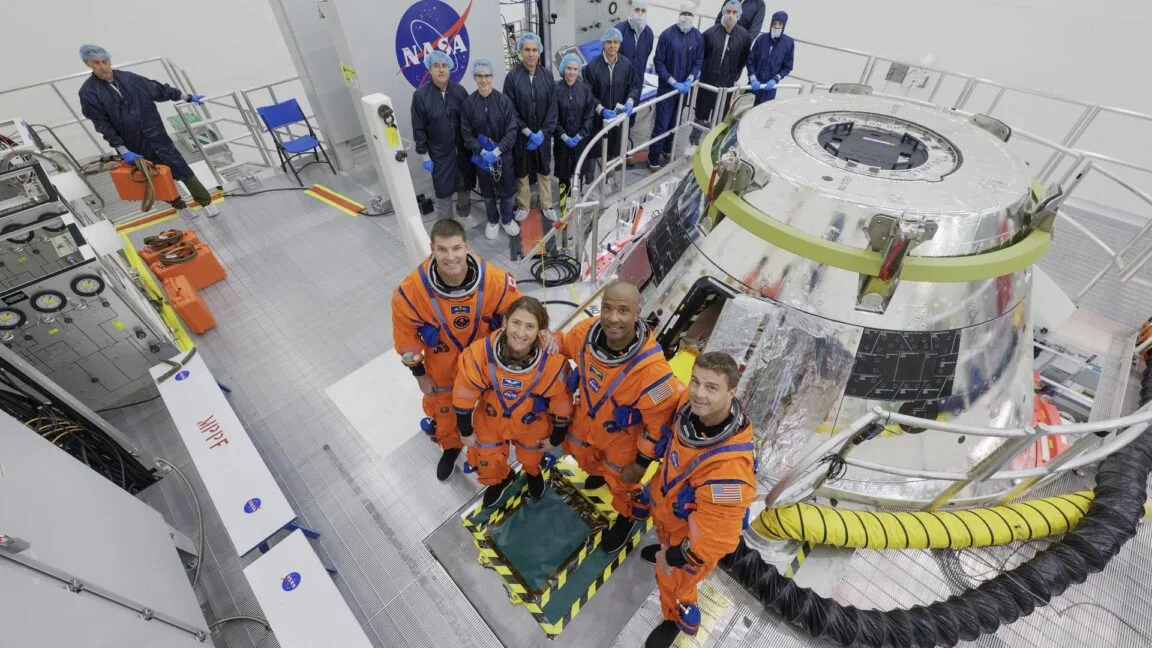
How composed will the crew of NASA's first lunar voyage in over 50 years remain during the mission's opening hours? Consider Canadian astronaut Jeremy Hansen's approach to the pre-launch period.
You know me, personally, I hope to take a very short nap on the pad. There's enough time built in there to have a nap. I've been practicing falling asleep. So if the loops are quiet enough, and I get a minute, I'll try for a nap.
Jeremy Hansen
Picture the scene: Hansen will occupy a seat atop an enormous rocket loaded with explosive liquid hydrogen and oxygen, moments before launching on an intense journey that will transport him and three colleagues to the Moon and back. A potential billion spectators worldwide will be watching. Yet Hansen intends to rest his eyes for a few minutes.
Hansen's plan to sleep before launch highlights the intensity of Artemis II's first day, when the crew will put the Orion spacecraft through its paces to verify its readiness for lunar travel. This will be an extraordinarily demanding, high-pressure period where success is essential—any major problems mean an immediate return to Earth. Grabbing sleep when possible makes sense under these circumstances.
Ars spoke with all four crew members—Hansen, Commander Reid Wiseman, Pilot Victor Glover, and Payload Specialist Christina Koch—to understand their responsibilities during this critical stretch. What follows is the mission described in their own voices.
Liftoff
Launch comes after you've been awake for seven hours, and your brain is going in a bunch of different places, right? And so you've already worked a full day, and then you go do, like, the most energetic thing you've ever done in your life.
Victor Glover
The Artemis II launch window currently opens no earlier than February 5, 2026. Assuming favorable rocket, spacecraft, and weather conditions, ignition is scheduled for 8:09 pm ET. Under this timeline, the crew will wake around 1 pm and receive meteorological updates before donning their spacesuits. Roughly three hours before launch, they will board the Orion spacecraft and secure themselves in their seats. At this juncture, Hansen and possibly one or two other crew members will attempt brief sleep, given the demanding work ahead.
Sleep becomes impossible once the launch window begins.
About seven seconds prior to liftoff, the four main engines light, and they come up to full power. And then the solids light, and that's when you're going. What's crazy to me is that it's six and a half seconds into flight before the solids clear the top of the tower. Five million pounds of machinery going straight uphill. Six and a half seconds to clear the tower. As a human, I can't wait to feel that force.
Reid Wiseman
Just beyond the two-minute mark, the large side-mounted solid rocket boosters will detach. By that moment, they will have supplied most of the initial thrust, with the rocket already traveling at 3,100 mph (5,000 kph) and reaching 30 miles (48 km) altitude, well on its trajectory toward space. Koch and Hansen, serving as payload specialists, will primarily experience the ride. Wiseman, commanding the mission, and Glover, piloting, will monitor systems during the ascent, though the rocket's flight path is entirely automated unless an anomaly occurs.
Victor and I, we have a lot of work. We have a lot of systems to monitor. Hopefully, everything goes great, and if it doesn't, we're very well-trained on what to do next.
Reid Wiseman
At 8 minutes and 3 seconds of flight, the core stage will shut down. The upper stage and Orion will separate roughly 10 seconds later. The crew will then be in space with approximately 40 minutes to prepare for their next significant maneuver.
In orbit
The wildest thing in this mission is that literally, right after main-engine cutoff, the first thing Jeremy and I do is get up and start working. I don't know of a single other mission, certainly not in my memory, where that has been the case in terms of physical movement in the vehicle, setting things up.
Christina Koch
Koch, Wiseman, and Glover have all traveled to orbit previously, either aboard SpaceX Dragon or Russian Soyuz vehicles, and spent extended periods aboard the International Space Station. They understand how weightlessness will affect their bodies. Roughly half of all astronauts encounter "space adaptation syndrome" on their first orbital flight, and there is no reliable way to predict who will experience it. This presents a genuine concern for Hansen, making his first spaceflight, who must immediately leave his seat and begin work.
I'm definitely worried about that, just from a space motion sickness point of view. So I'll just be really intentional. I won't move my head around a lot. Obviously, I'm gonna have to get up and move. And I'll just be very intentional in those first few hours while I'm moving around. And the other thing that I'll do—it's very different from Space Station—is I just have everything memorized, so I don't have to read the procedure on those first few things. So I'm not constantly going down to the [tablet] and reading, and then up. And I'll just try to minimize what I do.
Jeremy Hansen
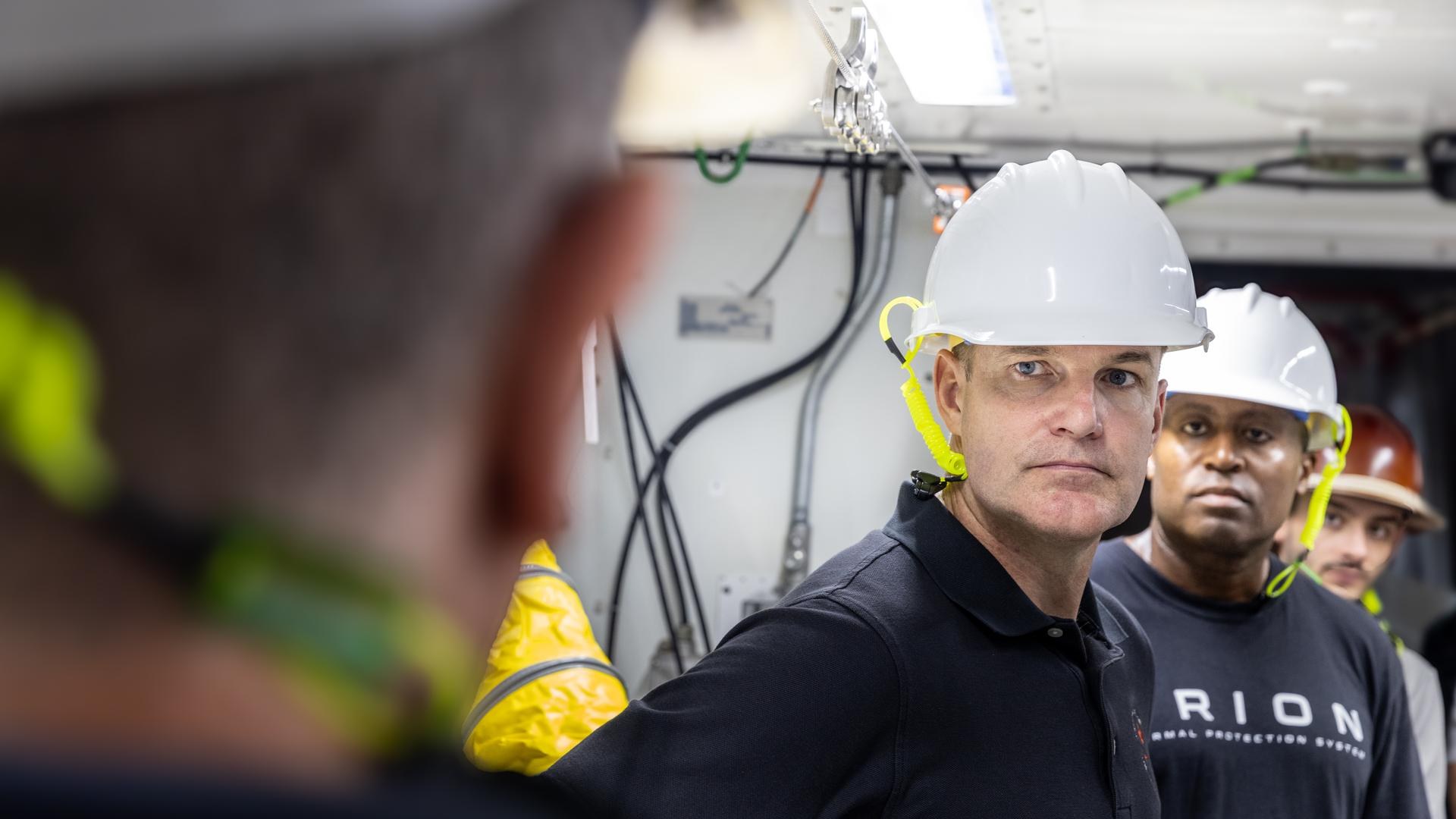
Koch and Hansen will activate and verify critical life support systems aboard the spacecraft. The stakes are clear: if the lavatory malfunctions, lunar travel is off.
We kind of split the vehicle by side. So Christina is on the side of the toilet. She's taking care of all that stuff. I'm on the side of the water dispenser, which is something they want to know: Can we dispense water? It's not a very complicated system. We just got to get up, get the stuff out of storage, hook it up. I'll have some camera equipment that I'll pull out of there. I've got the masks we use if we have a fire and we're trying to purge the smoke. I've got to get those set up and make sure they're good to go. So it's just little jobs, little odds and ends.
Jeremy Hansen
Unlike typical rocket missions, the Artemis II upper stage, called the Interim Cryogenic Propulsion Stage, will not ignite immediately. Following separation from the core stage, Orion will occupy an elliptical orbit reaching an apogee of 1,200 nautical miles—nearly five times the altitude of the International Space Station. At this point, the crew will be farther from Earth than any humans since the Apollo era.
At this apogee, 50 minutes into the mission, the upper stage must fire for the first time to raise Orion's perigee, bringing the spacecraft back around Earth. Here arrives a pivotal moment. Should all systems perform nominally, the upper stage will execute a longer burn to elevate Orion's next apogee from 1,200 nautical miles to 38,000 miles. This will place the vehicle in an Earth orbit with a 23.5-hour period.
That's going to be bananas. People keep talking about us seeing the Moon, but man, I'm super excited about seeing the full disk of the Earth from that far.
Victor Glover
Prox Ops
The apogee burn will extend for roughly 15 minutes. Afterward, Wiseman and Glover will have about an hour to remove their spacesuits and ready themselves for a demanding evaluation of both the Orion spacecraft and their piloting abilities. They will exchange positions, with Glover taking the primary controls. At 3 hours and 24 minutes into the flight, Orion will release the rocket's upper stage and commence "proximity ops," or prox ops, lasting more than two hours. During this demanding phase, Orion will execute a series of maneuvers relative to the upper stage.
As soon as we separate, Victor and I are on stopwatches. We have to start sending commands to the vehicle to get a 180-degree pitch flip around maneuver. Then we start flying formation around that thing for the next two, two-and-a-half hours. It all comes super quick. From the moment we separate from the Interim Cryogenic Propulsion Stage, every second counts.
Reid Wiseman
This will be an anxious period for the crew. No one has previously piloted Orion.
We are trying to characterize the handling qualities, the flying qualities of the Orion spacecraft and the European Service Module. Really, what we're trying to do is give data to the ground so they can anchor their models. We've got a lot of models on how this thing will fly. And we're going to fly around the Interim Cryogenic Propulsion Stage, roughly 10 meters off the nose of the ICPS, for a series of maneuvers, gross handling qualities, fine handling qualities. And then we're actually going to fly around to the side. So that'll let us do some pitch attitude, pitch changes as we go around. And then we're going to fly off the side target of the ICPS. It will be about two hours of those maneuvers, doing pure developmental test pilot handling qualities evaluations, Cooper-Harper ratings.
Reid Wiseman
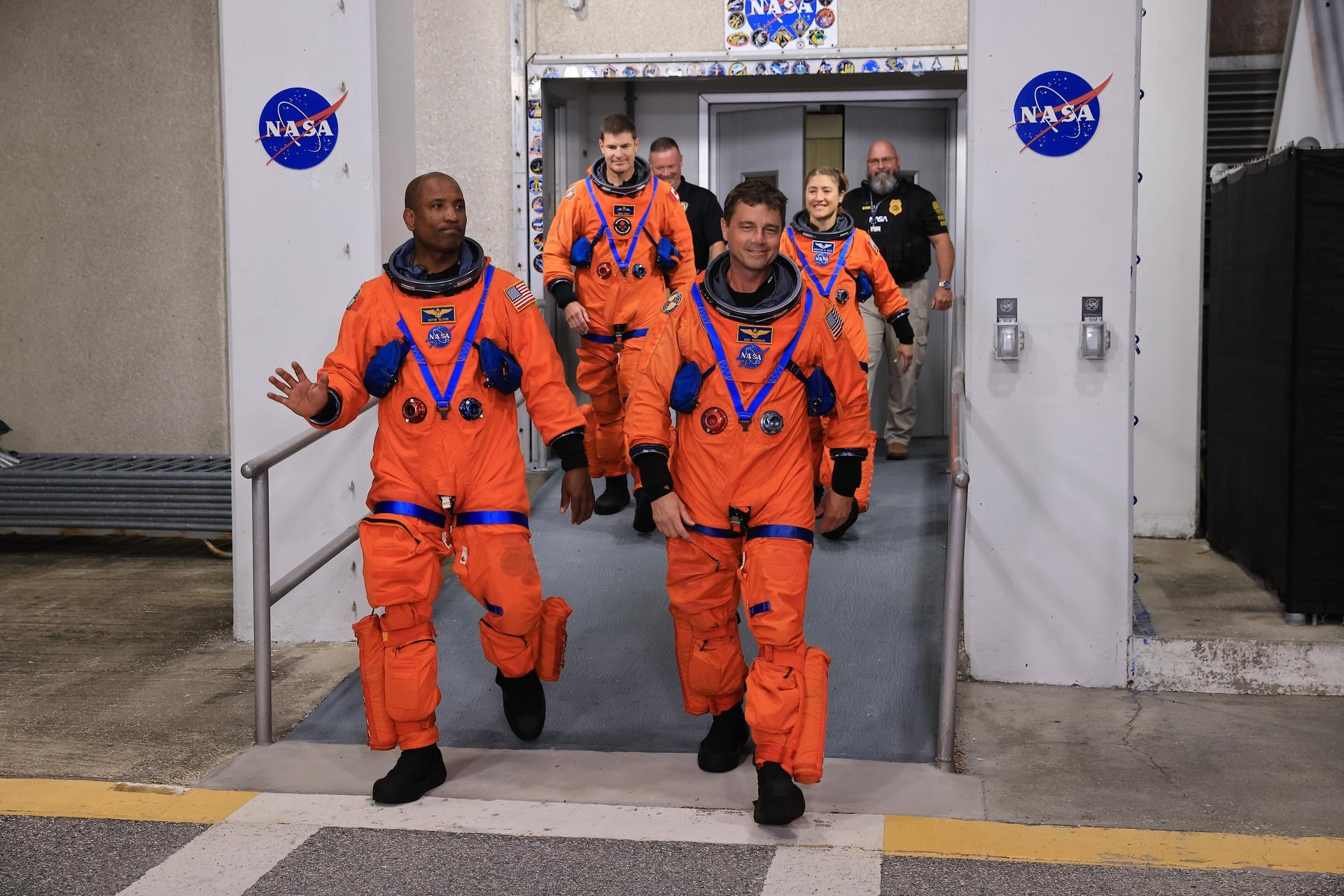
Glover, who piloted the Crew-1 mission in November 2020, will command the spacecraft during these maneuvers, while Wiseman relays information to Mission Control in Houston.
We're going to be giving them handling quality data just like our old Navy test piloting days. Dragon's got a touchscreen, and Orion's got a THC [translation hand controller] and an RHC [rotational hand controller]. And you know me, I'm a fighter pilot. I like having that control stick and stick-and-throttle feel in my hands. This vehicle looks like something straight out of the '90s, early 2000s. It looks like a Space Shuttle because it was built by the same companies that built the Space Shuttle. It looks like you've gone back in time, but it's taken us to the future of human spaceflight.
Victor Glover
Once the testing concludes, Orion will withdraw from the Interim Cryogenic Propulsion Stage, which will then raise its perigee and be consigned to a graveyard orbit. Orion will maintain its high-Earth orbit trajectory, and Glover and Wiseman will transfer spacecraft control to the autopilot system.
In the simulators, once we get away from the ICPS and we hand automation to the vehicle, that is the first time I've seen the crew breathe a sigh of relief.
Reid Wiseman
Fly me to the Moon?
Following the proximity operations phase, the crew will have roughly three hours to dry their spacesuits and reconfigure Orion's cabin from launch mode to spaceflight mode. This involves installing an exercise flywheel. Several crew members will exercise during this window to load the life support system, verifying it can manage the extra carbon dioxide and moisture produced by physical exertion.
The first workout is a checkout of that exercise hardware, but it's also a checkout of the environmental control system. Because I'm going to be breathing, I'm going to be sweating, making more humidity and more CO2 for the life support system to scrub out. And then if that's good, that's another check that means we can go to the Moon.
Victor Glover
The crew will also prepare a food heater and consume a meal. Following these tasks, a four-hour sleep period is scheduled. Upon waking, they will monitor an automated burn by Orion's main engine to raise its perigee. The crew must carefully assess vehicle performance and consult with Mission Control before returning to sleep for another four-hour rest. Assuming they can sleep, that is.
We get a nap, roughly about a four-hour block there, and then we get up, and we do the perigee raise burn at that point, and we do an emergency comms check out, and then we go back to bed again. So it's a strange day from a sleep perspective. You know, it will be fine if we can sleep in all the little windows. The challenge is actually getting to sleep in that excitement. I think exhaustion will help.
Jeremy Hansen
What will complicate sleep is the knowledge that, following their second rest period, NASA leadership will decide whether Orion's propulsion and life support systems have been validated for the Trans-lunar injection (TLI) burn—the maneuver that will send the spacecraft toward the Moon. Wiseman believes the crew will have a solid indication of readiness after the perigee burn, which occurs after the first sleep.
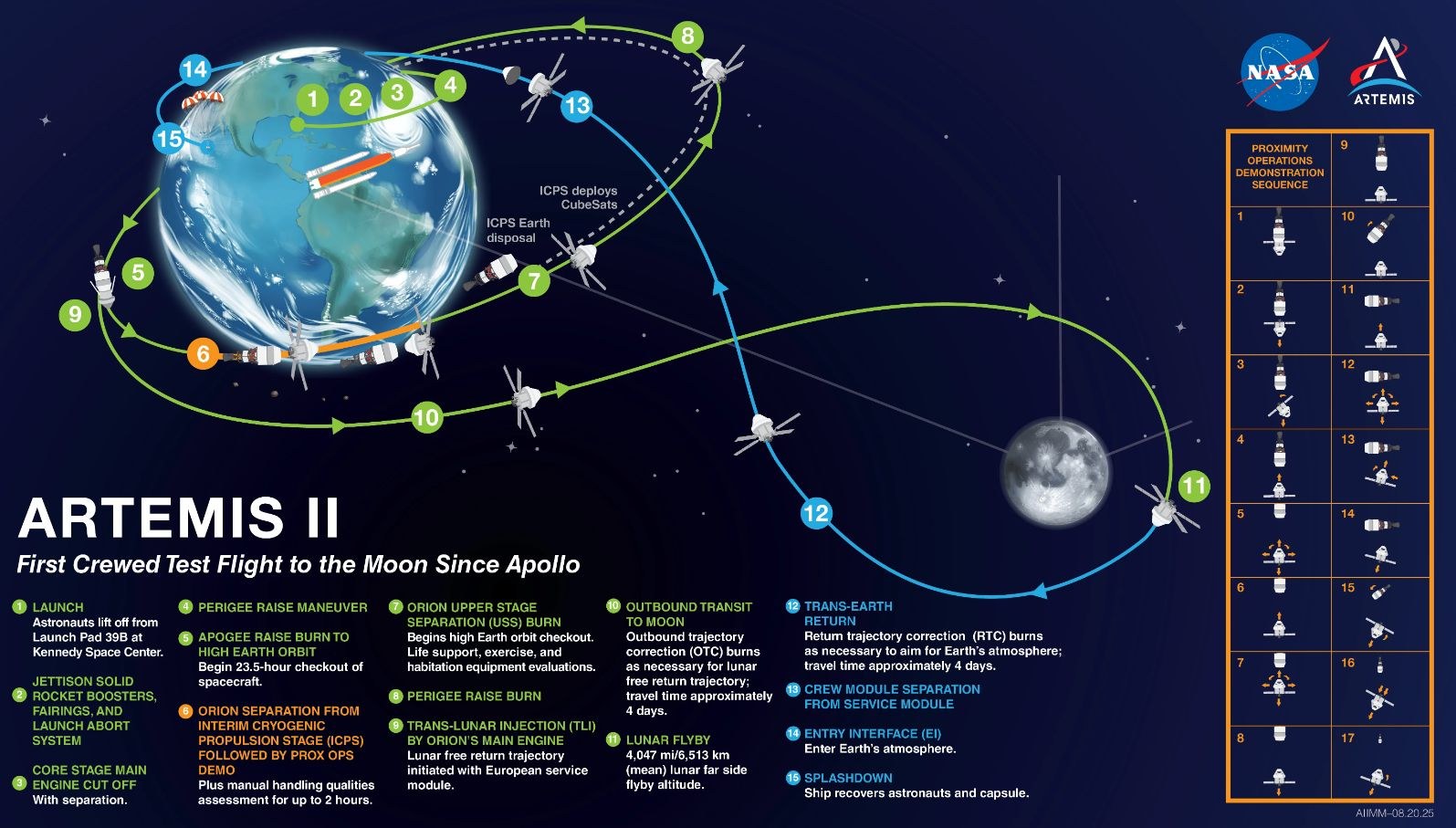
I think we'll know after we do our perigee burn. From there, we have 12 hours until we come back down to perigee and burn TLI. So I think we'll know right there if there are no major failures. That perigee raise burn, for me—we'll know if the vehicle is handling well. But from that 12 hours to when we do the TLI is when the Mission Management Team and the folks in Houston will be talking about preparedness for TLI. In most cases, if we miss TLI burn one, we can do another one 24 hours later.
Reid Wiseman
Koch suggests the crew might recognize issues even sooner, particularly if warning signs emerge.
In some ways, it could be immediate, like if there's a leak in one of our scrubber valves or something like that. We do some things literally during ascent. We actually activate some of our prop systems right away because we have to know whether we can use that prop for a once-around abort option. If we can't, then we have to do a different abort option. It could be something that we find out right toward the end. If we lose our second out of two inertial measurement units right before TLI, we're instantaneously no-go, and we will literally reach up and hit the cancel burn button. Our vehicle will start talking to us almost right away. We could even have inklings on the pad.
Christina Koch
However, if the TLI burn proceeds, the experience will be extraordinary. Following the burn, the crew will have several additional hours of activities, including communications with people on Earth who will be eager to speak with astronauts breaking free from planetary gravity. Finally, they will have time to relax, enjoy dinner, and sleep for eight uninterrupted hours.
In my brain, until that point, this is all still one long day. So for me, the first real sleep is on the second day.
Victor Glover
A rest they will have thoroughly earned, having validated Orion, ignited its engines, and traveled millions of miles from home.
Source: Ars Technica