Army cavalry unit assembles and deploys its first in-house attack drone
The 2nd Cavalry Regiment in Germany has built and flown an armed drone without contractor support, marking what commanders say is a conventional Army first.
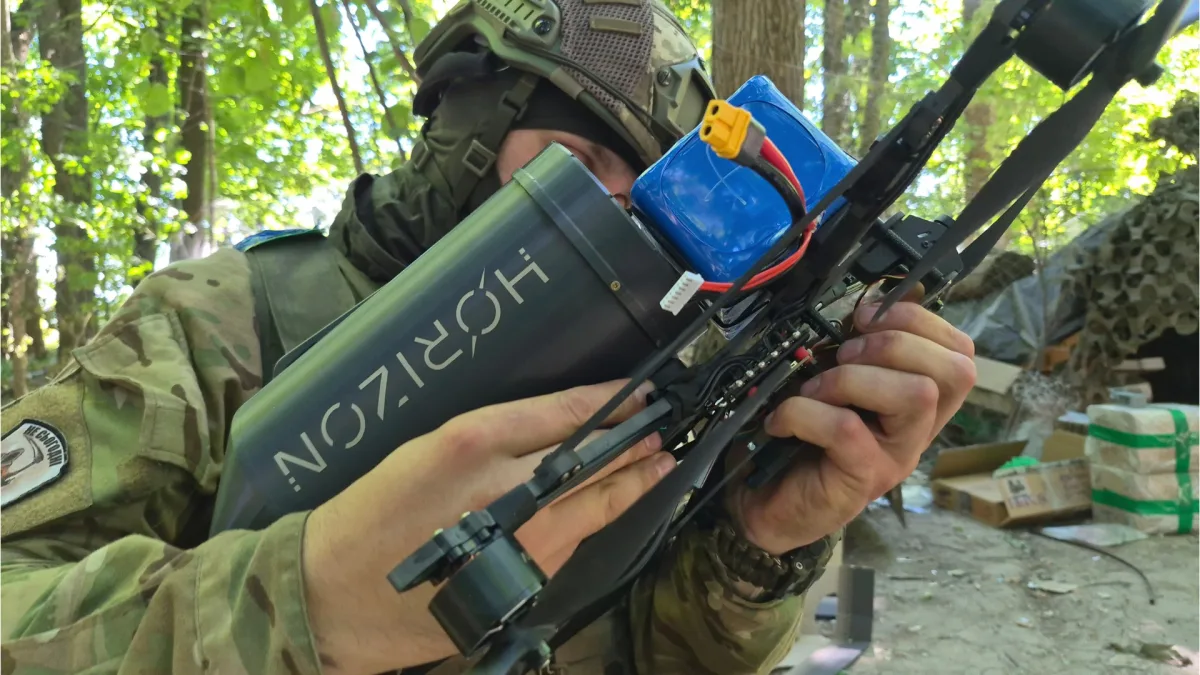
Soldiers stationed in Bavaria with the U.S. Army's 2nd Cavalry Regiment have successfully conducted a combat operation using an attack drone they assembled themselves. The unit, known as the Dragoons, took an Orqa MRM2-10 drone and equipped it with a 3D-printed munition casing dubbed "Dragoon bombs," according to reporting by Stars and Stripes. The projectiles could be tailored for different purposes: ball bearings could be added for anti-personnel effects, or a shaped charge could be configured to penetrate light armor.
Company commander Capt. Michael Bapp characterized the achievement in stark terms: "This is a conventional Army first, potentially an Army-wide first as far as a live, kinetic drone strike conducted without any contractor support (or) any external unit support." Regiment commander Col. Timothy Price underscored the significance of the unit's self-sufficiency, stating, "Today's success live strike using systems made by our Dragoons, armed by our Dragoons, and executed by our Dragoons, displays that we are adapting what we have on-hand now to meet the threat with a capable and credible force."

The U.S. military's pivot toward small unmanned systems reflects lessons learned from recent conflicts. While the American armed forces have operated large unmanned aircraft for combat purposes for many years, the tactical use of commercial-grade drones became a focal point after Russia's 2022 invasion of Ukraine. The affordability and accessibility of these platforms allowed Ukraine to compensate for numerical disadvantages against a larger adversary. Today, both combatants employ drones across tactical and strategic operations, and the practice has expanded to other active conflict zones across the Middle East and beyond.
Observing Ukraine's success with drone warfare, the U.S. military has begun developing its own organic capabilities. The Army launched a three-week training program called the Unmanned Advanced Lethality Course that teaches soldiers 3D printing and drone operation, while simultaneously building internal capacity to manufacture and maintain these systems. The Marine Corps has produced its own 3D-printed drone designed to exclude components sourced from China. The Navy, meanwhile, is integrating drone manufacturing capability directly onto aircraft carriers through containerized fabrication systems.