Anthropic Mathematician Claims Claude Helped Prove the Riemann Hypothesis
As Anthropic completed its Nasdaq debut, a staff mathematician at the company announced he had used the AI model Claude to discover a proof of one of mathematics' most enduring puzzles.
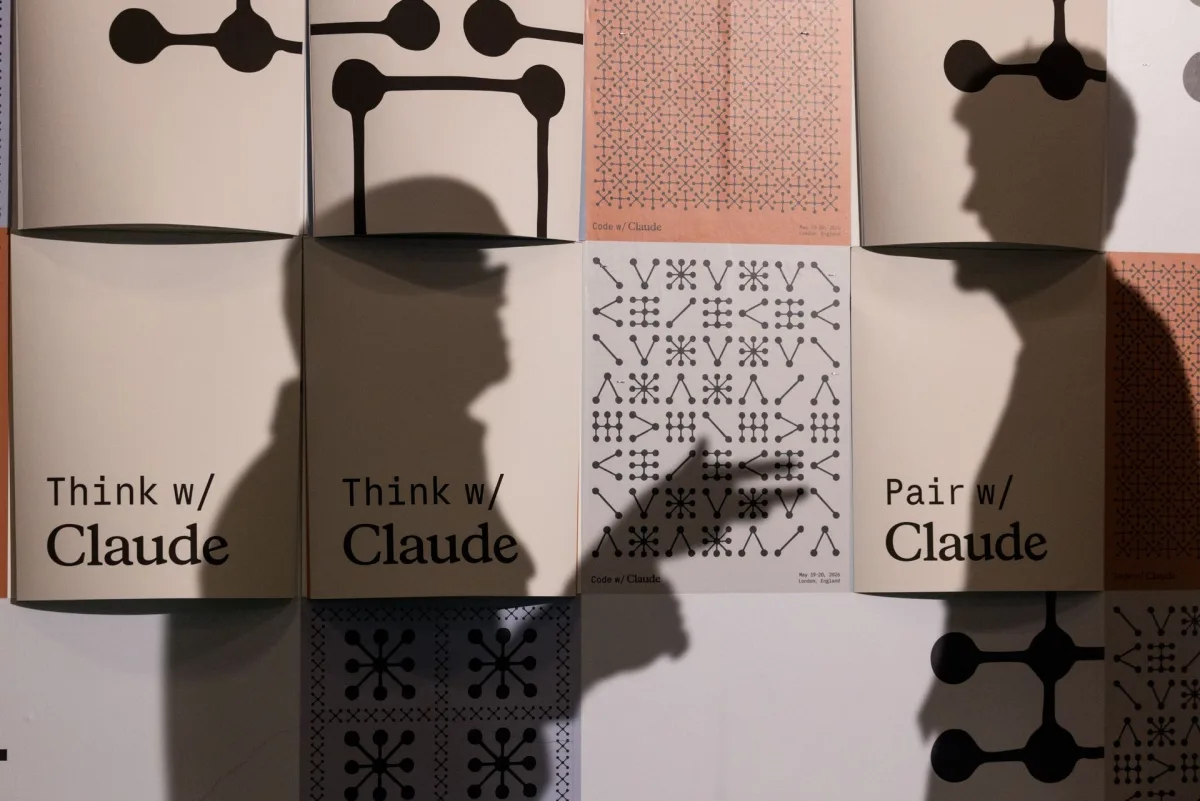
Levent Alpöge, a mathematician working at Anthropic, published a paper this week declaring that he had worked with Claude to arrive at a solution to the Riemann Hypothesis, a mathematical problem that has remained unsolved for 167 years. The announcement coincided with Anthropic's initial public offering on the Nasdaq.
Alpöge stated in his paper: "I believe I have, working with Claude, discovered a proof of the Riemann Hypothesis."
The Riemann Hypothesis stands as a cornerstone problem in number theory and ranks among mathematics' most celebrated open questions. Bernhard Riemann formulated the conjecture in 1859, establishing the framework that would bear his name. At its core, the hypothesis posits that prime numbers follow a determined pattern rather than appearing randomly. According to the Clay Mathematics Institute, "The Riemann hypothesis asserts that all interesting solutions of the equation ζ(s) = 0 lie on a certain vertical straight line. This has been checked for the first 10,000,000,000,000 solutions. A proof that it is true for every interesting solution would shed light on many of the mysteries surrounding the distribution of prime numbers."