AMD's Massive GPU Memory Creates Linux Hibernation Bottleneck
AMD engineer Sameul Zhang has identified a critical hibernation failure affecting Linux servers equipped with multiple Instinct accelerators, where 1.5TB of combined VRAM overwhelms the system's ability to save state to disk.
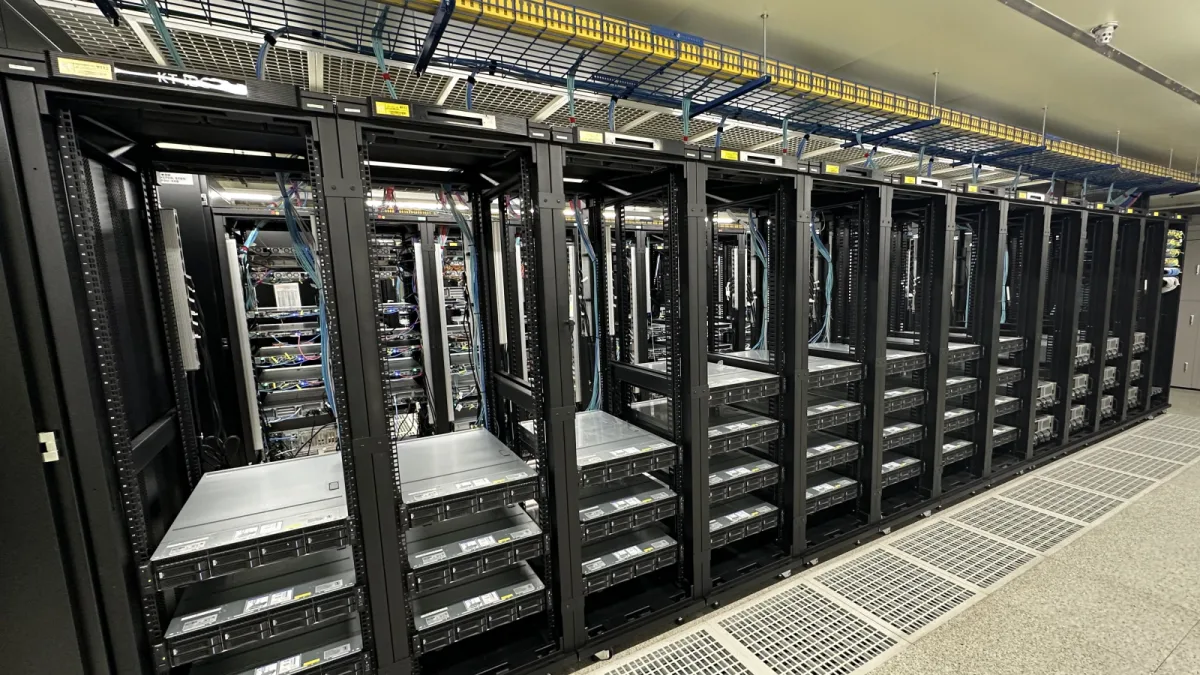
"If only I had more VRAM, all my problems would go away." That's rarely how things work in practice.
A recently published Linux patch series brought attention to an unexpected problem: servers equipped with multiple AMD Instinct accelerators cannot successfully enter hibernation mode. The issue stems from the sheer volume of memory these data center GPUs carry. Instinct accelerators represent AMD's specialized GPU lineup for data centers, built to handle artificial intelligence workloads, high-performance computing, scientific research, and similarly intensive applications.
The power of these processors comes partly from their enormous memory footprint. Individual cards can feature 192GB of VRAM—a figure that would astound gaming enthusiasts but represents standard equipment for contemporary data center hardware. A single server in this scenario runs eight Instinct cards, accumulating approximately 1.5TB of total VRAM. While greater memory capacity typically benefits performance, the sheer scale here creates unexpected complications.
The actual problem lies not in GPU count itself, but in how the Linux kernel manages GPU memory during hibernation cycles. When hibernation begins, the system transfers all GPU memory into system RAM using mechanisms like the Graphics Translation Table (GTT) or shared memory (shmem). The kernel then generates a hibernation snapshot by duplicating the entire system memory—including the relocated VRAM—into a separate memory region before persisting it to storage.
The mathematics reveal the difficulty: a server containing 1.5TB of VRAM requires duplication, potentially doubling memory demand to 3TB. This easily surpasses the 2TB system memory capacity found in many high-performance servers, causing the hibernation process to collapse under the memory pressure.
Zhang has proposed addressing this through two primary modifications. The initial change targets reducing system memory consumption during the hibernation phase itself, enabling the process to complete successfully. This introduces a secondary challenge: the recovery phase, or "thawing," could require nearly sixty minutes due to the enormous memory volume involved. A supplementary patch resolves this by bypassing restoration of these buffer objects during thaw, substantially accelerating the wake-up sequence.
The practical question arises: why would anyone hibernate servers designed to run continuously? Power reduction during idle periods represents one significant motivation, as does grid stabilization. Data centers operating at massive scale consume enormous electrical power, and hibernation capabilities help mitigate blackout risks, as demonstrated by recent outages in Spain.
Source: Tom's Hardware