AMD Acquires MEXT to Cut Server Memory Costs While Preserving Performance
The predictive memory technology offloads infrequently used data to flash storage and uses AI to retrieve it on demand, potentially reducing DRAM requirements by up to 75% depending on workload.
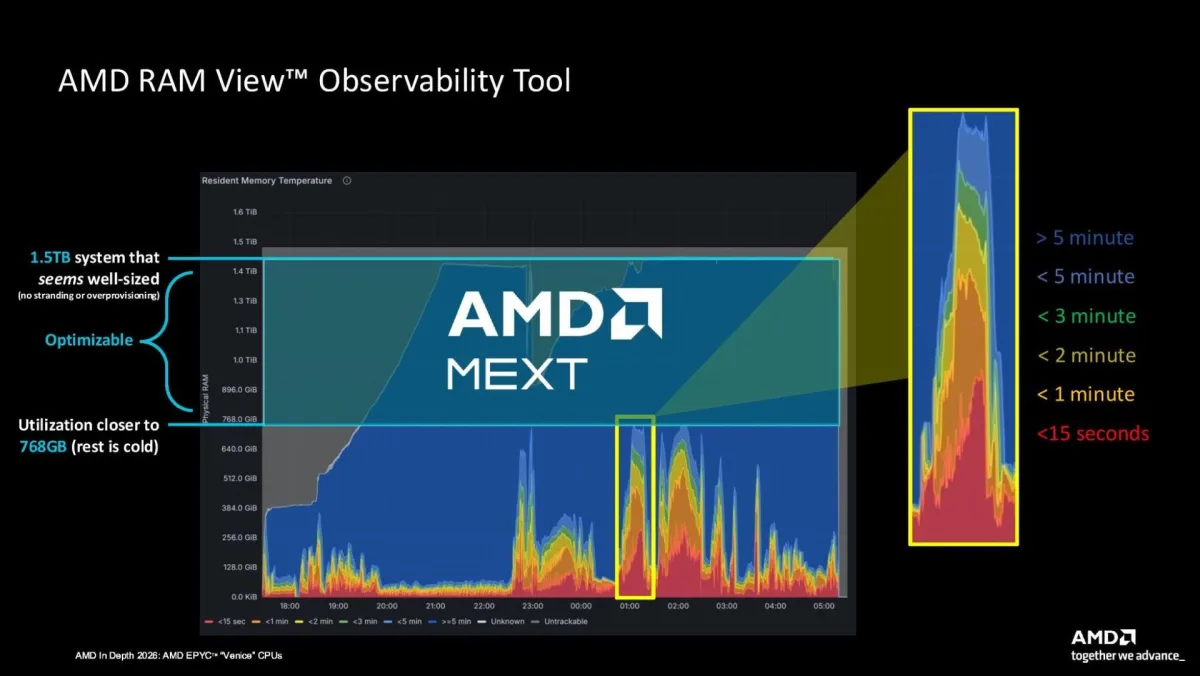
AMD has taken control of MEXT, a predictive memory engine that relocates dormant memory pages to flash storage and retrieves them using machine learning models. The company claims the system can deliver more than 99% of the performance found in a fully populated DRAM configuration while operating with as little as 25% of the standard physical DIMMs. AMD intends to roll out this technology across much of its IT infrastructure throughout the coming year.
The value proposition of MEXT appears ambitious. Per AMD and MEXT founder Gary Smerdon, the system can reduce the amount of physical DRAM needed in a server by anywhere from 20% to 75%, contingent on the specific application and desired performance level. The operating system still recognizes the missing memory as installed DRAM. Rather than relying on DRAM for that capacity, MEXT taps relatively affordable flash storage to hold cold pages, retrieving them as needed through an AI model. In certain AMD internal applications, including Synopsys PrimeTime, the company reports achieving 95% of the performance of a fully equipped server while consuming only 50% of the DRAM with MEXT enabled.