SpaceX Catches Starship in Historic Tower Landing, Clearing Path to Rapid Reuse
SpaceX successfully captured its Starship upper stage with a launch tower's mechanical arms on Saturday, marking a watershed moment in the company's quest to build a fully reusable orbital rocket.
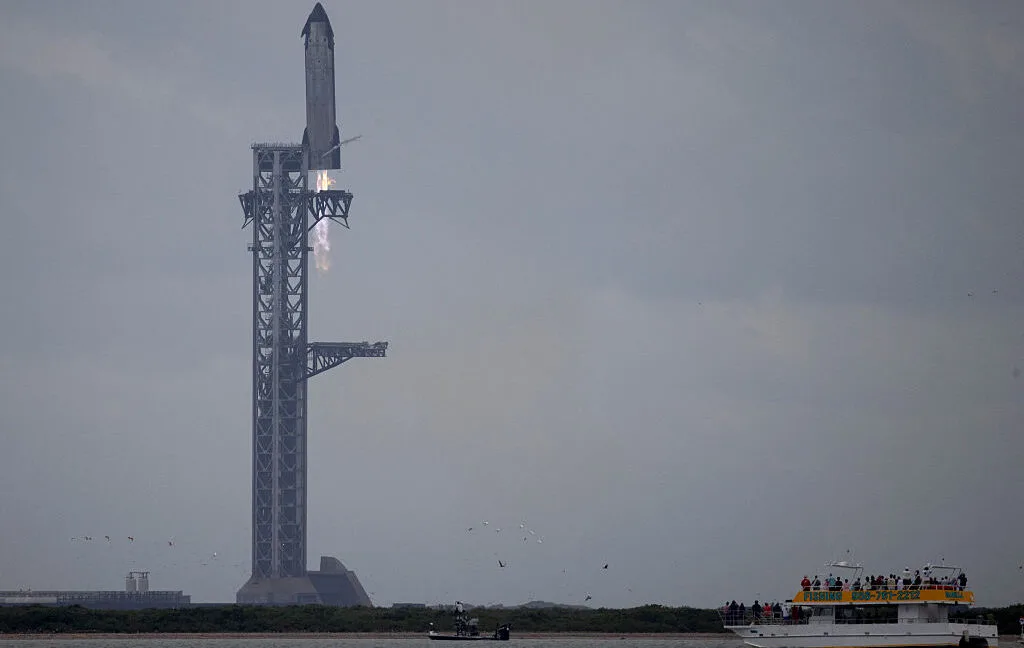
At Starbase in Texas, the metallic vessel descended through cloud cover in its final moments of flight. The rocket transitioned from a horizontal orientation to vertical as three Raptor engines fired, then descended toward the waiting launch tower. Two mechanical arms, each with only about one foot of contact surface on the rocket, reached out to receive it. Within seconds of coming into view, the Starship upper stage locked onto the tower's arms. The maneuver represented a watershed achievement for SpaceX, now approaching three decades since its founding, in the pursuit of building and perfecting a massive, rapidly reusable launch system.
A Technical Milestone
The accomplishment demanded extraordinary engineering problem-solving and unfolded before a global audience on Saturday evening, following several test attempts into the Indian Ocean. The spectacle of watching Starship orbit Earth hours earlier, then return under its own power to be caught by the tower, created a sense of witnessing the future arrive. SpaceX had previously impressed observers by landing orbital boosters on ocean barges and returning crewed missions via Crew Dragon. This flight transcended those achievements. Starships are enormous vehicles carrying tremendous kinetic energy from orbit, and until recently the notion of snatching a rocket from the sky using what amounts to mechanical chopsticks seemed impossible.
Learning from the Shuttle Era
Reusable spacecraft have flown to orbit before. During the 1970s, riding momentum from the Apollo program, NASA constructed multiple Space Shuttles. Their solid rocket boosters were recovered from the ocean and reused, while the large orange external tank was discarded after each flight. The orbiters themselves traveled to space for two weeks or longer before gliding back to Earth and landing on runways. The shuttles represented engineering excellence, but they relied on passive descent rather than powered landing, and their thermal protection systems required extensive refurbishment between flights.
NASA's original vision for the shuttle program promised ambitious economics and cadence. The agency envisioned launching dozens of astronauts simultaneously and moving cargo at $25 per pound. Reality diverged sharply from these projections. Crew capacity maxed out at seven astronauts, and actual cost-per-pound approached $25,000. Building five orbiters consumed extraordinary resources; NASA never constructed more. Over 30 years, the fleet completed 135 flights total.
Manufacturing at Scale
SpaceX currently maintains five Starships in advanced development stages at Starbase, with component inventory for a dozen additional vehicles. The company's South Texas facility can assemble a Starship upper stage every three weeks, though the factory was engineered to support production every three days. When Elon Musk, SpaceX's founder, outlined these manufacturing targets in an interview five years ago, the claims sounded implausible. Today, such ambitions sound increasingly credible.
The contrast with the shuttle program's pace is stark. SpaceX intends to achieve 135 flights annually within a few years, then scale toward thousands of launches. Saturday's successful capture of the Starship upper stage demonstrated that the foundational concept works. Both stages of a Starship rocket have now returned safely to the launch tower. Achieving high success rates with these landings will require time and iteration, but the proof of concept is established.
The Road Ahead
Tower landings will increase in frequency as launches accelerate. SpaceX will progressively refine the thermal protection system, likely the most demanding component for sustained rapid reuse. Eventually, what inspired awe this weekend will become ordinary. The day will arrive when such operations are taken for granted, when capturing a rocket from orbit becomes routine rather than remarkable. That transformation lies ahead, but not yet.