OpenAI's GPT Images 2.5 Introduces Flare and Sunburst, but Pricing and Speed Trade-offs Remain Murky
OpenAI unveiled two new image generation models this week designed to improve selective editing while keeping the rest of an image intact, yet crucial details about latency and per-job costs are still missing.
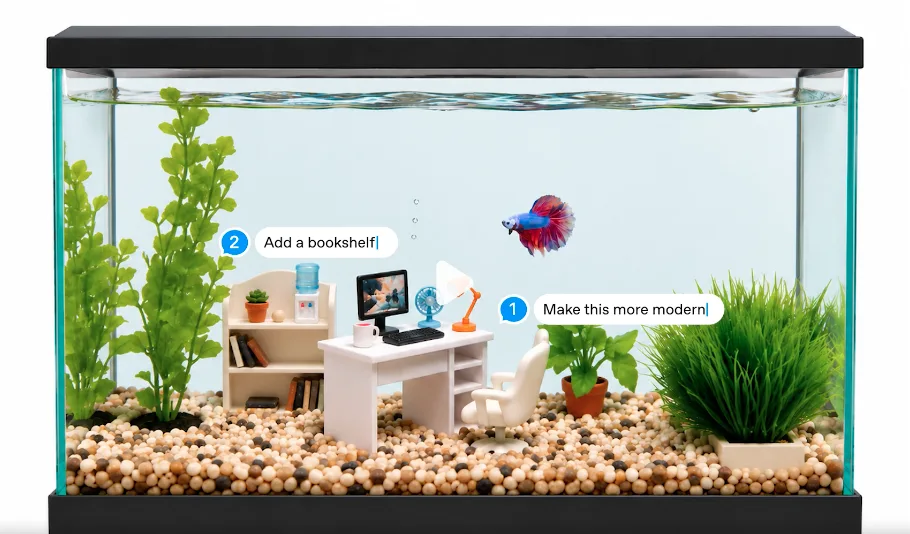
The two fresh models—Flare and Sunburst—represent OpenAI's latest push to solve a persistent challenge in image generation: modifying a single element without degrading surrounding content. Flare emphasizes speed as the standard option, whereas Sunburst prioritizes precision, though the actual performance differences in real-world scenarios and their financial implications remain opaque.
When the company rolled out GPT Images 2.5 this week, it highlighted a key improvement: the ability to alter one section of an image while leaving everything else untouched. Developers now have access to both Flare and Sunburst, yet making an informed choice between them requires digging into details OpenAI has not fully disclosed. The company publishes matching token rates for each model without clarifying how per-image expenses will actually diverge.
Flare vs Sunburst
OpenAI describes Flare as the default choice for most applications, enabling developers to boost image quality while cutting latency relative to its predecessor. According to the company, this model suits routine image-generation tasks, including social media content, quick visual prototyping, image search, and general image creation.
A standout claim: Flare produces superior images compared to GPT-Image-2 while achieving 50% lower latency.
Sunburst, by contrast, occupies the precision-focused tier. OpenAI characterizes it as built for premium visual workflows that benefit from tighter control across edits. For teams handling critical creative work—such as final-stage marketing campaigns or product photography—Sunburst emerges as the more suitable option.
The catch: OpenAI provides no transparent breakdown of how much Sunburst's enhanced precision will demand in terms of processing duration or expense relative to Flare.
Same token rates, not necessarily the same bill
Nominally, both models carry identical pricing structures: $5 per million text input tokens, $8 per million image input tokens, and $30 per million image output tokens. However, identical token rates do not guarantee identical bills when generating the same type of image.
While token counts drive image generation pricing, OpenAI has not provided explicit guidance on estimating token usage for GPT-Image-2.5.
Developers hoping to leverage OpenAI's current image-cost calculator for projections will be disappointed. The company explicitly states: Token rates match GPT Image 2. The GPT Image 2 calculator does not estimate GPT Image 2.5 token consumption.
On paper, OpenAI says Flare and Sunburst have the same token rates: $5 per million text input tokens, $8 per million image input tokens, and $30 per million image output tokens. But this doesn't necessarily mean using either model will run up the same bill for the same kind of image.
Without a reliable method to forecast token consumption for each model, developers cannot determine upfront what generating identical images will cost with Flare versus Sunburst.
The latency question looms equally large. OpenAI confirms that Flare yields higher-quality output than GPT-Image-2 at 50% reduced latency. Yet the generation-time gap between Flare and Sunburst remains undisclosed.
The launch documentation and individual model pages for both Flare and Sunburst sidestep this comparison. Only the announcement mentions that Sunburst's superior precision comes paired with longer generation times, leaving developers guessing about the actual magnitude of the delay.
In general, Images 2.5 gets better at changing one thing without breaking everything else

GPT Images 2.5 brings improvements across image quality, editing capabilities, and generation speed, according to OpenAI.
Teams using the API can expect more dependable reference-based workflows, thanks to enhanced image consistency that maintains closer alignment between variations and their source material.
The editing toolset has expanded with a new precision feature allowing developers to target specific image components—a product, a background, text—for modification while safeguarding the surrounding composition. The model now adheres more closely to editing instructions, even when applied iteratively across multiple rounds. For production environments where precise adjustments are routine, this capability could eliminate the need to reconstruct entire assets for minor refinements.
OpenAI also touts enhancements to visual intelligence and stylistic rendering, potentially reducing the number of iterations required to achieve desired results. The company notes that the new image model is better at understanding complex visual instructions and translating them into coherent results.
Streamlined editing, sharper image output, and quicker generation via Flare should facilitate smoother image-centric pipelines. Developers will need to test both models firsthand to determine whether Sunburst's precision gains justify the additional time investment and potential cost premium.