CircuitMess Ships MAKERphone 2.0, a Soldering-Free 4G Phone Kit for DIY Assembly
The Croatian maker company's second-generation build-it-yourself phone drops the soldering requirement and adds modular expansion, AI-assisted coding tools, and a companion smart band.
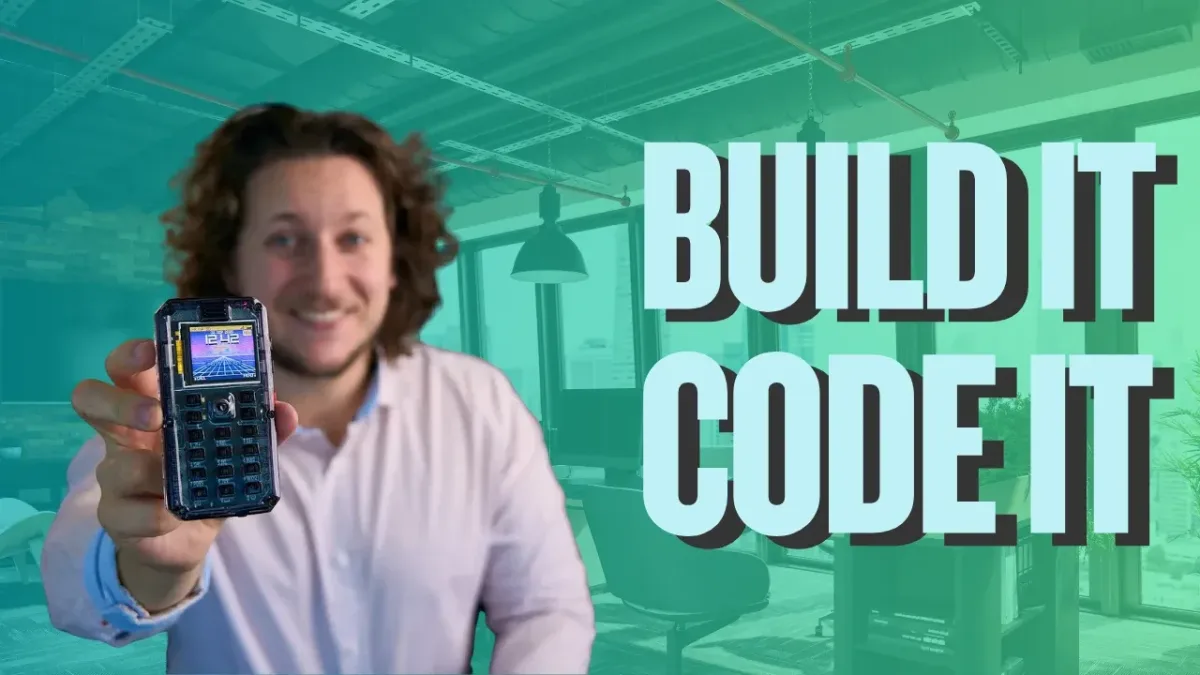
Most people use a mobile phone daily without understanding its internal workings. CircuitMess, the Croatian firm founded by Albert Gajšak, has made closing that knowledge gap its mission. The company's original MAKERphone campaign in 2018 raised over $324,000 and reached more than 6,000 backers under the name "Ringo."
The successor, MAKERphone 2.0, is now live on Kickstarter and has already exceeded its funding target with weeks remaining. The core concept remains unchanged: assemble a functional mobile phone yourself, then learn to code on it. The critical improvement is the elimination of soldering, a significant barrier for newcomers to electronics assembly.
Hardware and Specifications
- Processor: ESP32-S3, dual-core, 4 MB flash, 4 MB PSRAM
- Cellular: 4G LTE Cat-1 with 2G fallback, Nano SIM
- Display: 1.77-inch color, 160×128
- Input: 12-key numpad, nav joystick, 4 function keys, volume keys
- Audio: DAC, speaker, I²S mic, 3.5 mm headphone jack
- Battery: 1000 mAh, USB-C charging
- Storage: microSD slot
- Connectivity: Wi-Fi, Bluetooth, USB
- Expansion: UMAX modular connector
- Assembly: no soldering required
- Coding: MicroPython, Arduino C++, VibeBoy (AI-assisted)
- Price: $119 for early backers, $169 standard retail
The device arrives as a kit of components with assembly instructions and becomes a fully functional phone capable of making calls and sending texts over 4G LTE once a SIM card is inserted. The 4G specification may appear dated in 2026, but CircuitMess positions this as intentional: the device is not designed to replace a smartphone. Users who prioritize connectivity without constant social media access or those seeking to limit internet exposure find the trade-off acceptable.
At its core sits the ESP32-S3, a low-power microcontroller common in hobbyist electronics. This is not a competitor to Snapdragon or Apple Bionic processors, nor does CircuitMess claim otherwise. The removal of soldering requirements makes assembly accessible to children as young as 11, according to the manufacturer, and the official assembly video suggests the process involves straightforward component placement.
The 1.77-inch color display, 3.5 mm headphone jack, and modular design distinguish the device. The modular system accepts add-on hardware that expands functionality.
Modules, Coding, and Accessories
The module ecosystem elevates MAKERphone 2.0 beyond a nostalgic novelty. Several modules ship with the base kit: an infrared module for legacy television control, a camera module, a 2W speaker, an LED module, and a temperature and humidity sensor. A perfboard is included for users who wish to integrate custom sensors.
Programming occurs in MicroPython or Arduino C++. CircuitMess also promotes VibeBoy, an AI-assisted coding platform that lowers barriers for non-programmers. Large-scale hardware makers including Seeed Studio have adopted similar AI-powered development tools to broaden appeal beyond experienced developers. The approach democratizes custom app creation by allowing users to generate software through language models rather than manual coding.
A companion programmable smart band pairs with the phone via Bluetooth. This accessory functions as a semi-smartwatch, displaying time, running games, and providing timer and stopwatch features. It lacks health and activity sensors and is sold separately from the base kit.
Design Philosophy
A 4G-only phone in 2026 appears outdated when 5G is widespread. However, MAKERphone 2.0 deliberately rejects smartphone conventions. The device belongs to a category that includes Flipper Zero and handheld retro gaming devices—tools designed for specific purposes rather than general-purpose computing.
The appeal targets STEM-focused children and hobbyist adults who wish to build and customize hardware while adding modules of their choice. The 4G capability enables genuine phone functionality: calls and text messages. This transforms the device into an assembled bar phone where users can design and deploy custom games and applications.
For parents seeking to keep children connected without social media exposure, or adults intentionally limiting internet access outside dedicated computers, the device serves a practical purpose.
Pricing and Availability
MAKERphone 2.0 is currently live on Kickstarter and has achieved approximately 790% of its funding goal with about 27 days remaining in the campaign. Early-bird pricing begins at $199, with higher tiers as discounts expire. Multiple pricing tiers are available.
Residents of the US, EU, UK, and Canada avoid import fees, though VAT may apply depending on location. Shipping costs remain unclear, but the device is expected to begin shipping in July-August 2027.
This product targets those seeking to understand phone internals or parents looking to redirect screen time toward hands-on building. It is not positioned as an inexpensive smartphone replacement. Prospective buyers should account for both budget and the extended wait time before delivery.