Apple's A20 Pro Chip Debuts in iPhone Duo and iPhone 18 Pro Lineup
John Ternus led his first Apple event as CEO, unveiling the company's inaugural 2-nanometer smartphone processor alongside a custom cellular modem and a highly anticipated foldable device.
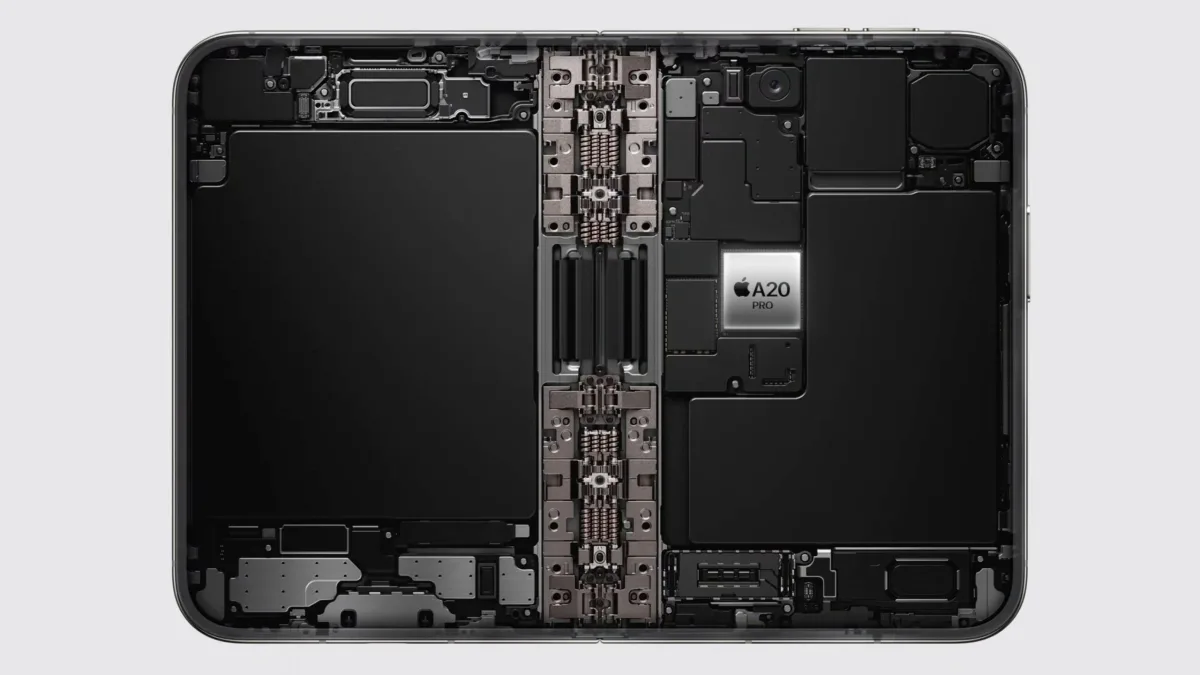
Apple introduced the A20 Pro system-on-a-chip during its latest iPhone event, marking the debut of newly appointed Chief Executive Officer John Ternus on stage. Alongside the processor, the company revealed an internally developed C2 cellular modem, replacing Qualcomm components in its flagship handsets. The A20 Pro represents Apple's first 2-nanometer processor designed specifically for iPhones, following the company's earlier M6 chip for Mac computers announced in August.
The A20 Pro will serve as the engine for three devices: the foldable iPhone Duo, the iPhone 18 Pro, and the iPhone 18 Pro Max. The processor incorporates dual neural engines, redesigned CPU and GPU architectures, and enhanced computational capabilities across the board.
Processing Power and Architecture
The chip features a six-core CPU configuration with two performance-focused super-cores delivering 20 percent faster speeds than the previous generation, paired with four efficiency cores equipped with neural accelerators. Apple describes this as a desktop-class processor and claims it represents the fastest CPU in a smartphone.
The seven-core GPU delivers a 40 percent generational improvement with expanded bandwidth capacity. New neural accelerators enable twice-as-fast FP8 compute performance. The dual neural engines combine for 32 total cores, while the chip incorporates a 50 percent increase in memory bandwidth—the widest memory interface Apple has integrated into an iPhone to date.
Thermal Management and Performance
Apple redesigned the chip's internal layout, positioning silicon dies to eliminate memory from the processor's thermal path. This arrangement allows the silicon to connect directly to a vapor chamber with three times the surface area of the iPhone 17 Pro's cooling system. The chamber incorporates additional graphite and copper alongside 80 percent recycled stainless steel.
These enhancements enable up to 40 percent sustained performance gains over the iPhone 17 Pro and double the sustained performance of the iPhone 16 Pro.
Battery Life and Connectivity
Apple claims the A20 Pro's efficiency improvements and new battery designs extend device longevity. The iPhone 18 Pro achieves 36 hours of video playback, while the Pro Max reaches 45 hours. Using Apple's proprietary usage model, the company projects 24 hours of battery life per charge on the 18 Pro and 30 hours on the Pro Max.
The new C2 modem delivers meaningfully faster uploads when compared to C1X while consuming 15 percent less energy, according to Apple, and introduces mmWave support in the United States. Both phones include the N1 networking chip supporting Wi-Fi 7, Bluetooth 6, and Thread connectivity.
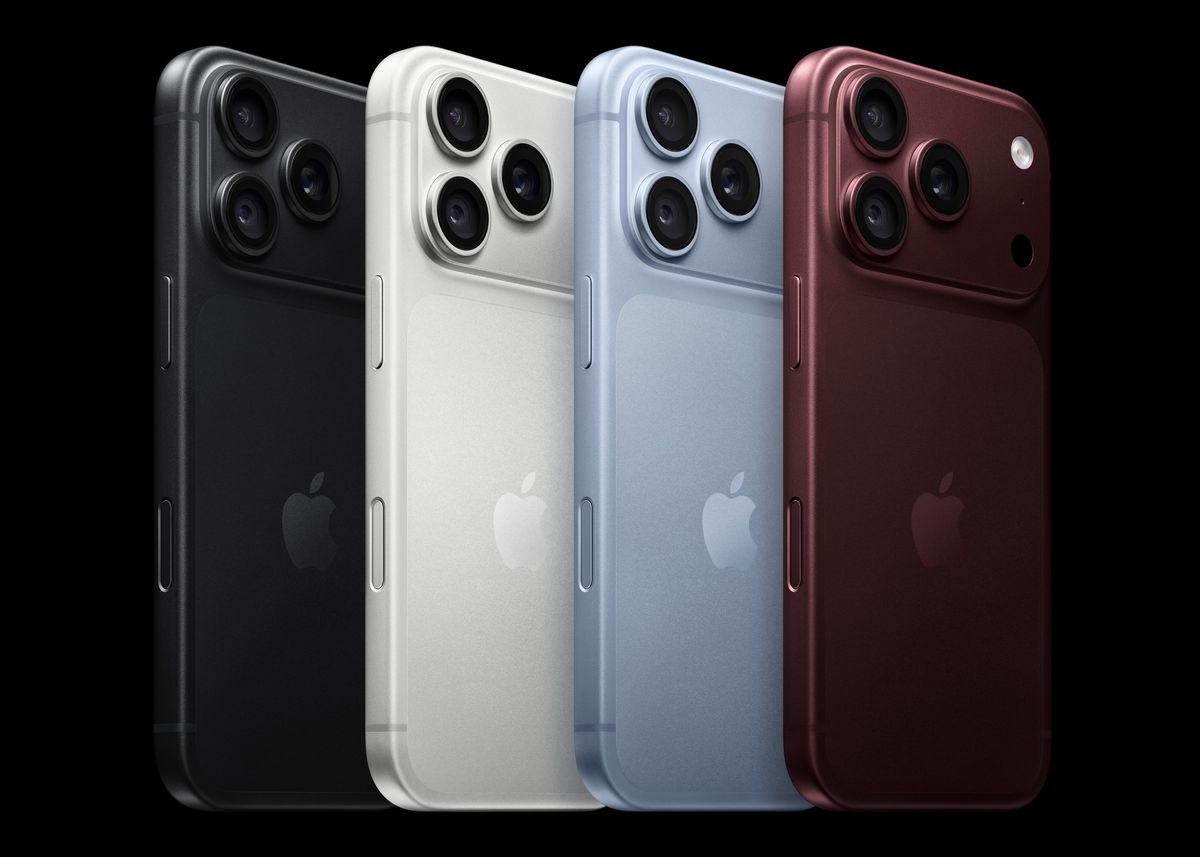
iPhone 18 Pro and Pro Max Specifications
The iPhone 18 Pro starts at $1,199, with the Pro Max beginning at $1,299. Both devices launch on September 18. They feature an updated Dynamic Island, a 48-megapixel fusion camera with variable aperture, and customizable post-capture settings including white balance and cinematic effects.
iPhone Duo: The Foldable Device
The iPhone Duo, Apple's long-awaited foldable smartphone, also powers the A20 Pro. The device marks Apple's first phone with a FaceTime camera positioned behind the display. The hinge utilizes aerospace-grade titanium construction, and the device carries an IP68 rating for dust and water resistance. It comes in "star white" and "night sky" (a dark blue) colorways.
When unfolded, the Duo becomes the thinnest iPhone ever produced and features the largest screen on any iPhone at 7.6 inches. The internal display incorporates an anti-glare coating to minimize crease visibility, paired with a titanium plate supporting the panel and a hinge containing over 100 components. Apple Pencil support will arrive later this year for both screens.
The device employs Touch ID for biometric authentication rather than Face ID, as Apple determined this approach works optimally whether the phone is open or closed and allows enrollment of multiple fingers. The Duo supports multiple poses, including partial folds, and includes a standby mode when positioned in a tent-style configuration, even without active charging.
iOS 27 enables docks and controls to position themselves on the sides of the display, placing them near the user's hand. The A20 Pro includes a new display engine supporting both screens simultaneously.
Battery and Camera Systems
The iPhone Duo utilizes the C2 cellular modem and operates as eSIM-only globally, maximizing available battery space. Each side of the phone contains its own battery, which functions as a unified system through software. Apple projects up to 31 hours of video playback on the inner display and 44 hours on the outer display. Using its proprietary model, Apple estimates 24 hours of battery life when using both screens equally.
The device incorporates a two-camera system: a 48-megapixel main lens with up to 2x telephoto capability and an ultrawide lens. The 48MP camera matches the one in the iPhone 18 Pro but lacks the variable aperture feature. A 12MP center-stage camera occupies the front, while an under-screen FaceTime camera sits beneath the inner display.
Pricing and Availability
The iPhone Duo begins at $1,999 for the 256GB model and extends up to 2TB capacity. Pre-orders commence on October 16, with the device launching on October 23.
Additional Silicon
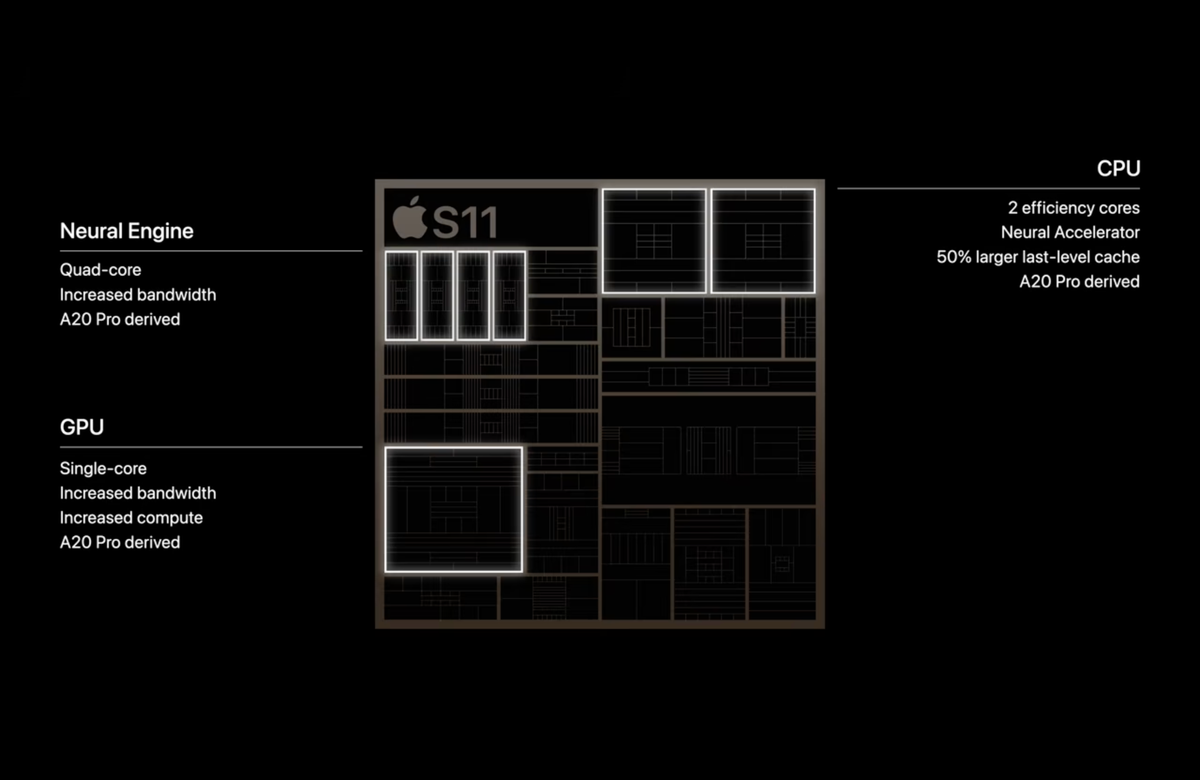
Apple also unveiled the S11 chip, designed for the Apple Watch Series 12 and Ultra 4.