Apple Rolls Out iOS 27 and macOS Golden Gate With AI-Powered Siri Across Its Ecosystem
Apple's 2026 operating system updates introduce Siri AI, a large language model-based assistant with context awareness, alongside refinements to the Liquid Glass design and performance improvements across iPhone, Mac, Apple Watch, Vision Pro, and Apple TV.
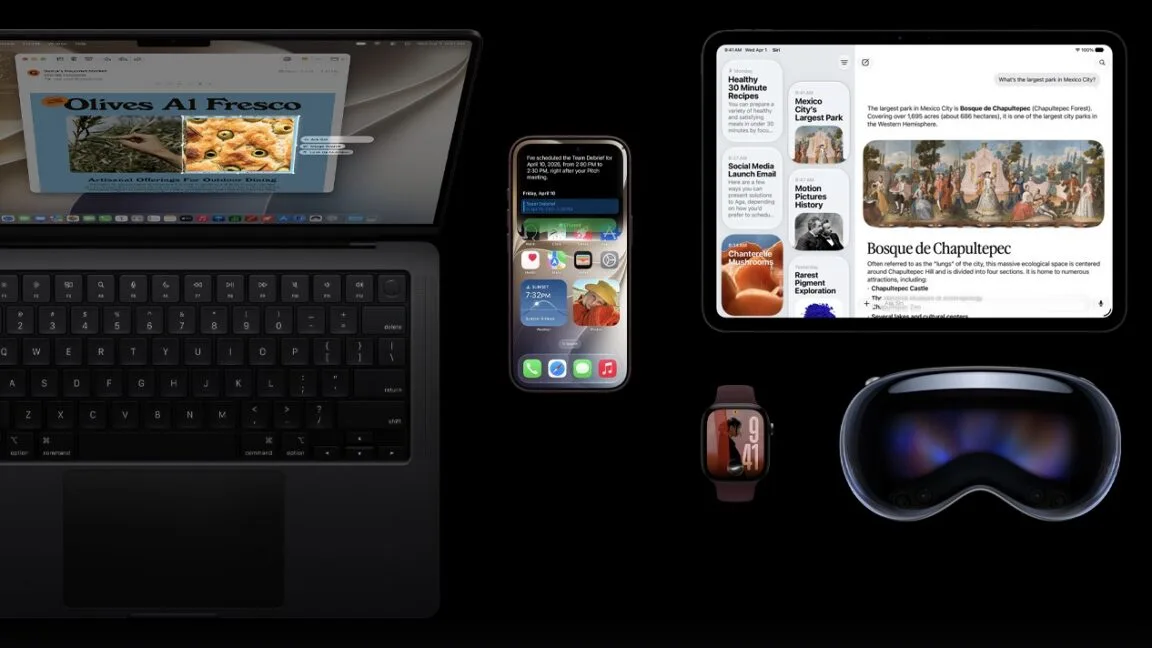
Apple unveiled its annual operating system refresh today, bringing iOS 27, macOS 27 Golden Gate, watchOS 27, visionOS 27, and tvOS 27 to supported devices. The centerpiece of this release cycle is Siri AI, a redesigned voice and text assistant built on large language models and equipped with contextual awareness—though tvOS remains the sole platform without this new capability.
The reimagined Siri can process natural language instructions to perform tasks such as describing on-screen content, retrieving personal information from past communications, and emails, and executing app-specific functions when developers have integrated support. Additional AI-driven capabilities span generating Shortcut automations and Safari extensions from text prompts, as well as expanded photo manipulation tools. A standalone Siri application now exists, functioning similarly to established offerings like ChatGPT or Claude.
The AI Infrastructure Behind Apple Intelligence
Apple's "Apple Intelligence" ecosystem relies primarily on proprietary models designated AFM 3. The on-device tier comprises AFM 3 Core, which operates with 3 billion parameters, and AFM 3 Core Advanced, deploying 20 billion parameters through a sparse architecture that "uses a sparse architecture, activating just 1 to 4 billion parameters at a time depending on the request." Complementing these are cloud-based variants—AFM 3 Cloud, ADM 3 Cloud (Image), and AFM3 Cloud Pro—which provide enhanced computational power for more demanding operations.
Design Refinements and System Improvements
Both iOS and macOS now feature adjustable transparency controls for the Liquid Glass aesthetic, allowing users to dial the effect up or down. On macOS, Apple has implemented numerous incremental design adjustments responding to user feedback accumulated since Liquid Glass debuted, representing a polish cycle rather than a fundamental visual overhaul.
Across the entire lineup, particularly on macOS and iOS, the updates incorporate various usability and performance enhancements. macOS gains HDR support for all system interface components and expanded compatibility with diverse external display configurations.
Platform-Specific Updates
tvOS 27, visionOS 27, and watchOS 27 represent more modest iterations compared to their iOS and macOS counterparts. tvOS omits Siri AI entirely, instead concentrating on refinements to the Podcasts and Music applications alongside larger text size options for the interface.
watchOS incorporates the Siri app and Siri AI capabilities, introduces a fresh watch face, and delivers design enhancements. The update expands health and fitness tracking with perimenopause and menopause notifications and monitoring, plus improved step detection. However, the Walkie Talkie feature is being discontinued along with other underutilized functions.
visionOS receives Siri AI and the Siri app, adds a new virtual environment called Thórsmörk, enhances screen recording functionality, and includes minor interface refinements throughout the platform.
Availability and Device Requirements
All updates roll out to eligible devices immediately. iOS 27 extends to iPhone 11 and newer models, though Siri AI functionality requires either an iPhone 15 Pro or iPhone 16 series device. Golden Gate demands an M-series Mac processor.
Golden Gate marks the final macOS iteration supporting Rosetta, the translation layer permitting M-series Macs to execute legacy Intel applications. Following this release cycle, numerous older unsupported applications will become incompatible, though Apple has granted an exemption for older games originally built for Intel Macs.