OpenSearch's Lewis: AI agents need better observability when success masks failure
When an AI agent calls the wrong API but still gets a valid response, the mistake can hide in plain sight. Bianca Lewis of OpenSearch explains why developers need new tools to trace what agents actually do.
The scenario plays out more frequently than many realize: An AI agent invokes an incorrect API, receives a valid response, and proceeds as though the operation succeeded as intended. A monitoring dashboard continues displaying green. For engineers accustomed to debugging by examining failed requests, this represents an uncomfortable form of success.
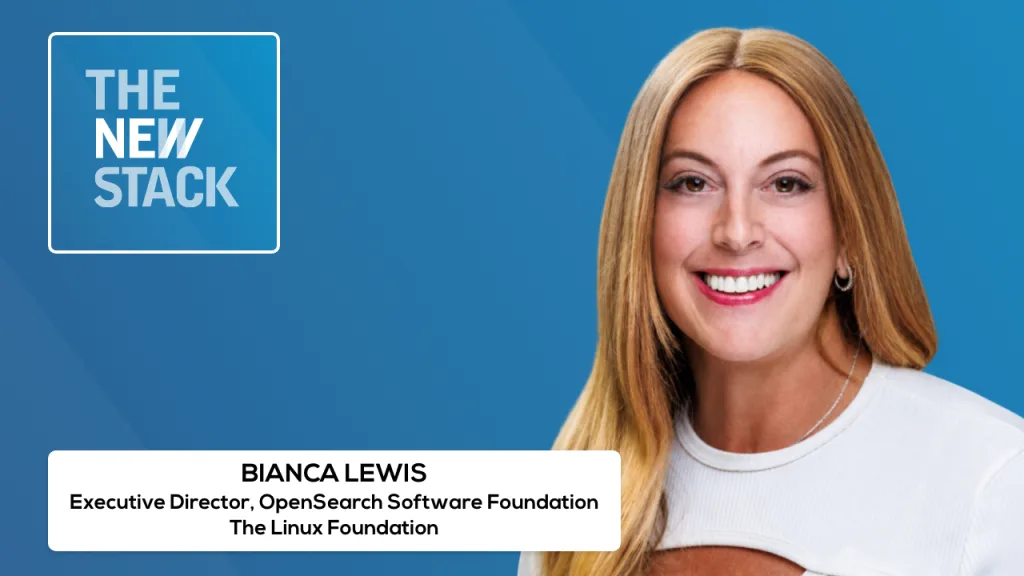
"In the agentic AI era, we are not querying like humans anymore," stated Bianca Lewis, executive director of the OpenSearch Software Foundation.
During an interview with The New Stack senior editor for AI Frederic Lardinois at AGNTCon + MCPCon North America 2026 in San Jose, Lewis discussed the implications of this transformation for OpenSearch, an open-source initiative already widely used by developers for application search and log analytics.
Lewis identifies potential applications for OpenSearch throughout an agent's operational cycle—both retrieving the information the agent requires and providing developers visibility into how that information gets used.
Follow the agent's trail
Lewis recalls an era when failures communicated their presence unmistakably.
Error 500 queries used to be the best thing that could ever happen because we would know that [something] went wrong. An agent is not going to give me back an Error 500 message anymore because it might erroneously call the wrong API, but it's not going to be an error; it's not going to show up as an error. It's changed how we need think about our applications and how we need to observe them.
Bianca Lewis
When an agent has access to multiple services through a search application, each individual call can technically succeed, even when the cumulative sequence steers the agent away from what the user actually requested.
Lewis describes leveraging OpenSearch alongside OpenTelemetry to document which services and APIs the agent contacted. By incorporating cost metrics, developers gain insight into both where expenses accumulated and where the agent deviated from the correct path. This concrete data becomes invaluable for investigation when the ultimate result appears reasonable but conventional error logs offer minimal insight.
Lewis also makes a distinction between ephemeral context specific to a single interaction and persistent information residing in search indexes. This distinction becomes critical when teams evaluate what to modify following a problematic execution. The trace documents the agent's actual behavior, allowing developers to examine the context the application initially supplied to the agent.
The advantage of combining search and observability on a unified platform becomes most apparent for organizations already running OpenSearch for one of these functions. Lewis describes teams beginning with observability capabilities, then applying the same platform to construct search functionality. This approach allows them to leverage existing expertise and reassess how many locations store duplicate copies of identical business information.
When Lardinois introduces the concept of data gravity, Lewis contends that the expense associated with switching platforms warrants inclusion in total cost of ownership calculations alongside operational expenses.
Who builds the next version?
Platform transitions require extended timeframes. Organizations maintain production applications across years, manage unexpired contracts, and must cultivate new technical capabilities. Lewis and Lardinois examine how a commercial ecosystem furnishes teams with hosting and support alternatives during transitions, and how an open project grants participants influence over the features they will ultimately rely upon.
I think that contribution into OpenSearch can take many forms.
Bianca Lewis
Lewis identifies pull requests, community Slack conversations, and user groups as participation pathways. For developers early in their careers, she recognizes an opportunity to establish a documented portfolio demonstrating their contributions to an operational system.
Experienced engineers bring systems-level thinking to production incidents—particularly valuable when an agent's assured answer signals the first indication of a problem.
Lewis has coined a term for this evolution. "I always joke — and I can say this because of my age — is that it's sort of like revenge of the dinosaurs. We have now come to the stage where the person who understands the system-level context of what you're trying to achieve with agentic AI becomes extremely important."
The complete interview appears on The New Stack's YouTube channel, featuring additional discussion on OpenSearch implementations, community priorities, and Lewis's perspective on maintaining data control as agent workloads expand.