OpenClaw Enterprise emerges as the Kubernetes alternative for governing AI agents at scale
OpenAI, Nvidia and Red Hat are backing OpenClaw Enterprise, an open-source control plane designed to let IT teams manage persistent agents across enterprise infrastructure without resorting to outright bans.
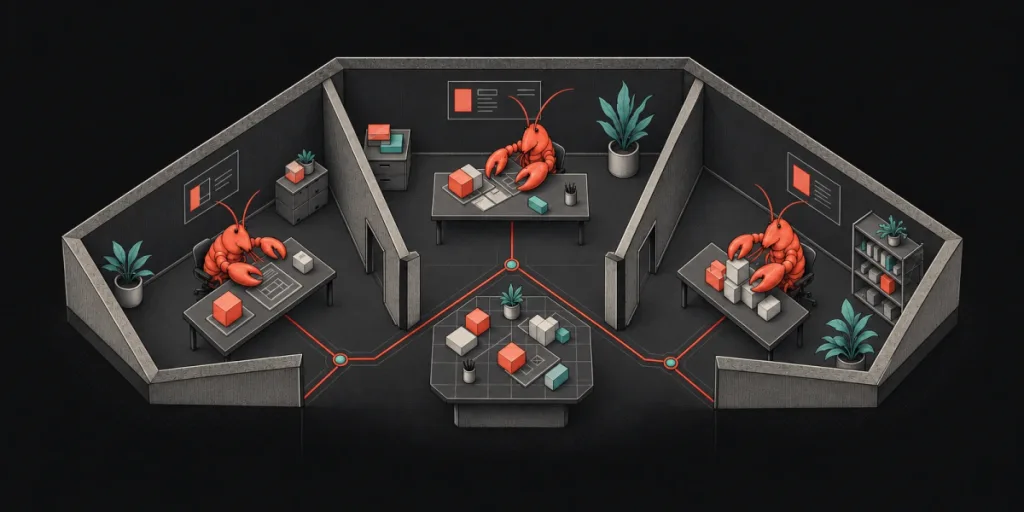
Enterprise IT departments have traditionally prohibited agent platforms altogether, viewing them as impossible to govern at scale. OpenClaw Enterprise (OCE) represents an attempt to change that calculus by providing centralized controls for managing autonomous agents across shared infrastructure.
The project traces its roots to late 2025, when Austrian developer Peter Steinberger released OpenClaw as a weekend side project. The self-hosted AI agent quickly went viral, accumulating over 100,000 GitHub stars by February, when OpenAI brought Steinberger onto its team. Since then, OpenClaw has matured considerably, establishing an independent foundation with backing from OpenAI, Nvidia, Red Hat and GitHub, while strengthening its security posture and expanding its agent harness capabilities.
Addressing the governance gap
Granting agents access to code repositories, authentication credentials, plugins and internal communication systems creates a governance nightmare for enterprise security teams. The more capable these agents become, the greater the potential impact of their actions. Kevin Lin, a member of technical staff at OpenAI overseeing OCE development, articulated the core problem in a Tuesday blog post.
The default stance of IT in most organizations is to ban agentic platforms like OpenClaw altogether.
Kevin Lin, OpenAI
Lin explained that organizations consistently request "a stronger common security, safety, and governance standard is needed before agents can be fully adopted." OpenClaw Enterprise addresses this by providing administrators with a unified interface for deploying agents, isolating them in separate namespaces, managing permissions, handling credentials and maintaining audit trails.
The project remains in early development, with Lin noting that OCE is "being developed in the open before its 1.0 release" later this year and is currently suitable only for internal pilot deployments. The OpenClaw Control Plane (OCC) forms the architecture's foundation, coordinating agent deployment and isolation while gateways and harnesses manage message routing and agent execution separately.
OpenClaw has already implemented the API, console, persistent worker, PostgreSQL backend and Kubernetes packaging. External gateway admission, workload authentication and certain model authentication approaches remain incomplete. The team released OCE as open-source software early specifically to allow organizations to inspect and modify the code while enabling external developers to influence the project's direction before the formal 1.0 launch.
OCE is built to run on your own infrastructure and will always be free for any organization to use.
Kevin Lin, OpenAI
The Kubernetes model applied to agents
OpenClaw Enterprise originated within OpenAI before the company transferred it to the independent OpenClaw Foundation. Nvidia and Red Hat have since contributed development resources, with both companies already running internal tests of the software. The project explicitly draws inspiration from Kubernetes' role in containerization.
Think of it as Kubernetes for agents.
OpenClaw project documentation
This parallel extends to OCE's actual deployment model. The local development environment runs the control plane, PostgreSQL and agent workloads within a Kubernetes cluster, while organizations can deploy OCE into their existing Kubernetes infrastructure. A Docker or Podman Compose option exists for development purposes, though it currently supports only a control-plane preview without agent deployment capabilities.
Lin articulated the long-term vision on LinkedIn, drawing an explicit parallel to container orchestration's evolution.
Similar to how K8 became the standard for deploying containers in the cloud, we want OCE to be that for agents.
Kevin Lin, OpenAI
Red Hat's leadership shares this perspective. Joe Fernandes, VP and general manager of Red Hat's AI business unit, published a separate blog post on Tuesday drawing connections between the industry's historical shifts—from proprietary Unix to Linux, then containers and Kubernetes, and now to agents. Fernandes argued that Red Hat can apply lessons learned from shepherding those earlier technologies into enterprise use to this emerging category.
Throughout Red Hat's history, some of the biggest changes in enterprise computing have been driven by fundamental shifts in how applications are built and operated. Red Hat engineers are already contributing to OpenClaw, and we're expanding that investment with expertise in Linux, Kubernetes, distributed systems, security and enterprise infrastructure.
Joe Fernandes, Red Hat
Security as the priority
OpenClaw has identified security as its primary focus area. The project is integrating isolation mechanisms between trusted and untrusted workloads with sandboxing, fine-grained permission controls and LLM-assisted review processes. The team intends to publish a reference architecture demonstrating how these components work together in production environments.
OpenClaw Enterprise remains substantially incomplete. While the control plane is taking shape, significant work remains unfinished, and the project is actively seeking input from developers, operators and security specialists before reaching version 1.0. Lin concluded by acknowledging the project's nascent state: "We are early, and there is much more work ahead."