Neo4j's GraphSummit to showcase graph databases as AI's missing context layer
Graph technology is emerging as essential infrastructure for moving AI applications from experimental prototypes to production systems, with Neo4j positioning its solutions as a knowledge layer for enterprise AI agents.
Organizations are grappling with a fundamental challenge: artificial intelligence models alone cannot deliver the contextual understanding that enterprise applications require. Graph databases, which layer intelligent relationships onto data structures, are becoming integral to how developers build AI-driven systems. Neo4j Inc. has positioned itself as a leader in this space, offering graph technology designed specifically to support developers working with AI.
According to Paul Nashawaty, principal analyst for theCUBE, "From an AppDev perspective, the value of technologies such as Neo4j is that they give developers a way to represent the relationships, dependencies and business context that AI applications need to reason effectively. Moving from experimentation to production requires more than embedding an LLM into an application. It requires trusted, connected data that AI can retrieve, understand and act upon."
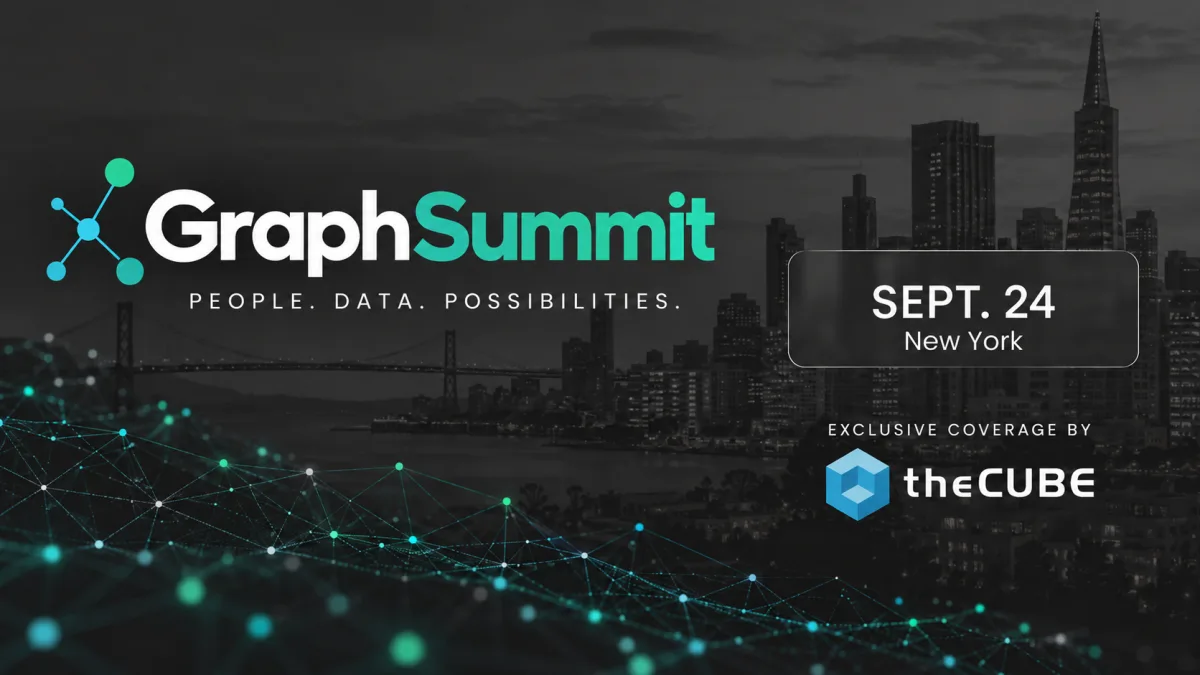
This month's GraphSummit event will bring together specialists and thought leaders focused on graph technology. TheCUBE, the livestreaming platform operated by SiliconANGLE Media, will provide exclusive broadcast coverage. The event offers an opportunity to examine how Neo4j is positioning itself in the emerging era of agentic AI and how graph systems continue to evolve.
Building intelligent context into agentic AI
Research conducted by theCUBE's AppDev team indicates that nine out of ten enterprises are actively implementing AI agents. However, a roughly 30% gap persists between the stage of AI experimentation and the readiness to deploy systems at production scale, according to Nashawaty. Neo4j's graph-based approach aims to narrow this gap by equipping agents with consistent context across disparate systems.
Nashawaty elaborated: "As agents move from copilots that answer questions to systems that take action, the ability to understand what is connected to what, why that relationship matters and what actions are safe becomes foundational. That makes the graph less of a specialized database technology and more of a potential knowledge layer for the next generation of enterprise applications."
Neo4j has integrated Graph Retrieval-Augmented Generation into its development platform. This approach merges vector search capabilities with retrieval methods that account for relationships, allowing agents to grasp business context and provide decisions with greater transparency and traceability.
The company's recent purchase of GraphAware signals its broader ambitions to function as an intelligence layer for agentic AI systems. While Neo4j does not directly compete with Palantir, it offers a counterpoint to Palantir Gotham, which handles data analysis and decision-making, Nashawaty noted.
"Neo4j is positioning the graph as a knowledge and reasoning layer for AI applications, while Palantir's Ontology is more tightly coupled to its broader operational platform," he said. "Neo4j's acquisition of GraphAware and its explicit positioning as an open-standard alternative to Palantir Gotham, however, shows that the company is moving beyond being a database provider and directly into intelligence and AI-driven decision support."
Event coverage and access
TheCUBE will broadcast its GraphSummit coverage on September 24. Viewers can also access recorded content from the event after the live broadcast concludes.
Multiple platforms will carry theCUBE's event reporting. The outlet maintains a dedicated website and YouTube channel for coverage, and additional reporting appears on SiliconANGLE's main site.
Podcast programming
SiliconANGLE distributes "theCUBE Pod" across Apple Podcasts, Spotify and YouTube, allowing audiences to follow programming on mobile devices. Each episode features hosts John Furrier and Dave Vellante discussing major developments in enterprise technology—spanning artificial intelligence, cloud infrastructure, regulatory matters and workplace dynamics—with exclusive analysis and context.
The outlet also produces "Breaking Analysis," a weekly program where Vellante reviews leading enterprise technology stories. The show synthesizes reporting from theCUBE with market research from Enterprise Technology Research and is available on Apple Podcasts, Spotify and YouTube.
Participating organizations
TheCUBE's GraphSummit coverage will include interviews with executives and specialists from Neo4j, Dell Technologies, Blitzy, Collibra, Qiagen, Raymond James and additional organizations. Discussions will focus on graph technology, data connectivity and the emerging knowledge layer supporting enterprise AI systems.