Modders boost DLSS 5 frame rates with foveated rendering technique borrowed from VR
New add-ons for ReShade and standalone tools apply eye-tracking-inspired resolution reduction to Nvidia's neural rendering, potentially doubling performance in demanding games.
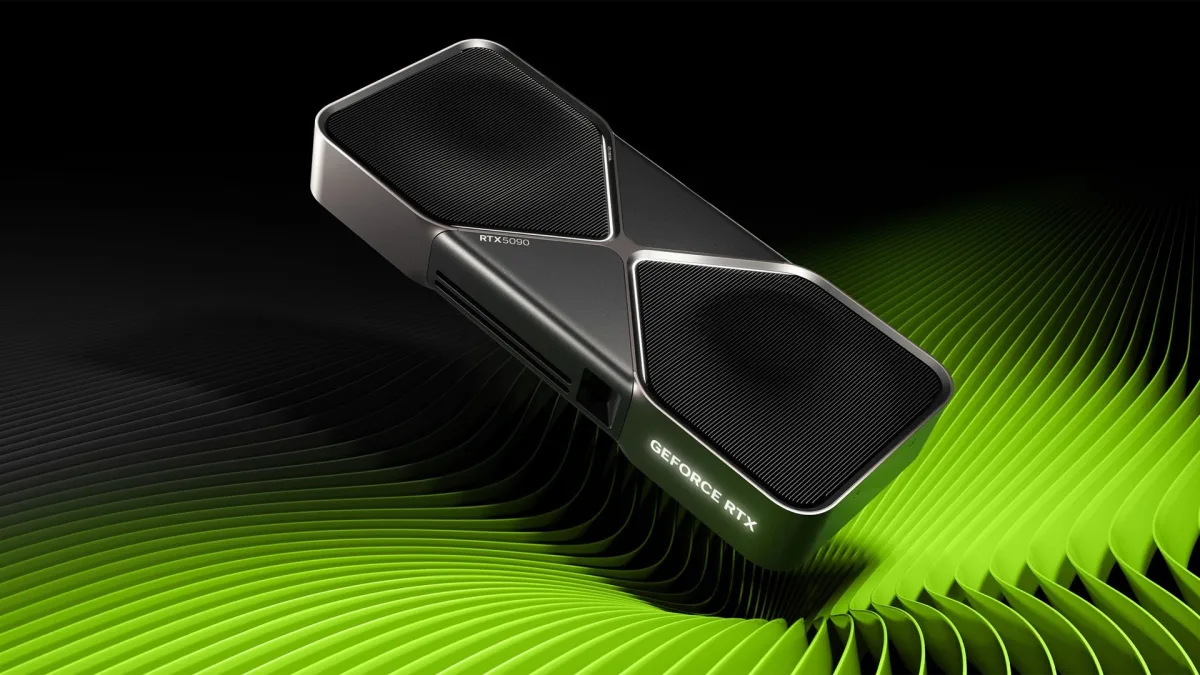
A pair of community projects have brought foveated imaging—a rendering method long used in virtual reality—into DLSS 5, the neural rendering technology from Nvidia. The technique concentrates GPU resources on what appears in the center of the screen while lowering detail at the periphery, a strategy that mimics how human vision actually works. Two implementations now exist: one built as an add-on for the ReShade graphics injector, and another designed to function independently without requiring additional software layers.
Foveated rendering has been a staple of VR performance optimization for years. The approach renders only the portion of the image that occupies the viewer's direct line of sight, typically maintaining high resolution in the center while degrading it toward the edges. Human eyes operate on a similar principle, with sharp focus concentrated in a narrow central area and peripheral vision tolerating less detail. When applied to games, this mismatch between center and edge quality remains largely imperceptible because the human visual system naturally expects this distribution.
Rather than simply adjusting image resolution across the frame, these new tools manipulate the detail level within DLSS 5's neural rendering pipeline itself. DLSS Neural Rendering loads an AI model directly onto the graphics processor and generates images in real time—a computationally expensive operation. By concentrating that AI processing power on the screen's central region, the overall GPU burden drops significantly.
The two projects taking this approach are maximedgoulet's Foveated DLSS5, which operates as a ReShade plugin, and ClarkCheekyKent's CheekyFoveatedDLSS, which can run as a standalone tool. Both allow users to customize the size of the high-quality center region, with separate controls for width and height to accommodate individual viewing distances and personal focus patterns. Users can also tune how quickly image quality degrades beyond the central focus area, creating a smoother or sharper transition depending on preference.
Because maximedgoulet's version operates through ReShade, it requires passing data through a longer processing pipeline compared to CheekyFoveatedDLSS's direct integration. Community feedback on Reddit suggests the standalone version offers greater convenience and polish, though both demonstrate substantial performance gains. In one test case, maximedgoulet reported frame rates climbing from 48 to 80 FPS in The Witcher 3 running at ultrawide resolution (7680x2160p) with 2x Multipass on an RTX 4090 graphics card. The same hardware had previously struggled to run DLSS Neural Rendering at that resolution without foveated optimization, suggesting the technique could make demanding neural rendering scenarios genuinely playable.
I made a foveated rendering mod for DLSS5 than can double performance by reducing the resolution inputs near the edges
maximedgoulet, on Reddit