Fruit Fly Brain Simulation Learns to Play Balatro at 20% Win Rate
A Balatro enthusiast has used Google's recently released fruit fly connectome to train a neural model to play the card game, achieving a 20% success rate on the easiest difficulty with reinforcement learning techniques.
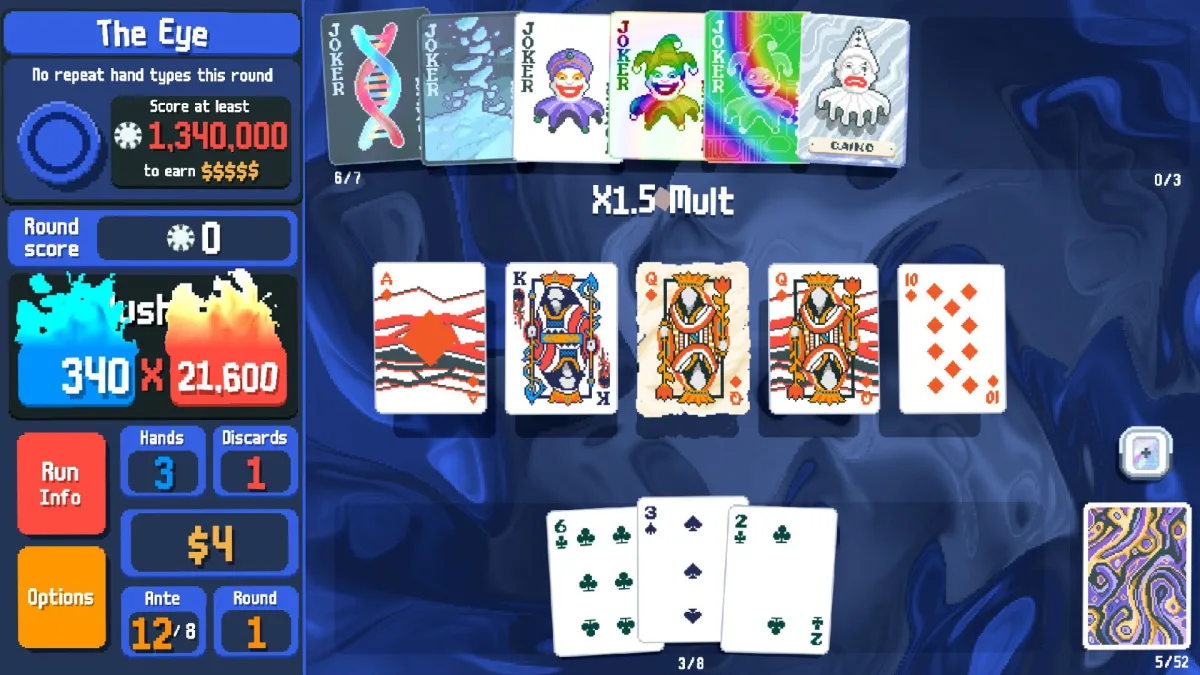
Google's newly published mapping of a fruit fly's complete brain and nervous system has already found its way into unexpected applications. Just over a week after the release, hobbyists have experimented with the connectome for everything from algorithmic trading to autonomous vehicle control. The latest creative use comes from a Balatro player who reports training the fruit fly brain model to play the roguelike card game, currently achieving a 20% win rate.
The Reddit user ActualAerie1011 posted a video demonstrating the model in action, playing on White Stake difficulty with the Red Deck—the game's easiest configuration. The accomplishment stands in contrast to OpenAI's GPT-6 'Astra' model, which has beaten Balatro using the Black Deck on Gold Stack difficulty, widely regarded as the game's most challenging setup.
According to ActualAerie1011, the training process involved a custom reinforcement learning algorithm designed to identify promising Balatro seeds. Since Balatro generates randomized runs like other roguelike games, such algorithms can uncover seeds capable of producing exceptionally high scores, potentially reaching the game's maximum score threshold. The training methodology pits both the fruit fly connectome model and the trainer algorithm against the same seed, then adjusts the brain model's weights based on performance outcomes.
The model currently operates with a 20% success rate on random seeds at the White Stake/Red Deck difficulty level. ActualAerie1011 noted that the model has access only to information visible on screen during gameplay, and development continues. In a comment on the original post, they stated: "The fruit fly will return, strong and smarter."
The project has drawn both admiration and skepticism from the community. ActualAerie1011 provided limited technical details beyond the training methodology and did not release code or cite existing open-source frameworks used in the work. The space is not entirely new territory; projects such as BalatroBot and BalatroLLM have been publicly available for approximately a year.
Balatro presents genuine challenges for machine learning systems despite its apparent simplicity. While the fundamental poker hand rules are straightforward, the game's complexity emerges from intricate joker interactions, sequencing effects, scoring mechanics, and special conditions including boss abilities and temporary or permanent modifier jokers. This combination creates a consistency threshold that proves difficult even for experienced human players, let alone artificial models.