AMD Opens Ryzen Overclocking to Linux with New Kernel Driver
AMD has released kernel patches that bring official overclocking support to Ryzen processors on Linux, ending years of reliance on firmware hacks and reverse-engineering for CPU tuning.
Linux enthusiasts who have envied Windows users' access to Ryzen Master's straightforward tuning interface can finally breathe easier. AMD has unveiled patches for the Linux kernel that introduce AOD (AMD Overclocking Driver) support for Ryzen chips, according to Phoronix. The move marks a significant shift away from the necessity for developers to decipher proprietary firmware mechanisms or cobble together system-specific ACPI solutions.
Rather than requiring reverse-engineering of closed-source firmware interfaces, the new kernel driver establishes a direct channel to AMD's tuning systems. By making core adjustment features available through the standard sysfs interface, AMD is establishing an official, mainlined pathway for software-driven CPU management.
The initial implementation of the driver encompasses several key capabilities. Users gain the ability to toggle Simultaneous Multithreading (SMT) on the fly via the CPU hotplugging system, replacing the need to pass the nosmt boot parameter. The driver also enables live observation of memory clock speeds, with foundational power management controls being integrated as well.
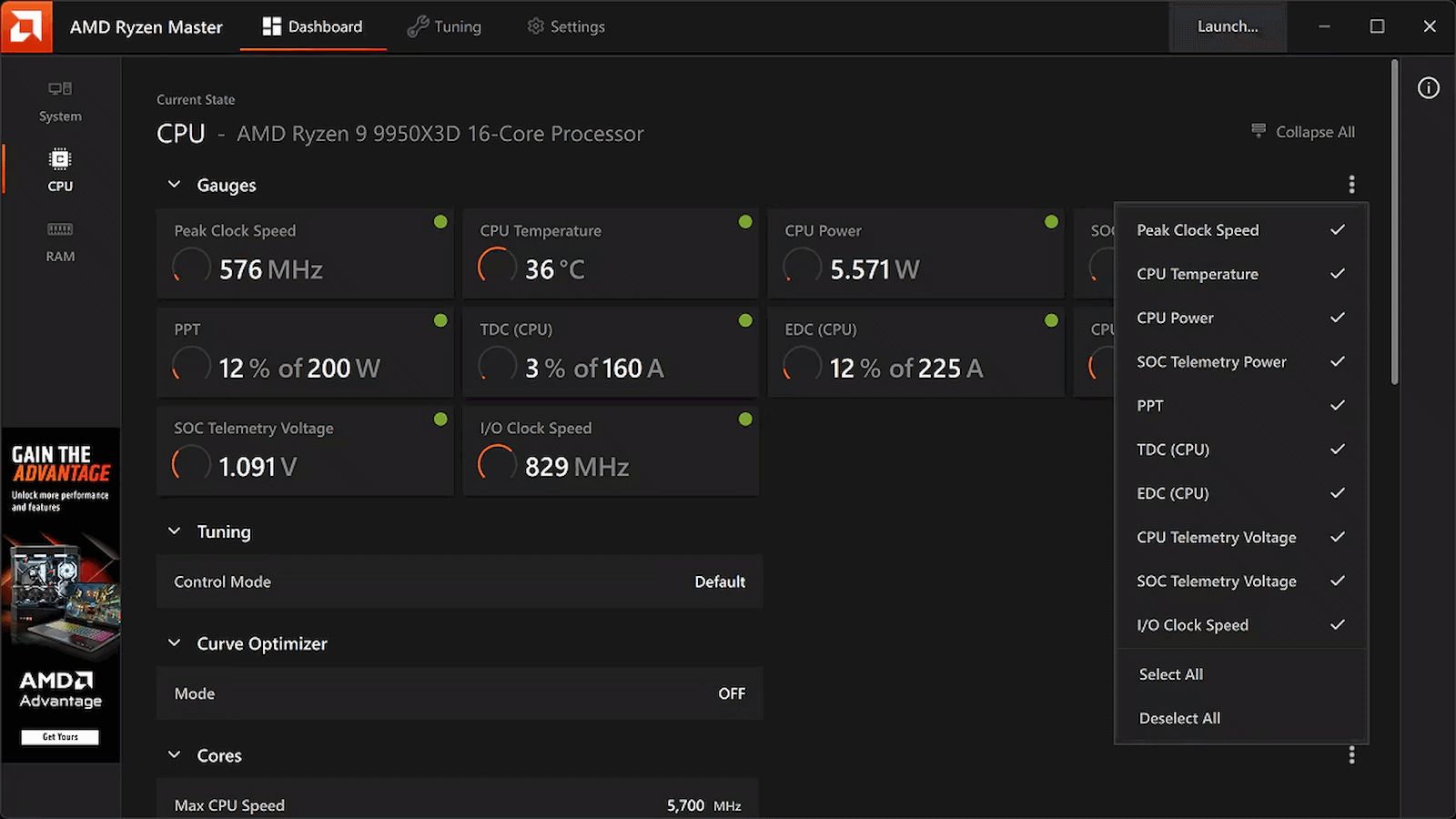
Those anticipating a streamlined, official AMD application comparable to Ryzen Master for Linux should temper their expectations. AMD is adopting the same model it uses for its amdgpu graphics driver: providing the kernel infrastructure while delegating the user-facing interface to the broader community. Applications like CoreCtrl will need to develop support for the new driver, though such work is expected to commence shortly.
This strategy aligns well with Linux principles. Since the tuning controls are exposed as clean kernel sysfs nodes, third-party developers can readily incorporate these features into comprehensive open-source monitoring and tuning applications, or craft custom extensions for specific desktop environments tailored to Ryzen optimization.
The patches are currently undergoing review in kernel mailing lists, with integration into mainstream kernels anticipated in the near term. For hobbyists seeking to extract maximum performance from their processors while maintaining a completely open-source software environment, this represents a landmark achievement in hardware support.