AI Model Cracks 108-Year-Old German WWI Cipher, Revealing Crimean Fleet Intelligence
A developer using OpenAI's GPT-6 Astra has decoded a German radio message from November 1918 that had resisted decryption for over a century, revealing wartime intelligence about Allied naval movements near Sevastopol.
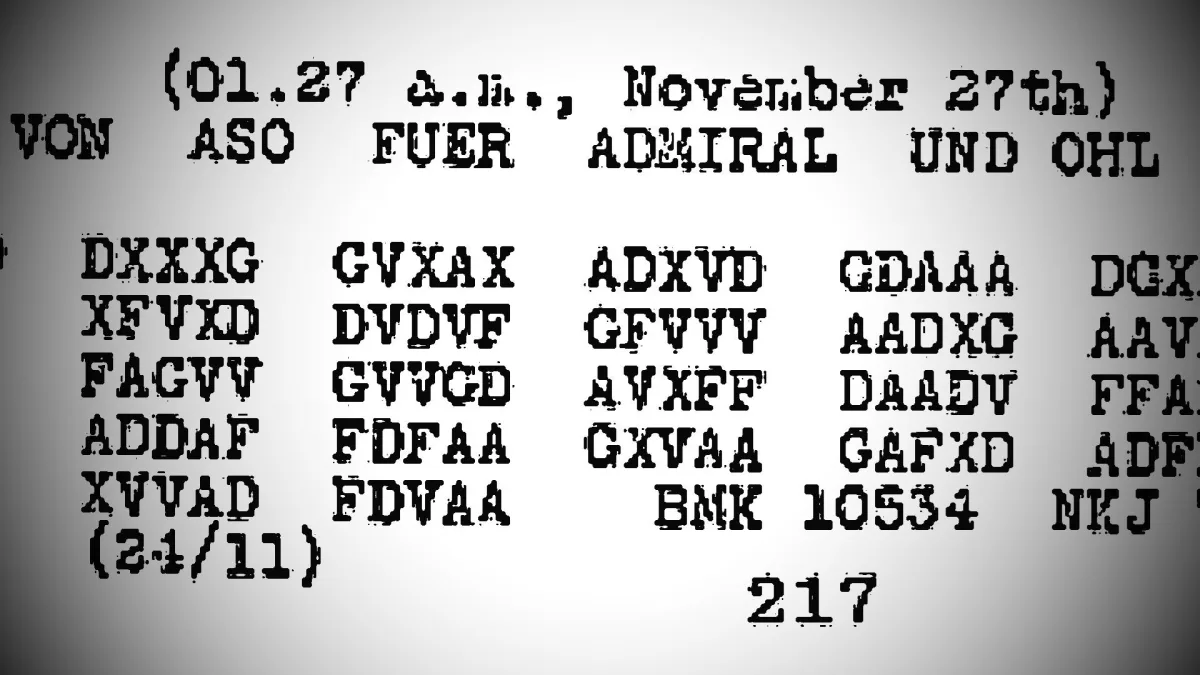
More than a century after transmission, an encrypted German military radio dispatch from World War I has been successfully deciphered, apparently for the first time. The message contained tactical information regarding movements of a British warship and an Allied naval force operating in the Crimean region. A developer working under the name Prinz achieved the breakthrough using OpenAI's GPT-6 Astra language model to crack the cipher.

Prinz selected the encrypted message from a curated collection of 50 unbroken ciphers maintained by Scienceblogs.de, a German science blog. The cipher had been identified as employing the ADFGVX encryption method, a technique that relied on a shifting grid of letters whose arrangement changed based on a keyword known only to the sender and intended recipient.
The message, directed to German High Command and addressed to a senior naval officer, appeared as random characters—precisely the goal of the encryption scheme. The German military's approach involved a complex grid system that would rearrange according to whichever keyword was in use at the time of transmission.
Astra determined that the keyword TRUPPENVERSCHIEBUNG unlocked the cipher, producing the German text: "EIN ENGLISCHER KREUZER EINLIEG X SEWASTOPOL X S4STEN X EIN GESCHWADER DER X ALLIIERTEN FOLGT 26STEN X." When translated, the message reads: "AN ENGLISH CRUISER ARRIVED AT SEVASTOPOL ON THE ?4TH AN ALLIED SQUADRON FOLLOWS ON THE 26TH."
To verify the accuracy of the decryption, Astra cross-referenced the decoded information against historical naval records. The cruiser mentioned in the transmission matched the arrival of HMS Canterbury at Sevastopol, Crimea, on November 24, 1918—suggesting the question mark represented a transmission error. The Allied squadron's reported arrival date of November 26 aligned precisely with documented historical records that Prinz consulted.
According to Astra's analysis, earlier attempts to break this particular cipher likely failed due to a flawed assumption about when the keyword came into use. Researchers had believed TRUPPENVERSCHIEBUNG served as the encryption key beginning December 9, 1918. The message in question, however, was transmitted on November 29—ten days before that assumed date.
The successful decryption demonstrates the problem-solving flexibility that contemporary large language models can bring to historical cryptanalysis and other complex analytical challenges.