Agentic AI Demands a New Approach to API Design and Discovery
As autonomous AI systems become capable of reasoning and planning, APIs must evolve from human-friendly documentation to machine-readable, self-describing interfaces that agents can discover and invoke dynamically.

Building systems around agent-first design patterns has become essential for enabling intelligent automation and flexible workflows in an AI-native environment.
While generative AI has already begun reshaping how developers interact with APIs, the industry is now confronting a more significant transformation: the rise of agentic AI. Agentic AI encompasses intelligent systems capable of reasoning, planning and acting without human intervention. Such systems can comprehend user objectives, locate available tools through APIs, determine the appropriate moment and manner to deploy them, and orchestrate complete workflows. This shift has profound implications for the way APIs are built, explained and made accessible.
Natural language-driven, autonomous API discovery and execution represents a fundamental shift in how agentic AI can reshape API consumption.
API Consumption Challenges Agentic AI Addresses
For AI agents to function effectively, APIs must be readily discoverable, sufficiently descriptive and context-sensitive. Without these qualities, several problems emerge alongside their remedies.
1. Ambiguity in Intent Mapping
Typical users communicate their needs using everyday language rather than formal API specifications. Consider this example:
Place an order for two iPhone 16s for customer John.
Conventional API integrations demand explicit familiarity with the correct endpoint, required parameters and expected data formats. This requirement introduces complexity, potential mistakes and extended timelines for building integrations.
Agentic AI tackles this challenge through the application of structured metadata that anchors natural language requests to actionable function calls. The system parses what the user is asking for, identifies pertinent tools and produces the appropriate API call.
The agent establishes a connection between the stated intent and the matching function by finding semantic alignment with the tool's description and underlying schema.
2. Lack of Structured, Self-Describing APIs
The majority of APIs were originally designed with human developers in mind: they rely on Swagger specifications, Markdown documentation and usage examples. Yet AI agents require machine-interpretable schemas to evaluate what capabilities exist, what inputs they need and what limitations apply.
Agentic AI operates optimally when APIs present the following information in machine-readable form:
- Function name and description
- Input parameters with types and constraints
- Authentication requirements
- Output schema
- Errors and limits
This structured information enables agents to:
- Validate inputs before execution.
- Build dynamic user interfaces (UIs).
- Choose tools based on context and task type.
3. Inconsistent Tool Invocation and Planning
In conventional systems, APIs are manually connected into automation sequences. Under agentic AI, planning and execution become fluid and responsive. The agent performs these steps:
- Reads the tool catalog.
- Matches the current user's goal to the most relevant tool.
- Fills in parameters from context or prompts.
- Authenticates security.
- Executes the tool and observes outcomes.
For instance, given this request:
Log a ticket for user 1234 saying their shipment didn't arrive.
The agent would autonomously determine which API to call and how to structure the request.
4. Choosing the Right Tool from Similar Options
Many APIs provide overlapping or closely related functions:
- getWeatherToday vs. getWeatherForecast
- searchFlights vs. recommendFlights
Agents leverage semantic similarity to pick the appropriate tool. Nevertheless, when tools are too similar, agents may become uncertain about which to select.
Strategies to improve tool selection include:
- Use detailed, disambiguated descriptions.
- Include capabilities or intent tags.
- Score tool relevance based on embedding similarity plus historical success rate.
By aligning user requests with specific capabilities, agents can make more precise and reliable selections.
How Structured Metadata Enables Dynamic Agent Behavior
Structured tool schemas provide agents with critical capabilities:
- description: Intent grounding; maps prompt to tool usage.
- parameters: Input validation, UI generation, prompt slot filling.
- auth: Execution occurs only with valid credentials.
- capabilities: Enable multistep planning and chaining of compatible tools.
- rate limits: Let agent reason about retry policies or tool availability.
This metadata serves as the bedrock for declarative, self-discoverable APIs that agents can use without requiring manual code.
Example: End-To-End Planning by an Agent
Consider this user request:
Translate 'Good morning' to Spanish and send it as a message to Carlos.
An agent would execute the following sequence:

- Detect task requires translation → translateText.
- Store output → use as input to sendMessage.
- Construct a plan to chain these operations together.
Tool calling can occur with or without large language models (LLMs) directly involved. An HTTP GET endpoint from an OpenAPI specification might retrieve details about a specific order based on the orderNumber. Similarly, a Model Context Protocol (MCP) server snippet can return order details using the same orderNumber parameter.
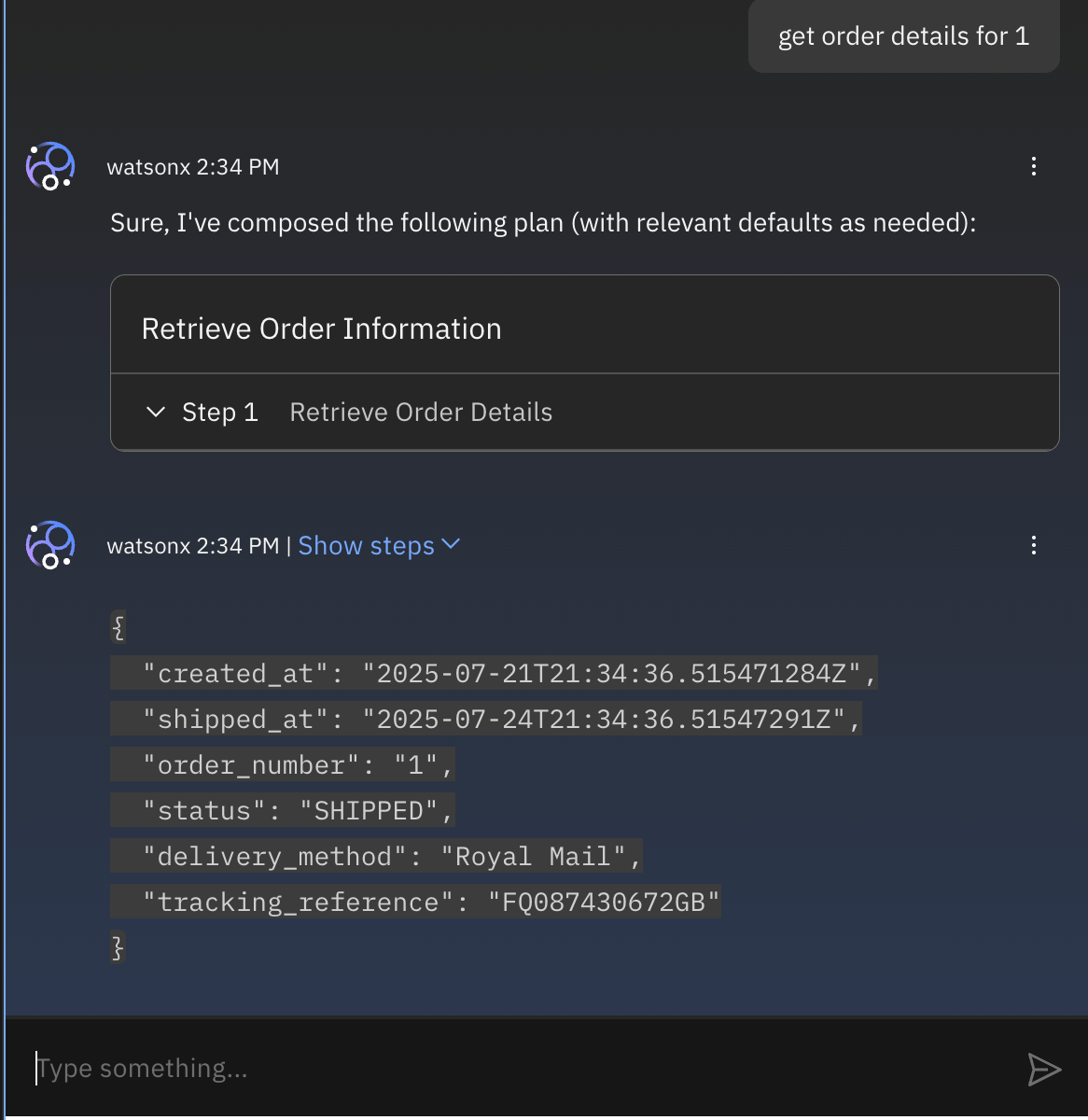
An MCP client can discover available tools, and an MCP can call an MCP server without requiring an LLM. When an agent operates with a user request that involves an LLM, the process becomes more sophisticated.
For example, given the request:

Get order details for order number 1.
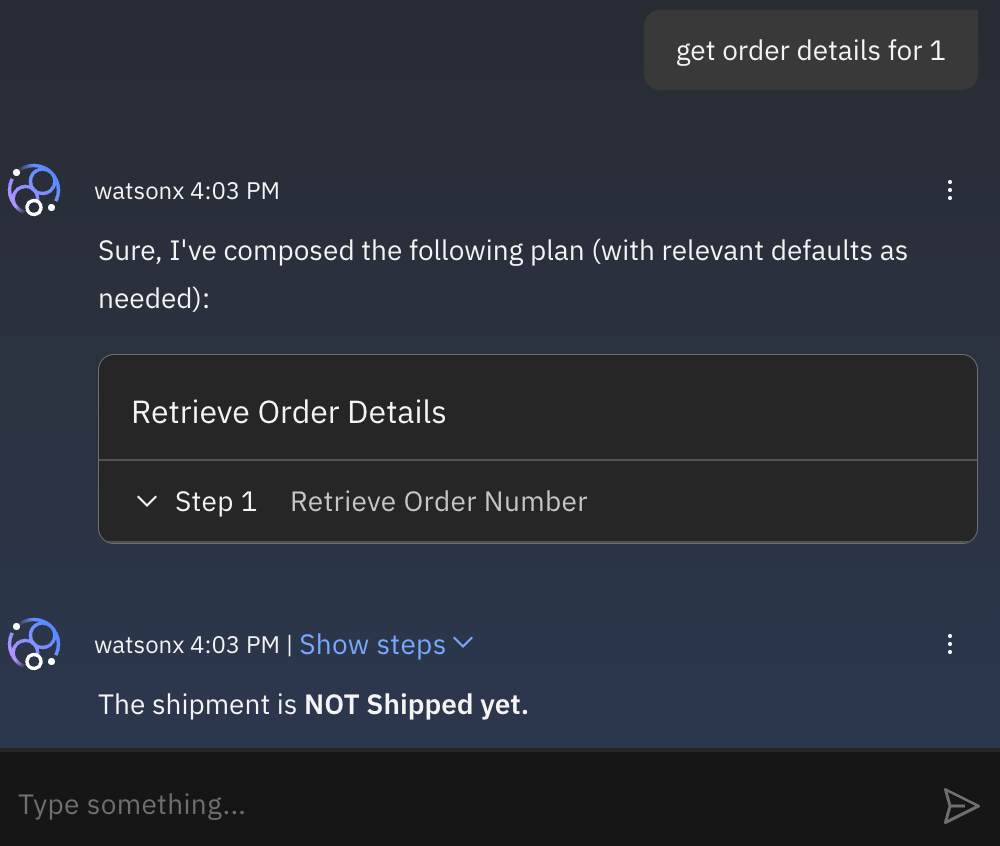
Adding a second order API to the MCP server with more specific descriptions allows the MCP client to detect multiple endpoints. For the same user request, the agent can now use the newly updated API with improved metadata to make a better selection.
Conclusion
Metadata quality directly influences which API an agent selects. Modifying metadata can produce unexpected outcomes, making careful design essential.
Agentic AI is fundamentally changing API consumption patterns:
- APIs must be self-describing, machine-readable and intent-grounded.
- Tool catalogs must expose metadata such as schema, parameters, capabilities and constraints.
- Agents can dynamically reason, plan and invoke APIs — unlocking fast, smart and more autonomous integrations.
In the era of AI-native development, organizing systems around agent-first consumption is no longer optional—it represents the essential framework for intelligent automation and adaptive workflows in hybrid environments. Protocols like MCP are becoming instrumental in facilitating this transformation.
Source: The New Stack