Unsealed Documents Expose Flaws in Medicare's AI-Powered Prior Authorization System
The Electronic Frontier Foundation released roughly 1,000 pages of government records revealing widespread operational failures, patient harm, and perverse financial incentives in the WISeR program, which uses artificial intelligence to evaluate medical service requests for Medicare beneficiaries.

In March, the Electronic Frontier Foundation initiated a Freedom of Information Act lawsuit against the federal government seeking details about the Wasteful and Inappropriate Service Reduction (WISeR) model, a Medicare initiative that deploys AI technology to assess prior authorization requests for select medical procedures. The organization has now made public approximately 1,000 pages of materials retrieved from the Centers for Medicare & Medicaid Services (CMS) through this legal action, encompassing vendor agreements with technology firms, internal progress updates, and grievances filed by healthcare providers regarding the program. The disclosed materials demonstrate that WISeR has produced extensive treatment delays and claim rejections, administrative dysfunction, and documented instances of patient injury.
Rationale for the FOIA Litigation
The EFF pursued its FOIA action to obtain critical transparency regarding an experimental AI initiative with the potential to compromise how Medicare recipients obtain medical treatment. CMS initiated the WISeR model in January 2026, implementing AI-based prior authorization determinations for beneficiaries residing in six states. Physicians must secure authorization before furnishing particular treatments if they seek assurance of Medicare reimbursement. Contracted private entities assess these requests through AI systems. Without adequate protective measures in place, AI-based prior authorization judgments may produce unjustified—or even prejudicial—treatment delays or refusals of critical medical services.
The specifics of the AI technologies that WISeR contractors employ to handle prior authorization requests remain largely undisclosed. Although CMS maintains that a qualified medical professional must examine all rejections, studies indicate that AI-generated suggestions frequently shape human determinations. Furthermore, the WISeR framework incorporates a financial mechanism that incentivizes vendors to reject care, as they receive compensation based on prevented expenditures. Within months of the program's inception, healthcare providers began documenting improper rejections, administrative complications, and extended processing periods that forced patients to endure prolonged discomfort.
The EFF's information request targeted CMS agreements with WISeR technology providers; examinations of vendor systems for precision, discriminatory patterns, or computational errors; and assessments, oversight activities, or reviews of WISeR performance and participating contractors.
Documented Problems Revealed in CMS Records
Materials obtained by EFF from CMS substantiate concerns that medical professionals, advocacy organizations, and elected officials have articulated since WISeR's introduction. These encompass extended processing periods, pervasive system malfunctions, unwarranted claim rejections, and documented patient detriment.
Extended Processing Times for Authorization Requests
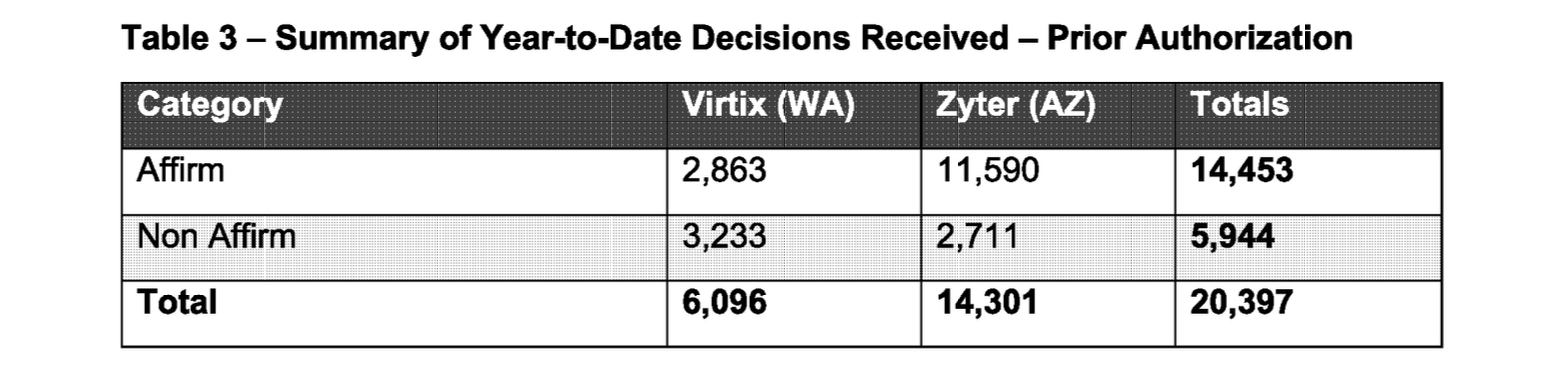
CMS has publicly committed to a 72-hour response window for WISeR vendors handling prior authorization requests, yet materials reviewed by EFF document pervasive failures to meet this deadline. Internal progress reports from the program's initial months indicate that WISeR vendors regularly exceeded the 72-hour timeframe for substantial portions of requests. One status report documents a prior authorization request that remained unanswered for 83 days. Such extended waits can inflict serious harm on patients. Healthcare providers have documented instances where WISeR processing delays have postponed essential medical interventions and subjected patients to prolonged suffering while awaiting clearance.
Financial Structure Encourages Claim Denials
The disclosed materials validate that WISeR's compensation framework generates a financial incentive for vendors to reject requests. Specifically, WISeR vendors receive payment for requests they deny (excluding denials that are subsequently overturned through the appeals mechanism). This monetary incentive compounds the danger that AI-supported decision-making may unjustly deprive individuals of necessary services.
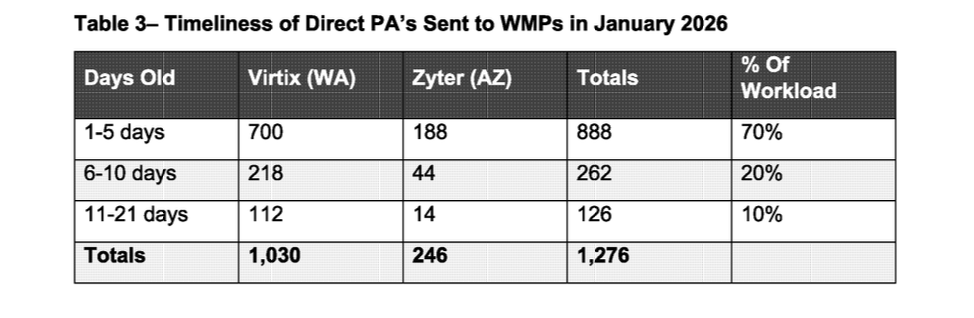
CMS publicly asserts that it mitigates the threat of unwarranted rejections by linking vendor compensation to "quality scores," which measure the speed and correctness of vendor determinations. However, the WISeR Data Reporting Guide released in these documents indicates that substandard quality scores result in payment reductions of merely 5-10%.
High Denial Rates Among WISeR Contractors
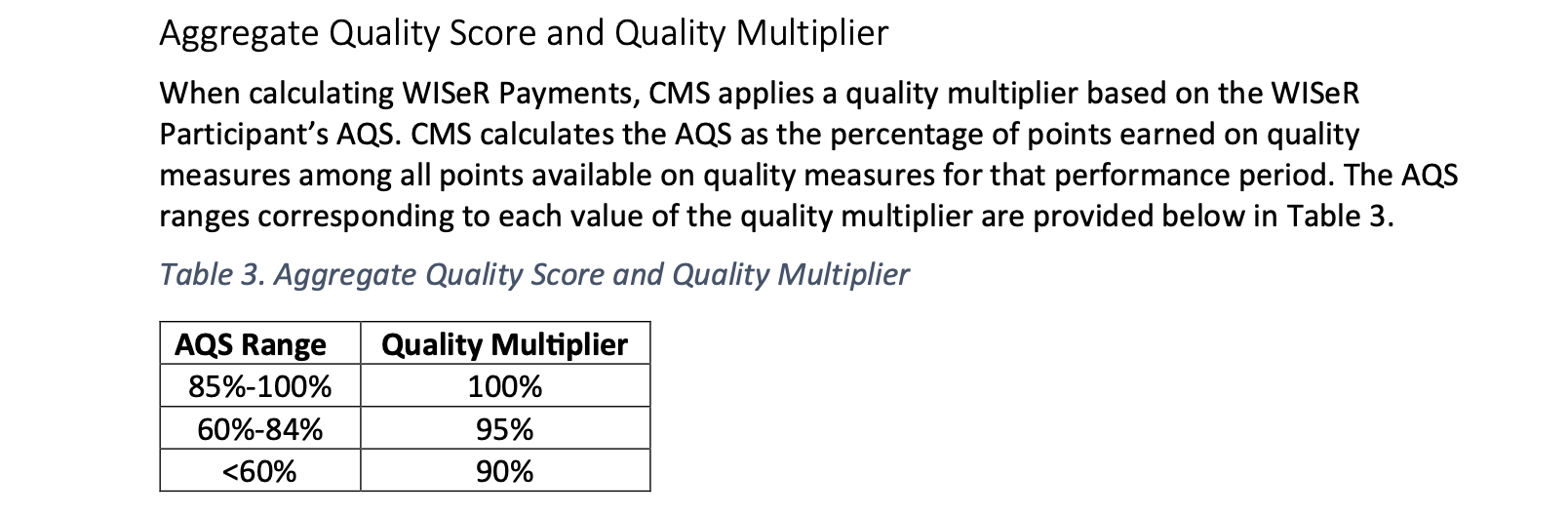
Records obtained by EFF suggest that WISeR vendors may be rejecting claims at abnormally elevated percentages. During the program's opening three months, two vendors alone rejected more than 20,000 prior authorization requests. Virtix, the vendor that CMS mandated to implement a Corrective Action Plan, rejected a greater number of requests than it approved during this period.
Provider Reports Link WISeR Delays to Patient Suffering
Remarks from healthcare providers demonstrate that WISeR processing delays have caused patient injury. The disclosed materials contain March 2026 submissions to a feedback survey concerning Innovaccer, the WISeR vendor managing requests for Ohio. Healthcare providers expressed frustration regarding poor communication, procedural obstacles, and extended response intervals. Multiple submissions highlight how extended processing times from the WISeR vendor have negatively affected patients:
We have patients calling our offices crying in pain because their procedures are being delayed while awaiting approvals or guidance tied to this model. A 3–4 day delay for necessary pain procedures is already difficult for vulnerable patients, but when providers cannot obtain answers for weeks, the situation becomes unacceptable.
I HAVE HAD TO WATCH 3 PATIENTS CRY AT BEDSIDE FOR NOT HEARING BACK ON THEIR PRIOR AUTH FOR KYPHOPLASTY/VERTABRAL AUGMENTIATION PROCEDURE. THESE PATIENTS ARE IN DEEP PAIN.
I have had cases submitted and waiting over 1 1/2 months for a UTN to be generated… In the meantime patients are having to be cancelled for surgeries they need. This is not acceptable they are severely hindering patient care.
Accelerated Launch Despite Technical Unpreparedness
The WISeR program commenced operations in January 2026, merely half a year following its public announcement. Despite objections from healthcare providers and a technology vendor regarding inadequate preparation, CMS proceeded without postponing the start date.
Roughly one month before the launch, Innovaccer, one of the contracted vendors, notified CMS that it intended to deploy a software version lacking complete capabilities and that had not undergone comprehensive testing. The vendor cited multiple obstacles to launching with full functionality, encompassing shifting specifications and requirements, ambiguous governance structures, and insufficient time for thorough testing with the provider network. Innovaccer stated it would automatically approve all prior authorization requests until it could establish complete functionality, noting that "Given CMS's decision not to delay the model start date, auto-affirming is the only path available."
According to an April 2026 status report, Innovaccer had not completed development or testing of certain components several months into the program's operation. Innovaccer was not alone in encountering technical obstacles preceding and following WISeR's launch. Weekly progress reports and provider feedback contained in the released materials document pervasive complications stemming from WISeR's expedited deployment.

Expansion Plans Include Time-Sensitive Medical Services
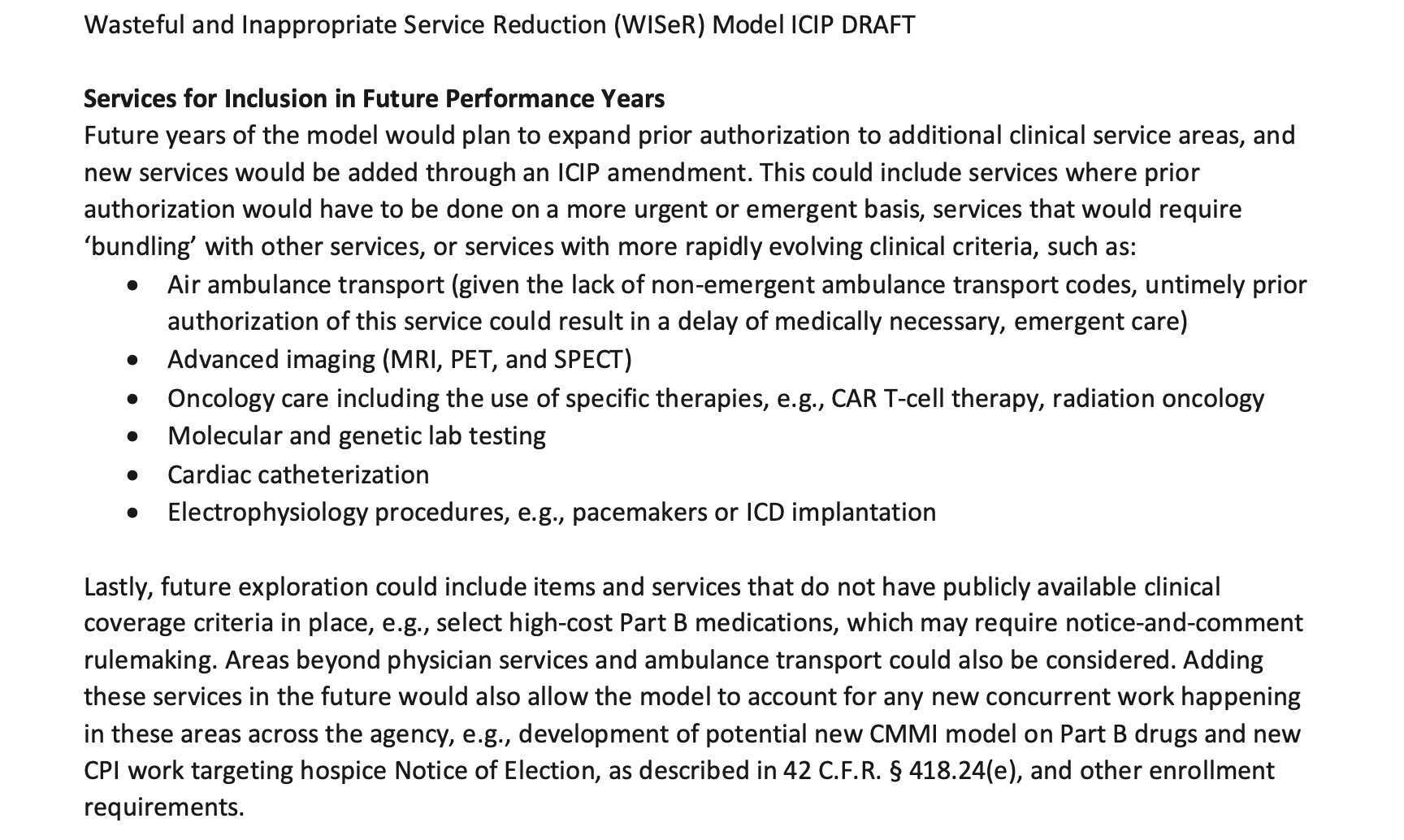
During its inaugural year, WISeR introduced prior authorization requirements for thirteen distinct medical services. The June 2025 Innovation Center Investment Plan for WISeR identifies medical services that might be incorporated into the program in subsequent years. This strategic planning document examines the possibility of incorporating services "where prior authorization would have to be done on a more urgent or emergent basis," encompassing air ambulance services, oncology treatments, magnetic resonance imaging, and pharmaceuticals without established public coverage guidelines.
The Need for Greater Public Accountability
The CMS continues to furnish materials in response to EFF's legal proceeding. The materials disclosed to date align with objections that healthcare providers have communicated since WISeR's inception, including extended processing periods, financial incentives favoring claim rejection, and operational difficulties. Nevertheless, significant uncertainties persist regarding the AI technologies that private vendors employ to guide determinations about Medicare benefit eligibility. As CMS releases additional documents, the EFF will continue making them accessible to the general public. Beneficiaries and the public require comprehensive information about how artificial intelligence influences determinations that shape patients' capacity to obtain medical care.
Source: Electronic Frontier Foundation (Deeplinks / Updates)