Senate Republicans push through FCC nominee as Democrats walk out over quorum dispute
Ted Cruz's committee approved Danielle Thumann for the Federal Communications Commission on a party-line vote after Democrats boycotted the hearing, reigniting a clash over procedure and the future partisan balance of the agency.
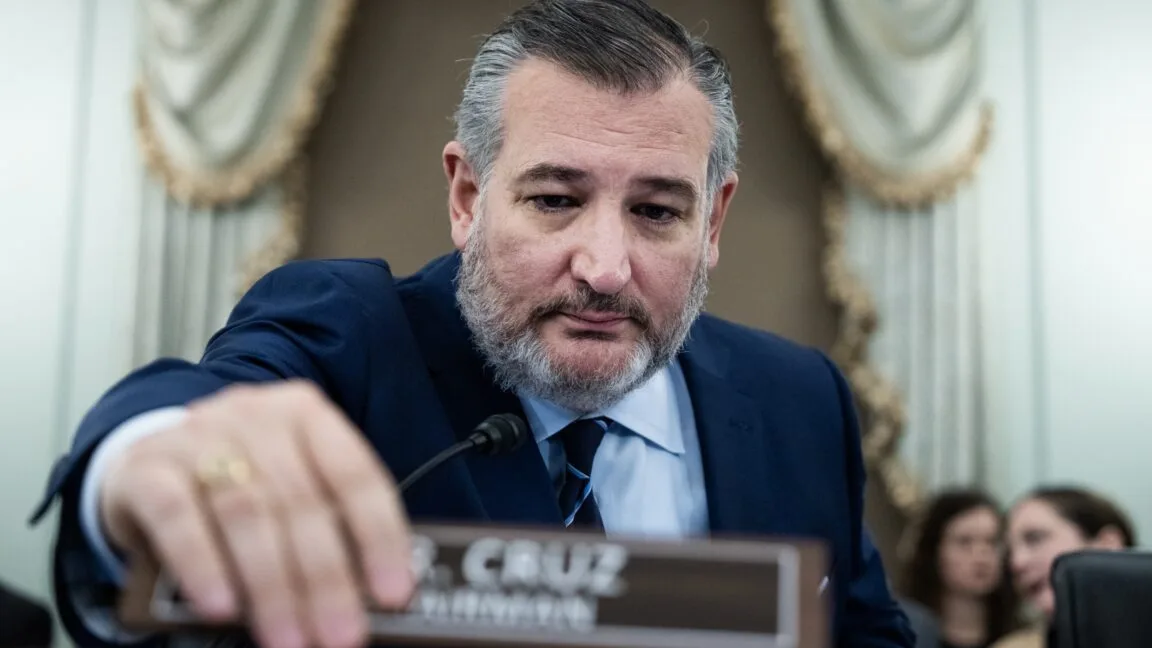
The Senate Commerce Committee, led by Senator Ted Cruz (R-Texas), advanced the nomination of Danielle Thumann to the Federal Communications Commission in a 15-0 vote today, with all 13 Democrats absent from the chamber. Cruz proceeded with the Republican-only tally despite Democratic objections that the vote violated committee precedent requiring at least one minority party member present for such proceedings.
"We're going to be doing our job today, even if the Democrats refuse to show up to do theirs," Cruz said during the hearing. The committee's Democratic members had announced they would skip the session to deny a quorum, citing both procedural concerns and objections to the nomination itself. Thumann's confirmation by the full Senate would give Republicans a 3-1 majority on the five-member FCC.
The vote sets up a confrontation over Senate rules and committee norms. A spokesperson for Senator Maria Cantwell (D-Wash.), the committee's ranking Democrat, stated that "since 2005, Commerce Committee rules required that a quorum include one member of the minority for official action on bill, resolution, or nomination." The spokesperson added that Cruz "failed to pass committee rules" for the current congressional session, meaning the committee technically has operated without formal rules during his chairmanship.
Cruz's office countered by pointing to Senate Standing Rules, which specify that a majority of committee members must be physically present but do not explicitly mandate minority party participation. A Cruz spokesperson said this creates a "cleansing clause" that prevents procedural irregularities from invalidating floor votes once a committee reports a measure.
False testimony allegations
Thumann faces accusations of providing misleading testimony to the committee. At a hearing last week, when Senator Ben Ray Luján (D-N.M.) asked whether she supported FCC Chairman Brendan Carr's efforts regarding Jimmy Kimmel, Thumann responded: "I have not worked with the chairman on any media-related issues."
Senator Luján challenged this account in a letter to Cruz, stating that "documents obtained through Freedom of Information Act requests demonstrate that she worked on several media-related issues, including on commitments that Skydance made to pave the way for FCC approval of its merger with Paramount." Luján wrote that "it appears that Ms. Thumann misled the Committee and offered false testimony, seriously calling into question her judgment and character."
The FCC's official website describes Thumann as senior counsel to Carr on matters involving the Wireline Bureau, the Public Safety and Homeland Security Bureau, and the Consumer and Governmental Affairs Bureau. Emails obtained through public records requests by the advocacy group Protect Democracy show she had involvement in media-related matters.
Thumann submitted follow-up responses to senators this week, clarifying that her work sometimes included "reviewing documents or filings in a matter outside of my designated portfolio. However, I did not have any conversations with Paramount, CBS, or Skydance related to the merger."
Role in FCC responses to media complaints
Luján alleged that Thumann "played a role in processing informal complaints related to" alleged news distortion on CBS's 60 Minutes and "apparently orchestrated the Commission's response to consumers regarding the Jimmy Kimmel controversy." However, records show Thumann was only a recipient of emails concerning the Kimmel matter.
The emails do reveal that Thumann approved language in an FCC response to complaints about alleged news distortion in a 60 Minutes interview with Kamala Harris. In one message, Thumann wrote: "Hi Kristi, I have confirmed with the Chairman and Erin that we would like for complainants to be encouraged to resubmit their news distortion complaints in the relevant ECFS [Electronic Comment Filing System] proceeding. Can you please work on some draft language to send to consumers that would advise them on this step (including how to use ECFS)?"
Democrats' quorum strategy and pairing objections
Democrats announced yesterday they would boycott the vote to prevent a quorum. They objected to Republicans adding a third GOP member to the committee while a Democratic seat remains vacant. "All Democratic members of the Commerce, Science and Transportation Committee object to the majority stacking independent commissions with Republicans and rushing nominees through the Committee process in this lame duck session with no Democratic pairs," Cantwell said in a statement.
Cantwell and other Democratic committee members sent a letter to Cruz urging him to cancel the vote and quoted his own words from 2014. "As you wrote in 2014, controversial nominees 'should not be confirmed in the lame duck session of Congress by senators who just lost their seats and are no longer accountable to the voters.' We agree," the Democrats wrote.
Cruz dismissed the historical argument. "Democrats will control the Senate, unfortunately, in January. But today is November 18," he said, adding that there is "ample precedent" for advancing nominations during a lame-duck session.
Pairing tradition and party balance rules
FCC nominations have traditionally been paired with one Republican and one Democrat when each party has an empty seat. Cruz rejected this as a requirement. "There's nothing that requires the president to nominate in pairs… the law merely says that no more than three of the commissioners may be from the same party," he said.
The Communications Act does prohibit a single party from holding more FCC seats than necessary to form a majority. It states: "The maximum number of commissioners who may be members of the same political party shall be a number equal to the least number of commissioners which constitutes a majority of the full membership of the Commission." If Thumann is confirmed by the Senate, Republicans would hold a 3-1 advantage. The sole Democrat, Anna Gomez, would have to leave at the end of 2027 unless Trump nominates her for another term.
Democrats urged Cruz to postpone the nomination. "There is no mandate for the outgoing majority to rush through a partisan FCC nomination in its final weeks… Ms. Thumann's nomination should be postponed until the next Congress and paired with Commissioner Gomez's renomination and the nomination of an additional Democratic commissioner," they wrote.