John Deere's Self-Repair Software Launches, but Farmers Remain Skeptical
The agricultural equipment giant introduced Pro Service in 2025 to let owners diagnose and fix their machines, yet adoption remains minimal and critics say the company still withholds critical repair information.
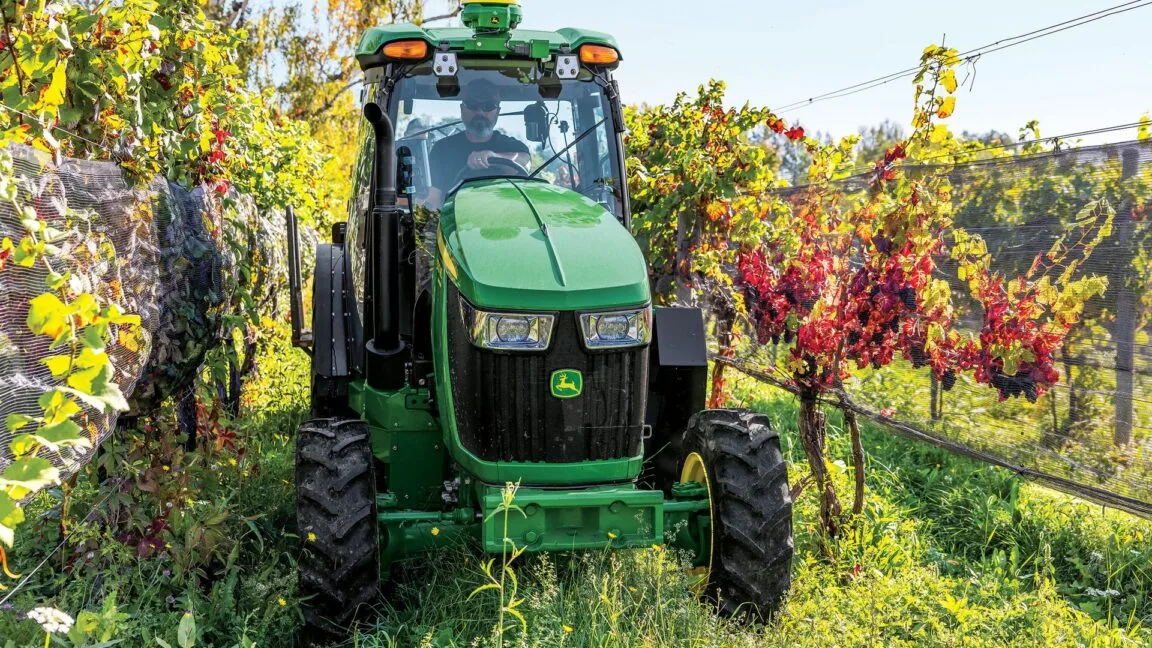
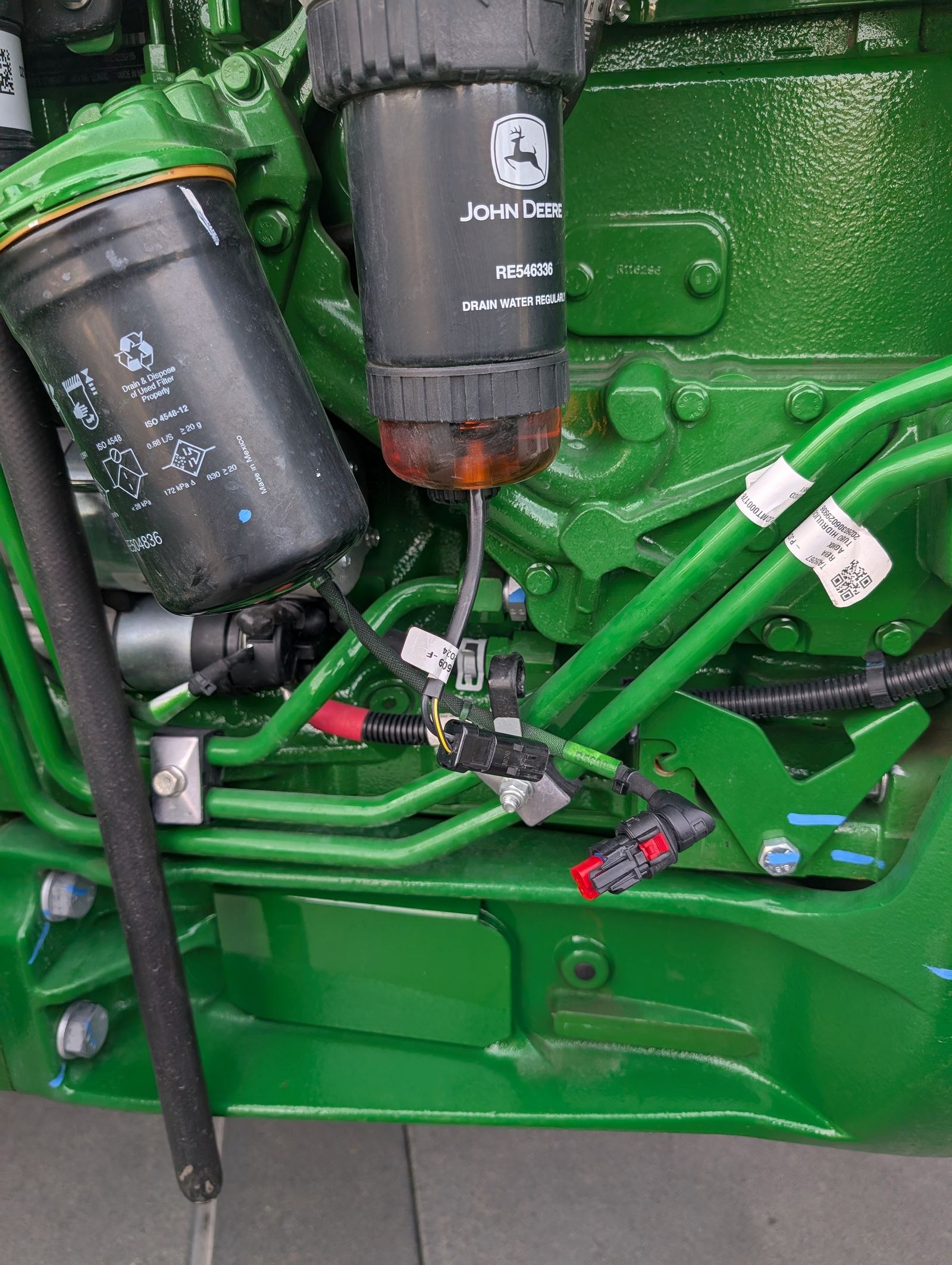
A disconnected water-in-fuel sensor on a John Deere 5130ML tractor needed attention. The person tasked with the repair was neither a mechanic nor a farmer, but rather someone working from a laptop at John Deere's Santa Clara headquarters. A cable linked the computer to the machine sitting outside on the grass. When a diagnostic question was entered into the software, it retrieved instructions and images from the user manual matched to the tractor's serial number. Within minutes, the dangling wires were reconnected with an audible click, and the red warning notification vanished from the screen. The repair was complete.
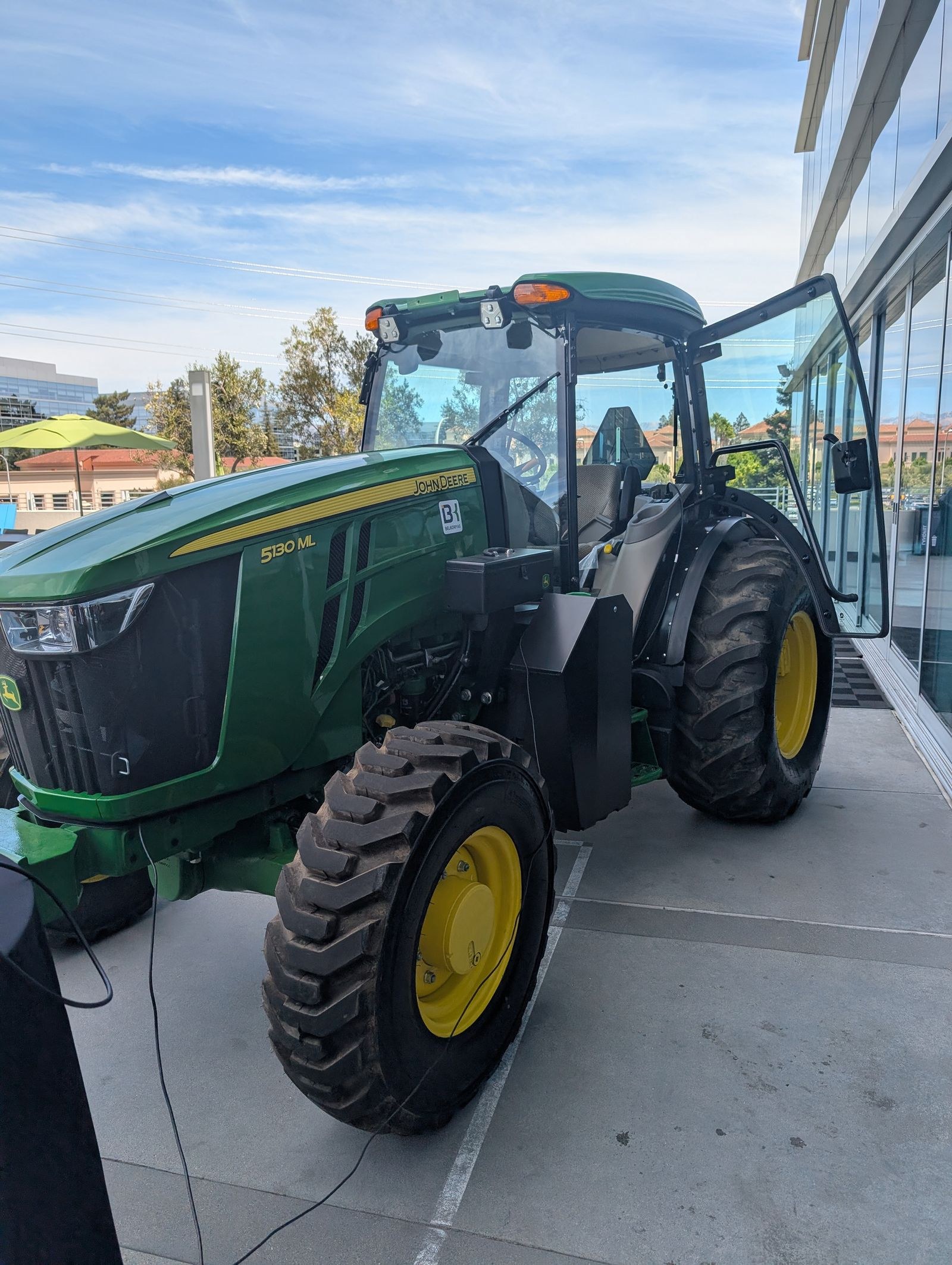
This demonstration showcased Operations Center Pro Service, John Deere's self-repair platform that the company says pairs with nearly every electronic-enabled machine it manufactures. Jahmy Hindman, senior vice president and chief technology officer who has spent 30 years at John Deere and traveled from Illinois for the event, emphasized the system's accessibility. "It is owner-friendly," Hindman stated. "I think that's always been our intent." Yet many in the agricultural community dispute this characterization.
The Right-to-Repair Backdrop
John Deere dominates the U.S. agricultural machinery sector, but over the past decade it has become a focal point for the right-to-repair movement. Modern farming equipment now incorporates sophisticated electronics, including controllers, wireless radios, and sensors. Many current models feature 4G connectivity for collecting location data and performance metrics, with some capable of autonomous operation guided by onboard software.
The company's digital restrictions have drawn significant legal challenges. In April, John Deere agreed to a $99 million settlement with equipment owners regarding excessive repair costs. In July, a separate settlement with the Federal Trade Commission required the company to enhance product repairability. Neither settlement involved an admission of wrongdoing, and both remain pending final judicial approval. Repair advocates contend these measures fall short both financially and in terms of meaningfully altering the company's practices.
Pro Service Details and Pricing
Introduced in 2025, Pro Service carries an annual subscription cost of $195 per individual machine. Larger operations and independent repair shops can access the entire John Deere fleet for $4,995 yearly, while agricultural and turf service providers pay $5,995 annually. The platform enables owners to connect their equipment via Wi-Fi or cable and receive maintenance diagnostics based on machine serial numbers, pulling from manuals and John Deere's data services.
The software recently incorporated an AI chatbot named JD within the Operations Center tool to simplify locating component information. Hindman noted that modern tractors can contain upward of 50 controllers, making diagnosis inherently complex. "As the tractor products grow in size, they also grow in number of controllers that are necessary in order to make it all work," he explained. "So it can be super complex."
Pro Service includes offline-downloadable features for situations without connectivity, customizable interface layouts, and complete software update histories for each machine. When repairs require parts, the software provides direct links to John Deere's shop. Kelli Sullivan, a group product manager at John Deere, emphasized that owners retain full control over their data and can choose whether to share it with the company, independent repair shops, or keep it private.
Adoption Challenges and Farmer Skepticism
Despite its capabilities, Pro Service has struggled to gain traction. One year after launch, John Deere reports approximately one thousand daily users—a modest figure considering roughly 1.8 million farms operate across the United States. "We're just trying to get the word out," Sullivan said. "We have a suite of tools that are already available in our customers' hands that allow them to do those things."
Jared Wilson, a Missouri farmer managing 3,000 acres of corn and soybean production, is a named plaintiff in the $99 million lawsuit and has characterized that settlement as "fundamentally flawed." When presented with the demonstration, Wilson noted that Pro Service excels primarily with straightforward repairs. "If you have multiple failures, you have to figure out where to start," Wilson observed. "If you have three different or four different diagnostic codes, where do you start in the tree to figure out what's wrong?"
Wilson does not subscribe to Pro Service and knows no farmers who do. He reports that farmers in his network instead rely on cracked software versions obtained through gray markets rather than purchasing John Deere's official offering. Even with Pro Service available, he expressed doubt that John Deere would provide the comprehensive tools farmers genuinely need. "It's taken a class action lawsuit and FTC action to get them to come this far," Wilson stated. "If you believe what they're saying now—that this is actually it and we're getting everything we've asked for—then I've got some oceanfront property in Arizona to sell you."
Remaining Information Gaps
A significant concern for Wilson involves the inability to verify whether the dealership version of the software matches the customer version in terms of functionality. Hindman countered that all software versions are identical. The core issue centers on product improvement plans, or PIPs, which John Deere uses to flag potential or existing equipment problems. These notifications only circulate after the company's systems detect that an improvement might be warranted.
When farmers encounter novel problems, information must first reach John Deere, undergo verification, and then be distributed through Pro Service as a PIP. During this interval, the owner facing a malfunctioning machine lacks the necessary diagnostic details. Many farmers would prefer to troubleshoot independently without relying on proprietary company software. "They're still not giving us access to that next level that we have to have for some of the most difficult problems that we encounter," Wilson said.
Willie Cade, a board member of the advocacy organization Repair.org and vocal John Deere critic, offered a harsher assessment. "They're just monopolists that want to make money and as much as they possibly can," Cade stated. "Their real customer is not the farmer. Their real customer is Wall Street."
When asked about repair advocates' criticisms during the demonstration, Hindman expressed openness to the pressure. "We have the best intentions of making sure that we have the ability to give customers the tools that they need to keep their equipment up and running," he said. "We share that goal in common. Are there things that we need to continue to work on? I'm sure that there are. But let's not forget that we are a long way towards moving the needle to a much better state."
Broader Implications
Repair advocates continue pressing John Deere, recognizing that agricultural equipment represents some of the most durable consumer goods, engineered to function reliably for years or decades under demanding conditions. Establishing precedent for farmer repair rights carries implications beyond farming. "This is an issue that's concerning agricultural equipment," Wilson noted. "But it's really the vanguard of a much bigger and persistent problem that affects every aspect of our society."