Boston Terminates Flock License-Plate Camera Contract After Unauthorized Nationwide Data Breach
Boston's government ended its relationship with Flock Safety after the company's cameras shared license-plate data with law enforcement agencies nationwide, violating contractual restrictions designed to keep the information local.
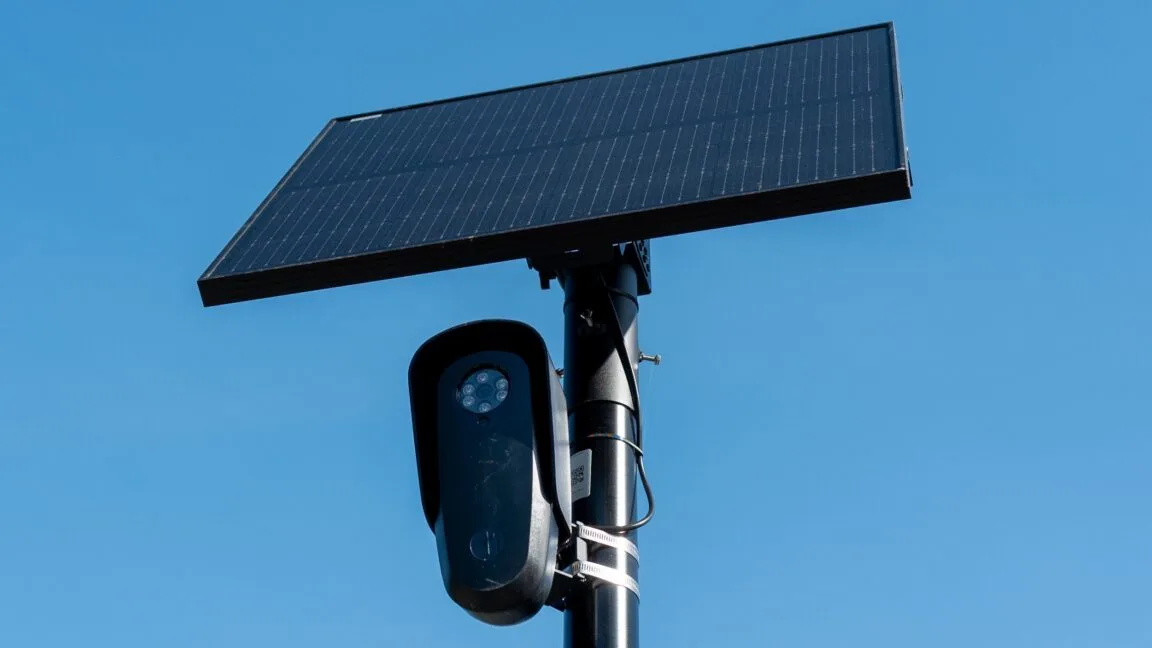
Boston has discontinued its use of Flock Safety's automated license-plate reader cameras following a data-sharing incident that breached the terms of the city's agreement with the vendor. During a recent appearance on GBH News, Mayor Michelle Wu announced the decision, which came shortly before the city released its 2025 surveillance technology report documenting the breach.
The Boston Police Department had operated roughly 45 Flock cameras as part of a test program running from April through September of the previous year. According to the surveillance report, a technical error by Flock enabled unauthorized access to the collected data across the country.
Pursuant to the contract, the Flock ALPR Pilot Program was designed to restrict access to the data collected by BPD ALPR cameras exclusively to trained BPD personnel. The contract clearly noted that data sharing was to be disabled, and BPD confirmed with Flock that settings were "off" for sharing. Within three days of initiating the Pilot, BPD became aware that other law enforcement agencies were able to access license plate and vehicle information collected from BPD ALPR cameras using a nationwide lookup feature that was enabled by the vendor in error. Upon learning of the vendor error, BPD ensured that the function was immediately disabled and access to the Department's data was no longer available without submitting a written request to BPD as described above. No further direct access was available for the duration of the Pilot.
Boston's 2025 surveillance technology report
The report did not disclose the quantity of law enforcement agencies that obtained access to Boston's information during the incident. Despite the problems encountered with Flock, Boston proceeded to evaluate alternative vendors, launching a trial with Motorola in February 2026 and subsequently testing equipment from Axon beginning in June 2026.
Boston's experience reflects broader concerns about how law enforcement uses license-plate reader technology. The Electronic Frontier Foundation released a report examining Flock's nationwide lookup capability, revealing that officers frequently conduct searches with minimal or no substantive justification.
The EFF's examination of search logs from Flock systems demonstrated widespread misuse of the tool. "An EFF analysis of ALPR search logs from Flock Safety systems shows that officers across the country are spying on drivers for completely nonsensical 'reasons'," the organization stated. "Police are routinely searching the Flock database without providing any legitimate justification, making a mockery of our civil liberties by logging reasons like 'LOL' (short for 'laugh out loud'), 'LMAO' (short for 'laughing my ass off'), 'sexy,' and 'idk' (short for 'I don't know') to access sensitive ALPR location data."
Flock Safety has implemented changes to its platform since late 2025, requiring officers to select from predefined categories when conducting searches. However, the EFF noted that this modification "does not require proof that the dropdown reason actually matches the true purpose of the search."
Boston Remains Open to License-Plate Technology With Stronger Safeguards
The city has not ruled out deploying license-plate reader technology in the future, provided appropriate oversight mechanisms are established. When asked whether Boston would continue using such cameras under the right conditions, Wu stated, "Yes, we need a publicly approved and authorized policy to guarantee all of those protections, privacy, civil liberties, and if that's in place, then we should deploy technology to be able to keep people safe and solve crimes faster."
Boston's requirements for any future vendor include contractual obligations prohibiting data sharing and mandating deletion of recordings within 30 days unless law enforcement requests retention for investigative or legal reasons.
Wu emphasized the importance of transparency and control in any deployment. "The police department has been piloting different versions [of the technology] to better understand where vehicles might be going," she said. City leadership must "know exactly who can access that data, how it will be retained, how long will it be saved for."
"It can really help with safety in a lot of ways, but it has to be used responsibly," Wu continued. "When the toggles or the access controls either are not able to be restricted in the ways that conform with that policy, or are set but then can be unset or reset in ways that violate that policy, we would not use that platform."
Multiple municipalities have been reconsidering their relationships with Flock in recent months, citing worries about surveillance overreach, unintended data distribution, financial burden, and documented instances of misuse by officers. Flock Safety countered that new municipal contracts have substantially exceeded contract terminations so far in 2026, with new partnerships outpacing nonrenewals by roughly 10 to 1.