AI agents create audit blind spots as enterprises struggle to track automated decisions
As artificial intelligence systems handle more business judgment calls, auditors face a widening gap between the data they can verify and the reasoning they cannot see, raising governance concerns across regulated industries.
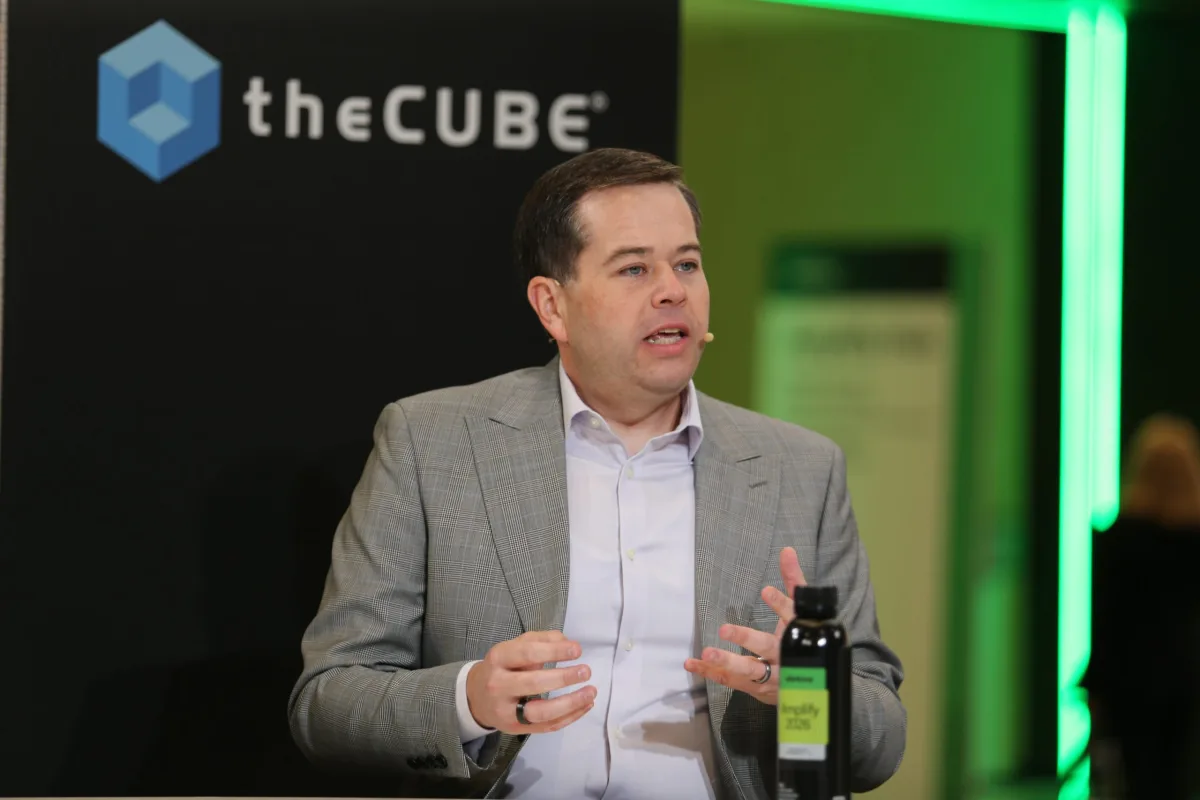
The traditional audit trail is disappearing. While financial and operational information continues to flow through NetSuite, human resources systems and data warehouses, the decision-making process itself has shifted into territory auditors cannot easily inspect. Where email chains, Slack conversations and handwritten notes once documented how choices were made, AI agents now execute those judgments at speeds that outpace human review. This transformation poses particular challenges for companies operating under regulatory scrutiny.
The tension between automation's efficiency and auditability's requirements emerged as a central concern at Workiva Inc.'s Amplify conference, where governance of AI systems has moved from a technical compliance matter to a board-level strategic issue. Josh Robinson, chief audit executive at Vast Space LLC, described the core problem: "With humans, we could understand they were using their judgment, they were exercising probability, but we could see it," he said. "There was either handwritten notes or there were tick marks or there was email chain or Slack messages. That has all been removed from the equation. So, for me, the risk is in the unknown."
Governance, NetSuite and the audit trail behind AI agents
The solution does not require new technology so much as rigorous application of established audit principles. Robinson explained that internal audit teams have long relied on testing for completeness and accuracy, and those same tests can be applied incrementally through each stage of an AI agent's workflow.
"If you can demonstrate completeness and accuracy as an auditor, generally that allows you to reach conclusions about the assurance of datasets or audit tests you're doing," Robinson said.
Accountability remains the harder challenge. At Vast Space, which manufactures commercial space stations and manages astronaut safety alongside regulatory obligations, gaps in control carry consequences far beyond financial restatement. The person whose signature appears on the work retains responsibility for its accuracy, regardless of which system generated it.
"As an audit leader, if it comes to my desk and I'm going to put my signature on it, it pretty darn well better be the right answer," Robinson said.
Breaking down data silos represents the first step toward efficiency. Workiva's AI agents and Knowledge intelligence layer are designed to address this fragmentation. Robinson, who has been a Workiva customer since 2017, highlighted the value of a unified platform that connects disparate systems.
https://www.youtube.com/embed/9PxqviEEBeM?feature=oembed
"I can go to my CFO and be like, OK, we use the likes of a NetSuite and an HRIS and this and this, and this is our data lake," he said. "And we're using Claude, but now look at Workiva who can connect to those 5 different things, bring it in and create agents simply that is going to solve X, Y, Z problem for you."