Startup's Charging Drones Take Flight on Live Power Lines
Nomadic has raised $6 million to scale its NOMAD quadcopters, which land on high-voltage transmission lines to recharge and monitor grid infrastructure without interrupting service.
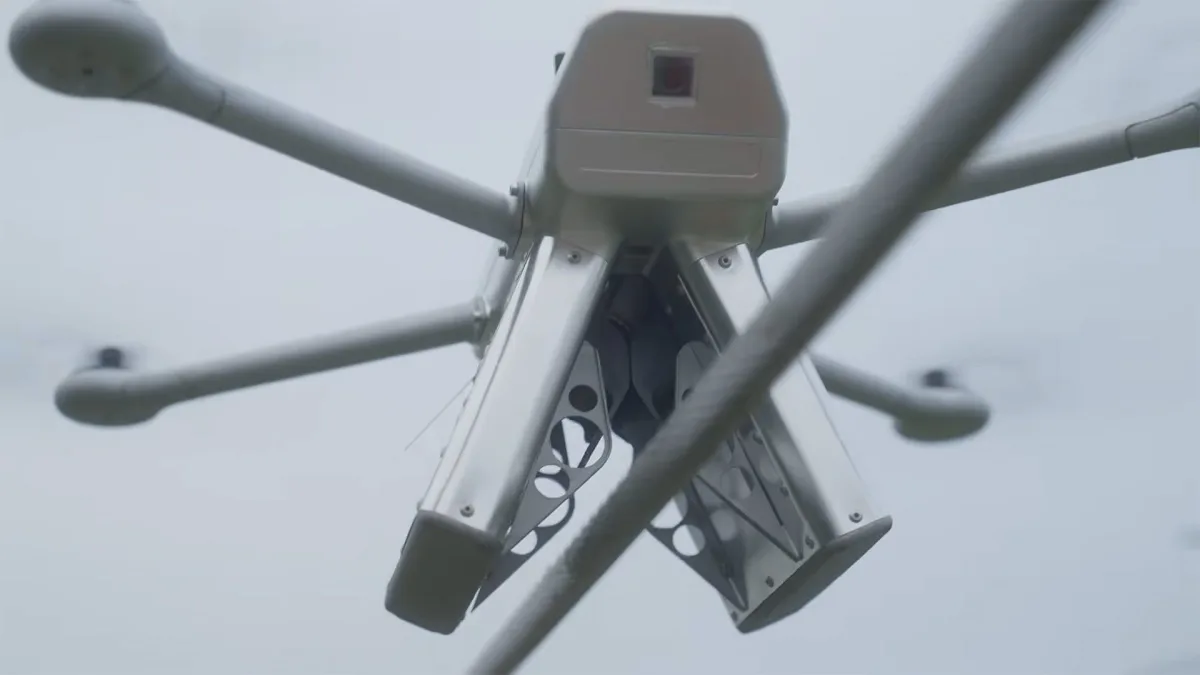
Nomadic, a technology startup, unveiled its NOMAD drone platform this week alongside news of a $6 million seed funding round. The quadcopter aircraft possess an unusual capability that their name suggests: they can operate continuously without needing to return to a charging station. Instead, NOMADs perch on energized high-voltage power lines to recharge before proceeding to their next assignment.
The company has kept a low profile until now, but Nomadic reports conducting more than 20,000 hours of testing on live power lines across Germany, Norway, and the United States. "NOMADs are drones that land on live high-voltage lines, charge from the line itself, and relocate across the grid to where measurements are needed," the startup explains.
The measurement reference points to the drones' primary application: monitoring the transmission infrastructure from which they draw electrical power. Utilities find this capability valuable because grid operators rely on weather forecasting to determine transmission capacity, yet line characteristics fluctuate significantly. According to Nomadic, "the weakest point in any line sets the limit for the whole line."
Fixed sensors versus mobile monitoring
Fixed monitoring stations have emerged as the conventional approach for line surveillance, though mobile drone solutions present compelling advantages. The NOMAD, which draws power inductively from the lines themselves, offers a distinct alternative. Traditional high-voltage inspections conducted by human technicians typically demand substantial preparation, specialized equipment, and temporary power shutdowns. Nomadic asserts that a single NOMAD can cover approximately 25 kilometers of line, whereas fixed sensors typically operate at intervals of 1 to 5 kilometers.
Beyond the physical drone units, Nomadic has developed supporting software to maximize value from fleet-wide data collection. "Nomadic OS combines their data with weather and grid models, giving operators a real-time picture of what is physically happening on their lines."
Durability and expansion plans
The NOMAD platform demonstrates considerable ruggedness. Testing has validated performance in temperatures reaching minus 25 degrees Celsius, severe wind conditions, and on transmission lines operating at voltages up to 420kV, which represents the standard maximum for European grids. With its new capital, Nomadic intends to expand its operational fleet and forge partnerships with additional utilities. The company is also recruiting staff, primarily engineers, with positions based in Munich, Germany.