Security Bottlenecks Slow Enterprise AI Agent Deployments
Companies deploying AI agents at scale are discovering that data protection methods like tokenization now control project velocity, while traditional security review processes designed for slower development cycles are becoming obstacles to production launches.
Organizations moving AI agents into production environments are confronting a new constraint: the speed at which they can implement tokenization and other safeguards for sensitive information now determines how quickly those initiatives advance.
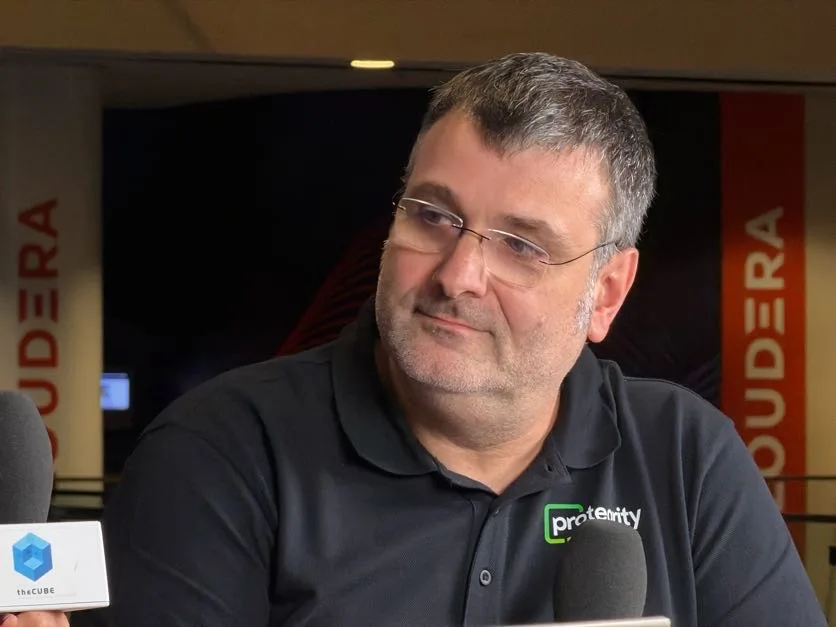
The problem runs deeper than deployment timelines. Once sensitive data enters a model, vector store or agent memory system, extracting it becomes nearly impossible—yet security approval processes built for earlier, slower development cycles are blocking launches. The real shift underway involves balancing data protection with maintaining the utility of that protected information. This dynamic is surfacing across Cloudera Inc.'s partner network, where security has begun functioning as a prerequisite for AI value delivery rather than a final checkpoint, according to Diego Loureda, vice president of customer success and presales at Protegrity USA Inc.
Data leaks are still a thing. If you put sensitive data on a model, if you put sensitive data on a vector store or in the memory of an agent that is going to propagate to other agents, good luck removing that sensitive data. There's no way you're going to be able to do that.
Diego Loureda, Protegrity USA Inc.
Loureda shared these observations during an exclusive conversation with theCUBE's Rebecca Knight and Paul Gillin at Cloudera EVOLVE26. The discussion also covered Protegrity's selection as Cloudera's Emerging Technology Partner of the Year.
Tokenization keeps protected data usable for AI
Conventional encryption can render data so inaccessible that both analysts and AI models lose the ability to work with it. Protegrity's strategy centers on tokenization, a method that replaces sensitive information with substitute values rather than applying mathematical algorithms, Loureda explained. This approach carries additional significance as quantum computing poses risks to current cryptographic methods.
Our main method of protection, that is tokenization, it's already quantum ready. The reason behind that is because there is no mathematical algorithm behind it. It's all based on replacement in memory.
Diego Loureda, Protegrity USA Inc.
Yet safeguarding data alone does not address velocity challenges. Research commissioned by Protegrity through Enterprise Management Associates Inc. revealed that 83% of organizational leaders experienced project delays, Loureda noted.
The main problem with governance is that companies are approving projects and that will not scale in the age of AI. They have to approve patterns.
Diego Loureda, Protegrity USA Inc.
The same research indicated that 82% of leaders deploy agents in limited configurations, stripped of capabilities and data sources that would enhance their effectiveness, he added. Mechanisms like tokenization enable security teams to remove friction and permit those agents to operate at full capacity, according to Loureda.
https://www.youtube.com/embed/-K-nAaar5mk?feature=oembed
Security has always been the business of no, the department of no. That changes now. These days security is the team that can enable AI to give you value.
Diego Loureda, Protegrity USA Inc.