Russia's Shturm unmanned tank malfunctions during Putin demonstration
The remotely operated assault vehicle lost its command link repeatedly during the Tsentr-2026 military exercise, forcing operators to switch to manual control before it became immobilized in mud.
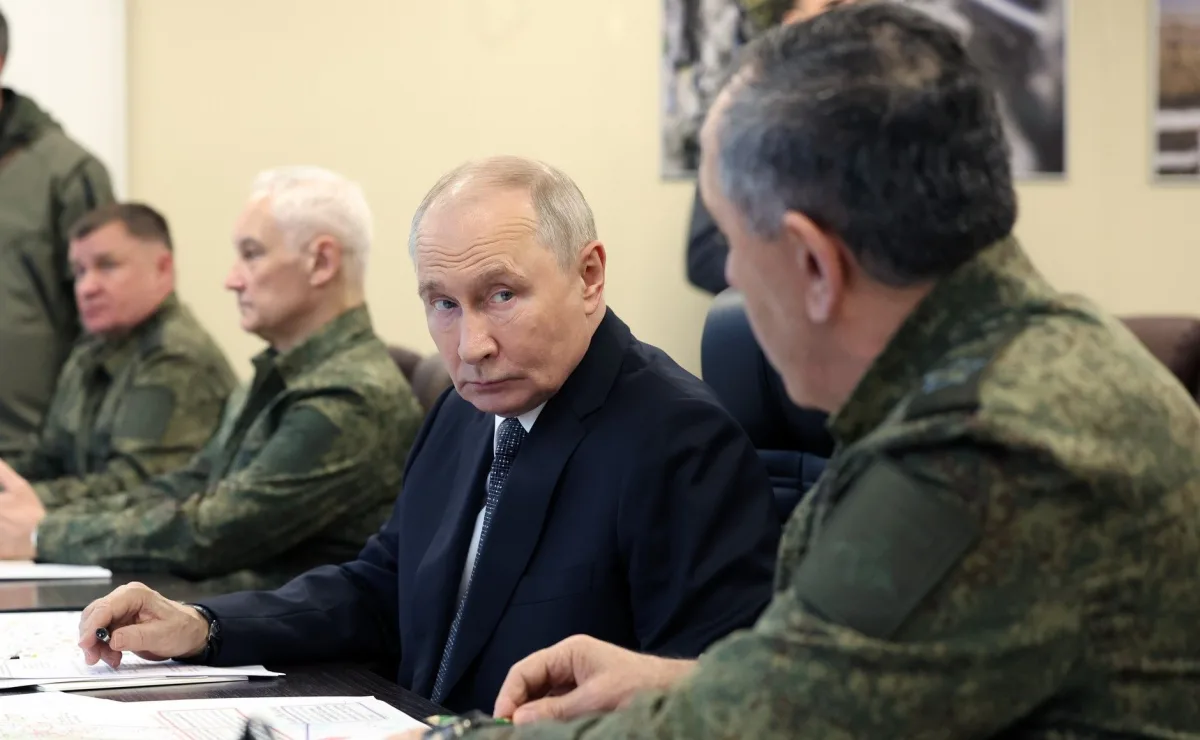
Russia unveiled its Shturm unmanned assault tank at Tsentr-2026, a strategic military exercise that ran from September 28 to October 3, 2026, but the vehicle experienced significant technical problems during the demonstration. The tank repeatedly lost its command-and-control radio connection to its separate command vehicle, prompting organizers to abandon remote operation and deploy a human driver instead. Even under manual control, the vehicle became stuck in a muddy ditch beside a dirt road, with its tracks and front hull buried in soil.
Uralvagonzavod, the world's largest tank manufacturer by production volume, designed the Shturm as a heavy robotic system intended primarily for urban warfare. The platform is constructed on modified Soviet-era T-72 and T-90 tank chassis and can be equipped with a shortened 125mm D-414 main gun, twin 30mm 2A42 automatic cannons, or thermobaric rocket launchers. The system's central capability—and the source of its failure during the public demonstration—is its remote operation capacity, which enables control from a crewed command vehicle positioned within a radio link range of approximately 3 kilometers. The vehicle also includes provisions for a human operator to drive it manually.
According to an October 3 Defense Blog report, the Russian Defense Ministry announced on October 2 that Putin had witnessed the new unmanned combat vehicles and that they had provided fire support to assault units during the main phase of the exercises. Details of the malfunction surfaced after these initial statements. A Russian armor expert cited by Defense Blog identified "several technical flaws, including an engine compartment and turret roof that are almost unprotected, areas drones most often target when attacking armored vehicles in Ukraine."
The expert further questioned the vehicle's operational viability, stating: "The idea of this vehicle seems unsuccessful to me: dependence on a command post that has to be 3 to 4 kilometers away and in direct line of sight. Without proper communications like Starlink, or something similar, there is no point in such a vehicle." Starlink had previously blocked Russian drones from accessing its services during the country's ongoing four-year conflict with Ukraine.