Research on Meeting Science Shows Leaders Should Listen More Than They Talk
A growing field of organizational psychology is revealing what makes workplace meetings effective—and the findings suggest that many leaders are doing it wrong.
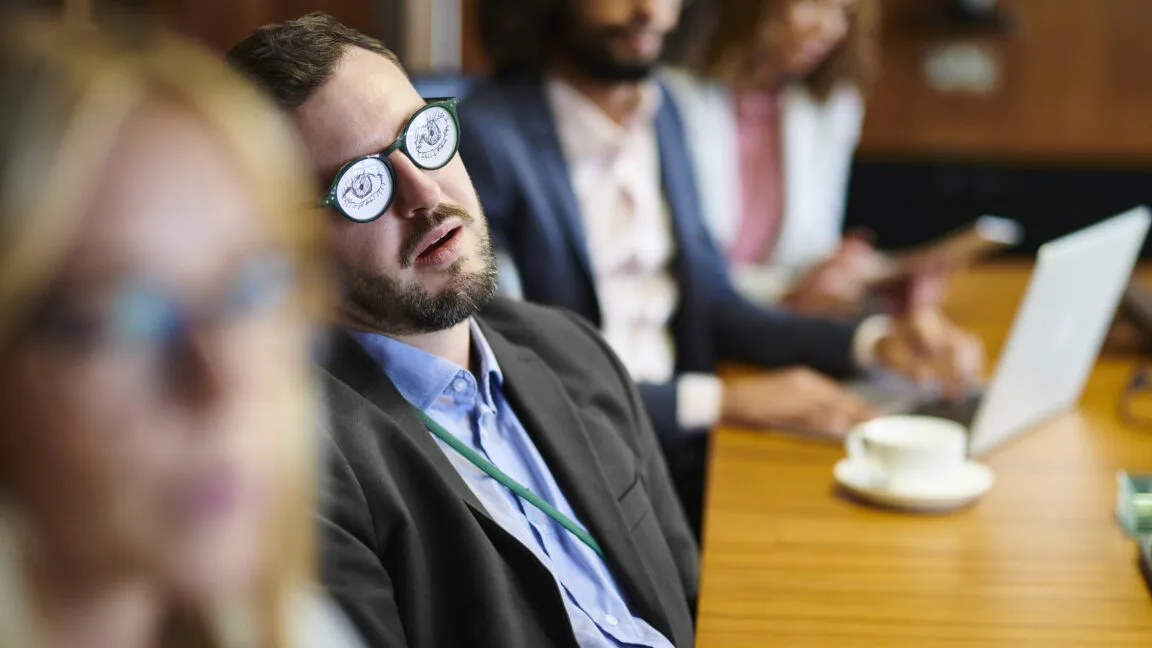
Roughly one billion meetings occur globally each day. Executives dedicate close to three-quarters of their time to meetings, while managers spend much of their schedules planning and running them. For much of the developed world, meetings function as both the rhythm and the frustration of work life.
Yet for decades, little was known about what meetings actually accomplish or how to conduct them effectively. The study of meetings remained marginal. That landscape has shifted dramatically. What was once a minor academic pursuit—"meeting science"—has emerged as a legitimate and expanding field within organizational and social psychology. The expansion accelerates as archived recordings from remote work provide researchers with unprecedented quantities of data. The field now offers revealing insights into how people behave.
Meetings serve a fundamental human purpose: they fulfill our need to connect, exchange information, and work together. Throughout history, people have assembled in various settings to accomplish tasks, exchange knowledge, align on priorities, or simply converse. However, meeting scientists use a more precise definition. "Meetings are gatherings of people with some goal or structure to the event," explains Liana Kreamer, an organizational psychologist at the Florida Institute of Technology, who co-authored a comprehensive review of three decades of meeting science research published in the 2026 Annual Review of Organizational Psychology and Organizational Behavior.
Kreamer's path to this field began during her graduate studies, when she was examining teamwork, leadership, and workplace relationships. While pursuing her doctorate under meeting scientist Steven Rogelberg, she recognized that meetings provided an ideal setting for investigating these topics and more. "You can use a meeting as a stage to study anything you want," she notes. At their foundation, "meetings are a fundamental aspect of how we organize and interact as social beings," Kreamer and co-authors Rogelberg and Jon Gray of the University of North Carolina in Charlotte wrote in their 2026 article.
Researchers investigating meetings typically employ two main strategies. One involves traditional surveys where participants reflect on their meeting experiences—whether real or hypothetical—and researchers analyze their responses. The other examines specific actions and patterns drawn from audio and video recordings of actual meetings. This detailed content analysis is, according to industrial and organizational psychologist Nale Lehmann-Willenbrock, director of the Center for Better Work at the University of Hamburg, Germany, "where the music is."
In one study, Lehmann-Willenbrock and her team reviewed video recordings of meetings to examine how a leader's communication style shapes team interaction during problem-solving. They discovered that when meeting leaders posed questions with genuine attention and respect, team performance improved. The opposite occurred when leaders asked questions but failed to listen carefully to the answers.
Leading with listening
Many findings from meeting science research appear self-evident, yet researchers emphasize that actual meetings frequently diverge from these principles.
A consistent theme across meeting science studies is the centrality of active listening, Lehmann-Willenbrock emphasizes—not mere passive acknowledgment but genuinely engaged, thoughtful responses. In remote settings, this becomes particularly challenging. "We've all learned to mute ourselves if we're not talking, very often, active listening is killed completely," she observes.
The ratio between speaking and listening significantly affects meeting outcomes. Leaders and participants frequently hold divergent assessments of whether a meeting succeeded, Lehmann-Willenbrock notes. "Often, leaders talk the most, which is also why they often think their meetings are pretty good," she says. Kreamer stresses that while leaders must guide discussions, they should not monopolize them. Leaders need to track how much time they occupy speaking to ensure diverse voices participate.
Research supports a range of actions leaders can implement before, during, and after meetings to enhance their success, according to Lehmann-Willenbrock. Before a meeting begins, leaders should select suitable spaces, provide refreshments, ensure appropriate lighting, invite only necessary participants, commit to starting and ending punctually, develop an agenda, establish and communicate specific objectives, and reserve time for informal conversation beforehand.
Pre-meeting socialization carries particular value, especially in remote contexts, Lehmann-Willenbrock explains. Her research demonstrates that "for more introverted participants and more quiet participants, this warmup phase is really helpful because it helps them make more active contributions inside the meeting."
Her investigations into in-person meetings have shown that casual conversation before meetings predicts how well meetings function, particularly for introverted attendees. However, remote meetings rarely include this pre-meeting interaction; Lehmann-Willenbrock suggests leaders establish expectations for early arrival or dedicate the opening minutes to an informal touchpoint.
Engaging attendees
Meeting facilitators can boost the chances of a productive meeting by ensuring all perspectives receive consideration. Kreamer advocates for silent brainstorming, a method designed to encourage participation from all attendees, including those who are hesitant or reserved. This involves establishing a shared digital space—such as a messaging platform or collaborative document—where all participants input ideas simultaneously. Research from 2009 demonstrated that this approach, sometimes termed "brainwriting," outperformed conventional open-discussion brainstorming in meetings.
Kreamer applies this method when collaborating with students on research concepts in her classes. "We can all see each other working," she explains, and quieter participants feel less apprehensive about interrupting or articulating their thoughts aloud. After ten minutes, she reviews the compiled ideas with everyone.
Zofia Walters, a doctoral candidate in industrial organizational psychology under Kreamer's supervision, has been investigating another dimension of meeting inclusivity: accommodating neurodiverse participants. Her research indicates that approaches such as reducing interruptions, recording instructions, utilizing shared scheduling tools, and incorporating regular check-ins likely benefit all workers, but may prove especially valuable for individuals with ADHD.
Walters surveyed 147 workers from different organizations about their most recent remote meeting: its effectiveness, post-meeting fatigue, and their emotional response. Respondents also indicated how much time they spent on concurrent tasks—such as responding to messages—and how long their camera remained active. They disclosed whether they had received an ADHD diagnosis, whether formal or self-identified.
In unpublished findings, Walters found that people with ADHD reported greater meeting fatigue compared to those without ADHD, particularly when cameras stayed on throughout, and experienced worse emotional states. Her data also suggests that concurrent activities during meetings may help ADHD participants manage boredom or restlessness.
Effective meeting practices extend beyond the meeting's conclusion. Following a meeting, leaders should communicate action items to participants, take concrete steps to execute the ideas and assignments discussed, and measure employee participation, satisfaction, and results, Lehmann-Willenbrock and colleagues concluded in a 2018 article in Organizational Dynamics.
The downsides—and upsides
Does the extensive time devoted to meetings negatively affect employees? Available research suggests it does. Studies indicate that workers anticipate feeling worse and accomplishing less when their schedules are packed with meetings, particularly when handling demanding work.
Meetings have become the standard approach to accomplishing work, but frequently, participants lack clarity about what they hope to achieve, according to cognitive scientist Ava Scott of the University of Copenhagen. This ambiguity means "a lot of meetings feel very purposeless."
Recurring meetings tend to be the most unfocused, based on Scott's examination of Microsoft staff; one participant characterized these successive sessions as having a dreamlike repetitiveness. Without a defined purpose, when schedules are already stretched thin, convening people in a meeting likely represents poor use of time, Scott argues. Kreamer points out that certain organizations, including Shopify, have eliminated all recurring meetings.
Yet a 2026 study examining more than 9,000 Norwegian workers found that despite being widespread and expensive, meetings may deliver sufficient value to justify the investment. The investigation, directed by economist David Deming at Harvard University and drawing on information gathered by Norwegian research firm Norstat, showed that higher meeting frequency correlates with later wage increases and professional development. One possible reason is that meetings enable interaction with more experienced staff members, facilitating the sharing of important information.
An important limitation: the study, released by the National Bureau of Economic Research, was correlational and cannot prove a direct link between meeting attendance and wage growth; however, it does suggest that although the expense of meetings is particularly acute for high-earning organizations, the advantages may exceed the costs. The researchers therefore propose: "Meetings are the broccoli of work—widely disliked, but probably good for us anyway."
Strategies for success
Humor can contribute to meeting success when it is genuine, kind, or uplifting rather than hurtful. When deployed thoughtfully, humor can spark innovation and strengthen team results. This approach works best when meeting participants know each other well, Lehmann-Willenbrock reported based on her analysis of video recordings from meetings at two German firms. Participants must have sufficient familiarity to feel secure joking with one another, she explains.
Not all participants feel at ease incorporating humor into meetings, notes Vita Stout, a science educator and comedian now at Sierra College in Rocklin, California. The former researcher who studied bats attended the International Congress for Bat Research in Austin, Texas, in 2022, where she documented the humor used in presentation talks—recording specific jokes, their delivery, and audience reactions. Stout's work, co-authored with bat researchers and released in the Proceedings of Biological Sciences B, concluded that when delivered with good timing and used appropriately, humor in scientific meetings serves as a mechanism for fostering connection and solidarity. However, joke-telling was disproportionately common among participants with greater authority and status, with established male scientists telling jokes more regularly than early-stage researchers and scientists from underrepresented backgrounds.
Like comedy, timing proves crucial in scheduling meetings. Planners should account for natural energy cycles and prevent meetings during the post-lunch energy slump. Lehmann-Willenbrock admits with some frustration that her own academic setting frequently ignores this principle. "A lot of our committee meetings are scheduled when people are at their most tired," she says, or when they are digesting their meal.
Consideration of participants' professional and personal commitments is equally vital when scheduling. "I have two small kids," she notes, "and I always get really angry when a meeting gets called that's about something… diversity- or inclusion-related, and then it's scheduled at 5 pm."
Some research points to variations across cultures in how meetings are perceived. In a survey of 1,432 workers across six nations, Lehmann-Willenbrock and partners assessed how annoyed, frustrated, and distressed individuals became when presented with scenarios in which leaders or other participants showed up five, ten, or fifteen minutes late. Participants from the United States and the Netherlands showed particular irritation at a late leader and extended delays. Respondents from China and Chile displayed less frustration in comparable circumstances.
Few cross-cultural investigations of this type exist within meeting science, Kreamer observes. "We have these best practices of meetings that we've learned over the past 30 years," she says, but the majority of research originates from Europe or North America. Kreamer sees this as a gap worth closing to determine whether the same principles for meeting success hold universally. Once those answers arrive, another meeting will surely be necessary.