Polish Mammoth Tusk Boomerang Dated to 40,000 Years Old, Revealing Ice Age Ingenuity
New radiocarbon analysis suggests a carved ivory boomerang discovered in Poland's Oblazowa Cave is twice as old as previously thought, pushing back evidence of human habitation in a harsh Ice Age landscape.
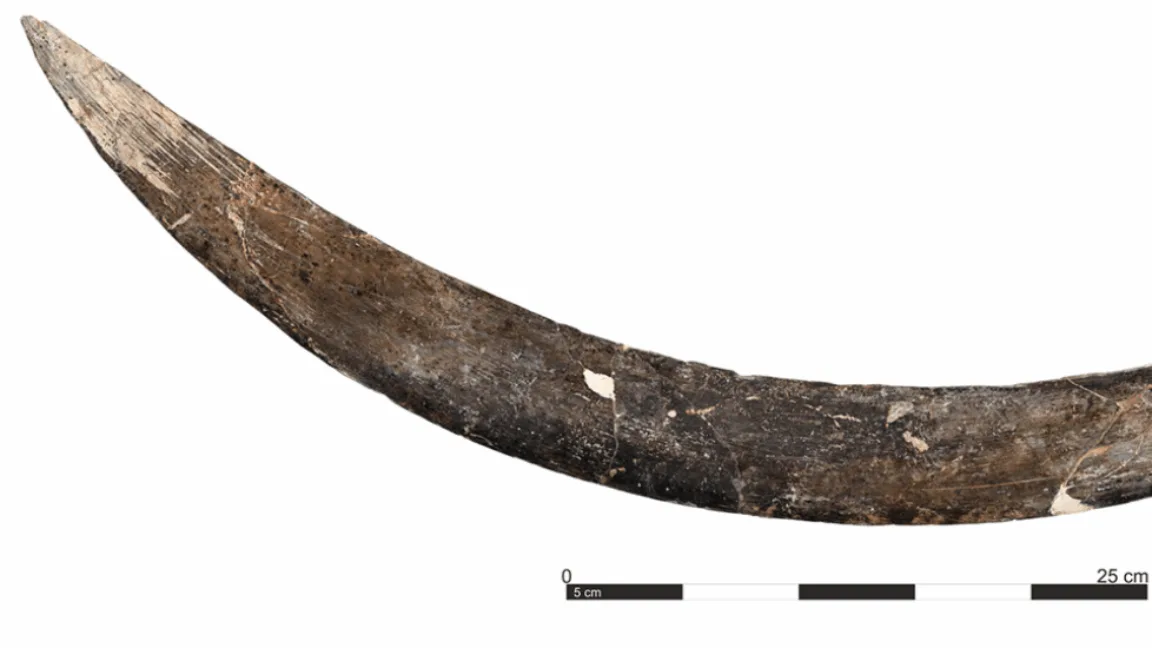
Researchers have determined that a boomerang fashioned from mammoth ivory and discovered in Poland may be significantly older than initially believed. When excavated from Oblazowa Cave during the 1990s, the artifact received a radiocarbon date of approximately 18,000 years. However, fresh analysis conducted by University of Bologna researcher Sahra Talamo and her team suggests the weapon dates to around 40,000 years ago, offering insights into how humans adapted to the unforgiving tundra environment of Ice Age Poland.
A boomerang carved from mammoth tusk
The artifact measures roughly 72 centimeters in length with a gentle curve and asymmetrical shaping, one end being more rounded than the other. The surface retains marks from the original mammoth, including fine parallel grooves left by the ancient artisan who shaped and finished the piece. Diagonal incisions near the rounded end would have improved grip during use. Heavy wear and smoothing across the entire object testify to repeated handling by a Paleolithic hunter.
Testing with a replica revealed that the boomerang flies with stability but does not return to the thrower, matching certain non-returning designs used by Aboriginal peoples in Queensland, Australia. This parallel represents independent invention rather than cultural transmission, as similar functional requirements produced comparable solutions across different eras and continents.
The original 1996 radiocarbon measurement, derived from material taken directly from the boomerang, yielded the 18,000-year estimate. Talamo and colleagues questioned this result because it seemed inconsistent with ages obtained from other artifacts recovered from the same cave layer. They hypothesized that modern carbon contamination may have skewed the earlier measurement, making the boomerang appear younger than it actually was. To verify their suspicion, they radiocarbon dated samples from 13 animal bones and one human bone fragment extracted from the identical sediment layer as the boomerang.
What about the human thumb?
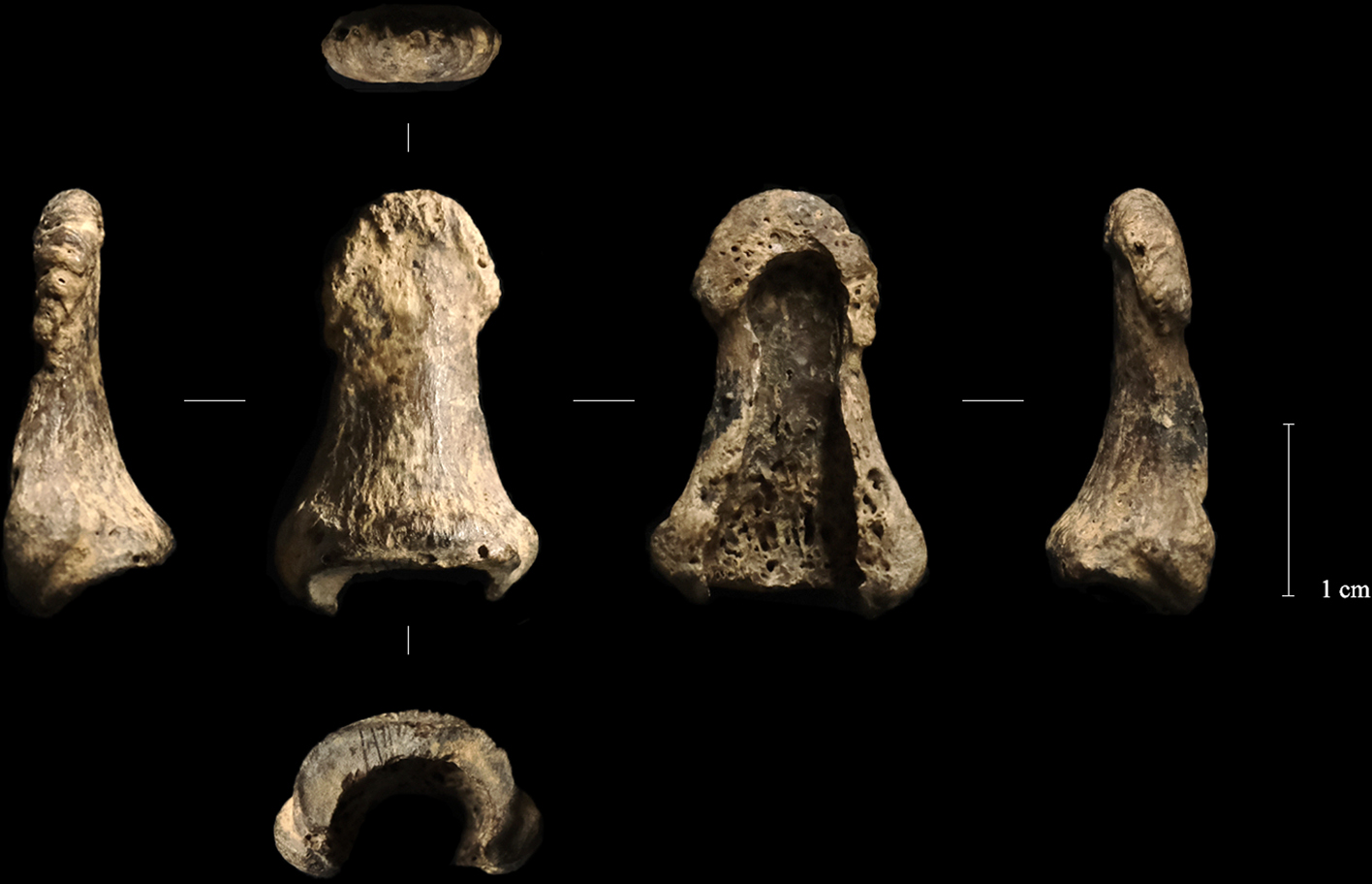
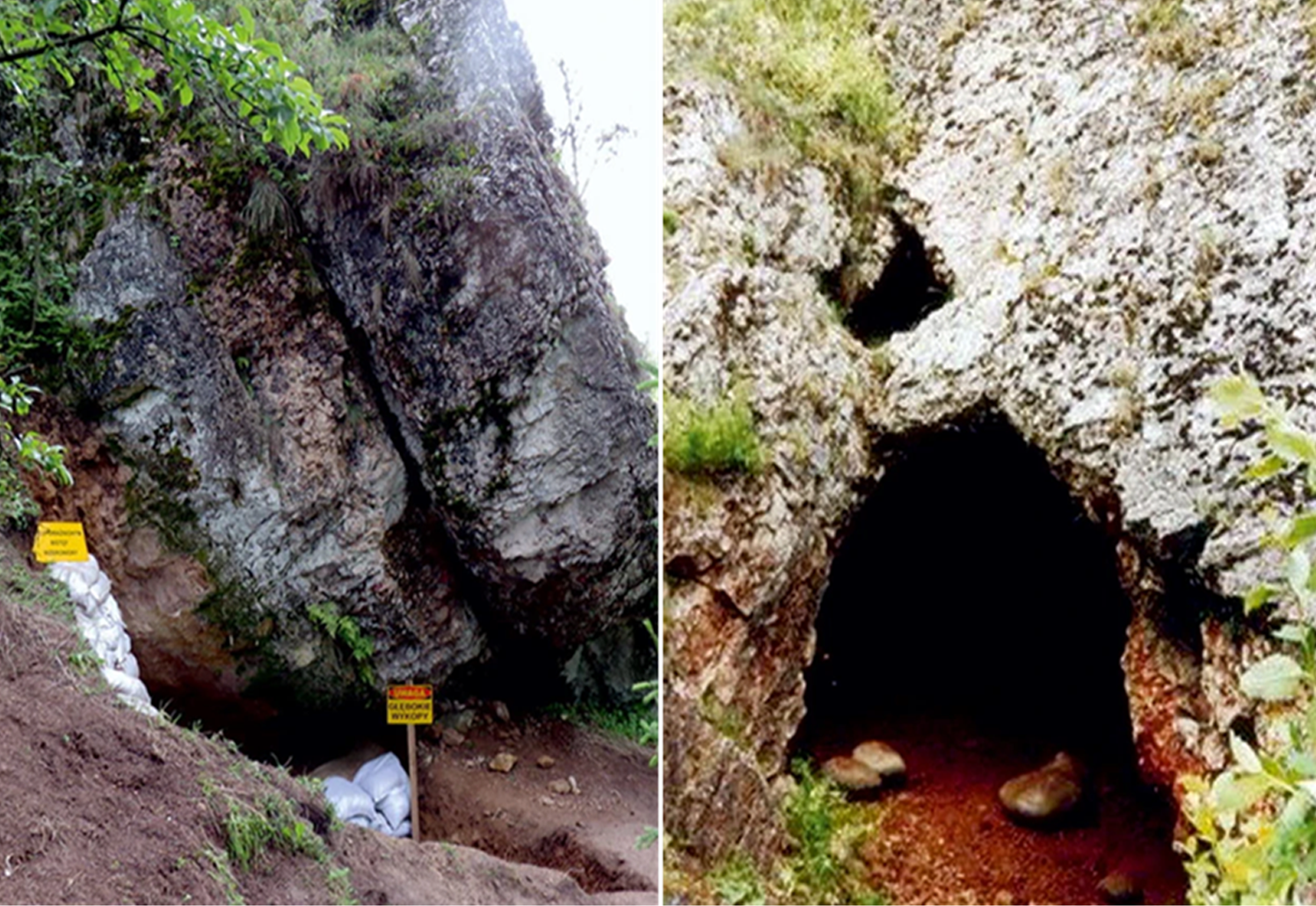
Among the bones tested was a human left distal phalanx—the final bone of a thumb—an unusual and intriguing discovery. Archaeologists found the boomerang positioned near a circular arrangement of boulders in the cave's central chamber, accompanied by antler tools, a pair of arctic fox-tooth pendants, and a bone bead. Talamo and her team propose that ritual activity may have surrounded this assemblage. They note in their published work that the boulders "appear to have been transported from the nearby river and intentionally placed."
The combination of elements—a boomerang of mammoth ivory, ritual placement, and a human finger bone—suggests ceremonial significance from an era so remote that its precise meaning remains unknowable to modern researchers.
Surviving in a prehistoric climatic wasteland
The origins of boomerang technology remain unclear, but evidence indicates that people on at least three continents—Africa, Australia, and Europe—independently developed curved, spinning projectiles. Like spears and bows, boomerangs represent a recurring human solution to the fundamental challenge of striking distant targets with hand-thrown implements.
Even at the original 18,000-year age estimate, the Polish boomerang ranked among the world's oldest examples of this technology. The revised dating, however, raises significant questions about human presence in central and northern Europe during the last glacial period. Conventional understanding suggested that these regions remained largely unpopulated for millennia following the disappearance of Neanderthals.
Talamo and her colleagues explain that "Environmental shifts after 42,000 years ago, associated with central European climatic deterioration, positioned the cold-steppe landscapes north of 49 degrees North as challenging for sustained settlements." In essence, frigid conditions and hostile terrain transformed the northern portion of Europe into something resembling a prehistoric wasteland—or so it appeared until the Oblazowa Cave findings.
Dating the bones and human phalanx revealed that people occupied Oblazowa Cave continuously for approximately 3,500 years during this period of environmental stress. Inhabitants weathered alternating warm and cold phases, demonstrating what Talamo and colleagues characterize as "resilience in the face of environmental variability." Remarkably, these people not only survived but possessed sufficient resources and leisure time to craft something as demanding and elaborate as a mammoth ivory boomerang.
Red stripes make it go faster
Talamo and her team observe that "This boomerang reflects a unique choice by the group at Oblazowa Cave," a statement that carries an undertone of scholarly amusement. Unlike stone spear points, wooden throwing implements, or even wooden boomerangs, this object demanded extraordinary time and effort to produce—resources typically scarce in mobile hunter-gatherer societies. An individual or group invested considerable labor in extracting the boomerang's thin, flat profile from solid mammoth tusk. Female woolly mammoth tusks reached thicknesses of up to 9.3 centimeters, while male tusks could measure 18 centimeters in diameter, requiring extensive chipping and shaping followed by meticulous smoothing to achieve the precise aerodynamic geometry necessary for flight.
Beyond mere functionality, the maker added decorative elements: deep, wide incisions filled with red pigment. The boomerang served a practical purpose, yet someone ensured it would appear striking as it traveled through the air, suggesting that aesthetics mattered alongside utility to the people of Oblazowa Cave.
Source: Ars Technica